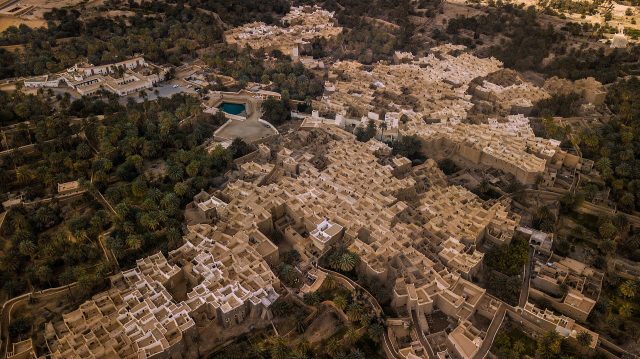
Ghadames has long been called the pearl of the Sahara, and not just for its ancient walls or the maze of shaded alleyways that offer respite from the midday sun. This oasis, nestled where Libya, Algeria, and Tunisia meet, moves to a different rhythm—one that seems to bend to the slow, deliberate pace of the desert itself. Among the clay houses built to keep out the heat, there is a place that holds more than just books. The Library of Ghadames is not merely a collection of manuscripts; it is a living witness to history, culture, and traditions passed down through generations.
The library’s origins trace back to a time when Ghadames was a vital stop for caravans crossing the Sahara. Founded during the Roman era, the city has always been a crossroads of cultures—Berbers, Arabs, African tribes, and later European travelers all left their mark here. In such a place, knowledge was not just valued but essential, a tool for survival as much as a source of wisdom. The library began as a repository for manuscripts copied and shared by local scholars, traders, and wanderers. Today, it holds texts in Arabic, Berber, and even ancient African languages, many of which exist nowhere else.
The building itself is indistinguishable from the rest of Ghadames, constructed from clay and palm wood, with flat roofs and narrow windows designed to block the scorching sun. Inside, the space is arranged to make the most of natural light while shielding fragile manuscripts from direct exposure. Shelves line the walls, filled with books and scrolls, while low tables in the center hint at the scholars and scribes who once worked here. The atmosphere is quiet, almost meditative, as if the walls have absorbed centuries of debates and reflections.
Among the library’s treasures are manuscripts on astronomy, medicine, and geography. In an age when crossing the desert could mean life or death, knowing the stars or the healing properties of local plants could save an entire caravan. The collection includes maps of ancient trade routes, descriptions of oases and wells, and treatises on Islamic law and philosophy. Some texts date back to the Middle Ages, others are more recent, but all share a common purpose: knowledge should be accessible to those who need it. The library was never just a storage place—it was a hub of ideas, where different cultures and traditions intersected.
Even today, the library remains a vital part of the city’s life. Though Ghadames is no longer the bustling trade hub it once was, its people still cherish their heritage. The library is open to visitors, drawing not only tourists but also local students, scholars, and schoolchildren. For many, it is a bridge to the past, a place where history lives not in museums but in everyday life. Elders can still be seen reading ancient texts or sharing stories with younger generations, keeping traditions alive through oral history.
Yet the library is not just about preserving the past. In recent decades, it has become a symbol of cultural resilience in a region where conflict and instability threaten to erase centuries of history. International organizations and local enthusiasts are working to digitize the manuscripts, making them accessible to researchers worldwide. The task is daunting—many texts are fragile, damaged by time or insects—but the effort continues. Each digitized page is a small victory in the fight to preserve memory.
Visiting the Library of Ghadames is less about sightseeing and more about stepping into a place where history feels tangible. There are no crowds, no loud tour guides, no flashy signs—just silence, the scent of old paper and clay, and the soft light filtering through narrow windows. You could spend hours poring over faded ink on ancient pages or simply sit in a corner, listening to the rustle of turning leaves. Time seems to stand still here, making it clear why Ghadames is often called a city that exists in two dimensions: past and present at once.
For those interested in North African history, the library is a rare find. It offers a glimpse into the lives and minds of people who crossed the desert for centuries, trading, fighting, and shaping a culture that still influences the region today. Here, the boundaries between peoples and eras blur—Arabic calligraphy sits alongside Berber symbols, medieval maps share space with 19th-century traveler’s notes. The library reminds us that knowledge is not just a collection of facts but a living thread connecting people across time and distance.
Ghadames and its library stand as proof that even in the heart of the desert, where survival seems impossible, life endures. Amid the sands and stones, a place has been preserved where people didn’t just survive—they created something lasting. The library is more than a building filled with books; it is a symbol of resilience, wisdom, and continuity. And perhaps that is why it continues to draw those who seek not just landmarks, but a real connection to the past.