El Tarf’s public library is the kind of place that rarely makes it into guidebooks, yet it offers a deeper understanding of the town than any landmark ever could. Tucked away in this quiet corner of northeastern Algeria, far from the bustle of the capital, it doesn’t have the grandeur of a national archive or the polished charm of a metropolitan reading room. Instead, it holds something more subtle: the quiet pulse of provincial life, where history isn’t just preserved in books but lived in the everyday rhythms of the people who use them.
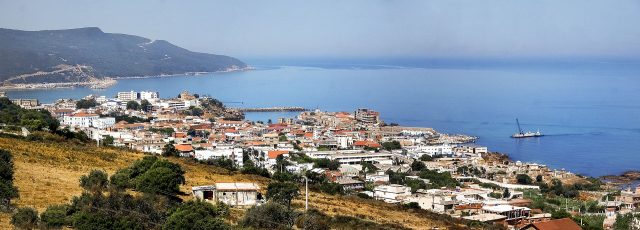
El Tarf itself is a town that doesn’t demand attention. It sits off the usual tourist paths, surrounded by rolling hills and Mediterranean forests that stretch toward the coast. The area carries the layered influences of Berber, Arab, and French heritage, and the library reflects that blend in its own understated way. It’s not a place of ostentatious displays or sweeping architecture, but rather a practical space where the past and present coexist. The shelves here hold more than just books—they hold the stories of a region that has seen revolution, rebuilding, and the slow, steady work of daily life.
The building itself is unremarkable in the best sense. Like many public structures in Algerian towns from the mid-20th century, it’s functional and unpretentious, with high ceilings and large windows that let in soft, diffused light. Inside, the atmosphere is one of quiet industry: wooden shelves line the walls, old card catalogs stand in corners, and long tables are scattered with reading lamps. Students pore over textbooks, older patrons flip through newspapers, and the occasional visitor browses the stacks. There are no crowds, no guided tours—just the steady hum of a place that serves its purpose without fanfare.
What makes the library special are the materials that go beyond the usual collection. The archives here contain documents tied to El Tarf’s role in Algeria’s struggle for independence, a period that left its mark on the region. Yellowed newspapers from the revolutionary era, firsthand accounts from those who lived through it, and later studies on the country’s post-war recovery offer a perspective that textbooks often gloss over. For anyone curious about Algeria’s history beyond the headlines, this is where the past feels immediate, almost tangible.
Yet the library isn’t stuck in the past. It’s a living space, one that adapts to the needs of the community. Local authors give readings here, poets share their work, and literary discussions spill into the evenings. While digital resources have started to appear in recent years, the focus remains on physical books—perhaps because, in a town like El Tarf, the weight of a book in your hands still means something. The library also serves as a gathering place, a spot where people come not just to read but to talk, to debate, or simply to sit in the quiet company of others.
The collection itself is a reflection of Algeria’s cultural diversity. Alongside works in Arabic, you’ll find French-language books, regional histories, and ethnographic studies that rarely make it into larger libraries. There are also writings by local authors, voices that might otherwise go unheard beyond these walls. For travelers with an interest in the less-trodden aspects of Algerian culture, the library offers a chance to see the country through a different lens—one that isn’t shaped by tourist expectations but by the people who call this place home.
Visiting the library isn’t an experience that fits neatly into an itinerary. There’s no grand entrance, no scripted tour, no pressure to perform the role of a tourist. Instead, it’s an opportunity to step into the flow of everyday life in El Tarf. Students cram for exams at the tables, retirees linger over the day’s news, and schoolchildren hunt for books to complete their assignments. The atmosphere is one of quiet purpose, a reminder that libraries aren’t just repositories of knowledge but living parts of the communities they serve.
If you find yourself in El Tarf, take a moment to wander inside. Pick up a book from the shelves, pull up a chair, and let the place reveal itself on its own terms. You might not find the dramatic stories or the polished narratives that fill travel brochures, but you’ll find something rarer: the unvarnished rhythm of life in an Algerian town, where history isn’t just remembered—it’s still being written.