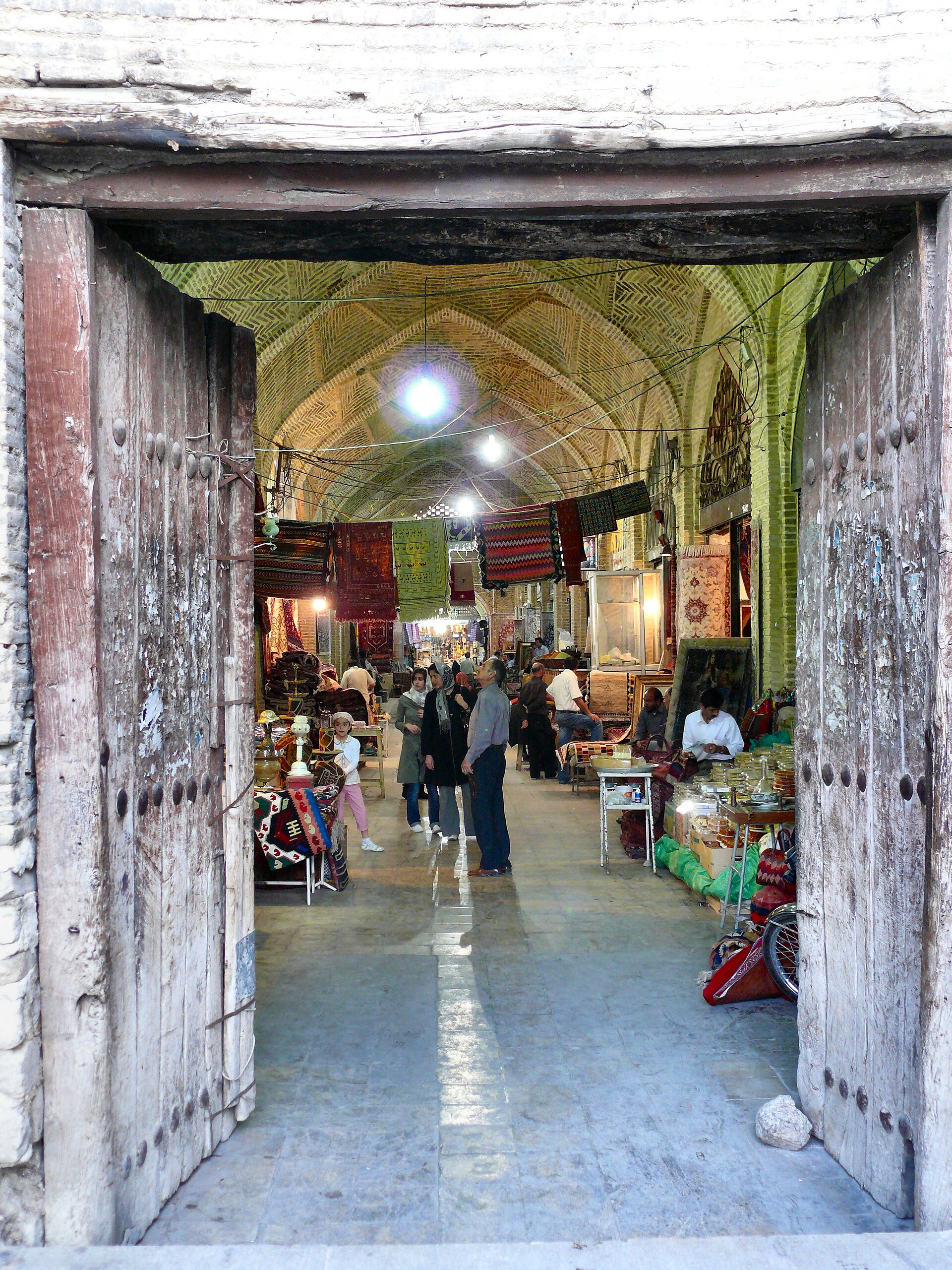
Shiraz’s Vakil Bazaar is one of those places where the past doesn’t just linger—it breathes. Built in the 18th century under the orders of Karim Khan Zand, the founder of the Zand dynasty, the bazaar was designed to be the commercial heart of his new capital. Karim Khan had a vision for Shiraz as a city of culture and trade, and the bazaar was central to that ambition. Unlike the grand, fortress-like bazaars of Isfahan or Tehran, Vakil feels more intimate, almost human in scale. Its long, vaulted corridors stretch like the veins of an old city, carrying the weight of centuries in their arched ceilings and worn stone floors.
Walking through Vakil is like stepping into a living museum of Persian craftsmanship. The bazaar is divided into sections, each dedicated to a different trade, just as it was hundreds of years ago. The spice merchants still line their stalls with pyramids of saffron, turmeric, and dried limes, their scents mingling in the air like a slow, invisible dance. Nearby, the coppersmiths hammer away at brass and copper, shaping everything from ornate trays to simple tea kettles, their rhythmic clanging echoing off the high ceilings. The textile section is a riot of color, with bolts of silk, wool, and cotton stacked high, their patterns as intricate as the stories they could tell.
What makes Vakil special isn’t just its age or its beauty, but the way it has adapted without losing its soul. The bazaar was built to last, with thick brick walls and a roof designed to keep the interior cool in the scorching summers and warm during the chilly winters. The architects of the time understood the climate, and their solutions were elegant in their simplicity. The high, vaulted ceilings allow hot air to rise, while the narrow alleys create a natural shade, making the bazaar a refuge from the heat long before air conditioning existed. Even today, when the sun beats down on Shiraz, the bazaar remains a place where time slows, where the outside world feels distant.
The bazaar’s layout is no accident. It was designed to be more than just a marketplace—it was a social space, a place where deals were struck, news was exchanged, and communities gathered. The main thoroughfare, wide and grand, was meant for commerce, while the smaller side alleys led to workshops, mosques, and caravanserais where travelers could rest. The Vakil Mosque and the Vakil Bathhouse, both built around the same time, are just steps away, reinforcing the idea that the bazaar was the center of daily life. Even now, you can still see this dynamic at play. Shopkeepers sip tea with customers, old men play backgammon in the corners, and the occasional stray cat weaves through the crowds, as much a part of the bazaar as the merchants themselves.
One of the most striking features of Vakil is its architecture. The brickwork is a masterclass in Persian design, with arches that curve gracefully and domes that seem to float above the alleys. The use of light is particularly clever. Small openings in the roof, called *badgirs* or wind catchers, funnel cool air into the bazaar while allowing just enough sunlight to filter through, creating a soft, diffused glow. This interplay of light and shadow gives the bazaar its dreamlike quality, especially in the late afternoon when the sun is low and the corridors are bathed in gold. It’s easy to see why artists and poets have been drawn to this place for centuries.
For all its grandeur, Vakil is also deeply practical. The bazaar was built to serve the needs of a growing city, and its design reflects that. The stalls are arranged in a way that makes sense for trade, with related goods clustered together. The spice sellers are near the herbalists, the textile merchants near the tailors, and the jewelers near the money changers. This organization hasn’t changed much over the years, and it’s one of the reasons the bazaar still feels alive. It’s not a relic of the past but a working part of Shiraz, a place where the old ways of doing business coexist with the new.
The bazaar has seen its share of history. It survived the fall of the Zand dynasty, the rise of the Qajars, and the tumult of the 20th century. It has been a witness to revolutions, wars, and the slow march of modernization. Yet, it has endured, largely because it has always been more than just a market. It’s a symbol of resilience, a place where the traditions of Persian commerce and culture have been preserved against the odds. Even as Shiraz has grown and changed around it, Vakil has remained a constant, a reminder of what the city once was and what it still aspires to be.
Visiting Vakil today is a lesson in patience and observation. It’s not a place to rush through. The best way to experience it is to wander, to let the sights and sounds guide you. Stop at a tea stall and watch the world go by. Bargain for a piece of handwoven fabric or a small copper trinket, not because you need it, but because the act of haggling is part of the ritual. Listen to the stories of the shopkeepers, many of whom have been working in the bazaar for generations. Their families have been here for centuries, and their knowledge of the place is as deep as the foundations of the buildings themselves.
In the end, Vakil Bazaar is more than just a historical site or a tourist attraction. It’s a living, breathing part of Shiraz, a place where the past and present coexist in a delicate balance. It’s a reminder that some things don’t need to change to remain relevant. The bazaar has survived because it has always been useful, always been necessary. It’s a place where people come to work, to shop, to meet, and to remember. And for those who take the time to look, it offers a glimpse into the soul of a city that has been shaping and being shaped by its people for centuries.