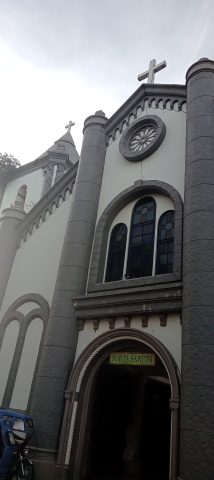
Tumauini Church, or the Church of San Matias, stands on a gentle hill overlooking a quiet town in northern Luzon, much as it has for over two centuries. Built in the late 1700s, it remains one of the few places in the Philippines where the colonial past feels tangible, not just preserved in museums but woven into the fabric of everyday life. The church is dedicated to Saint Matthias, though most people here simply call it the Tumauini Church, a name that carries the weight of the town’s history as a once-vital outpost of Spanish missionary efforts.
What makes this church unusual is its architecture, which defies the expectations of European baroque. The structure is built from local reddish brick, giving it a warm, earthy tone that contrasts with the ornate carvings covering its facade. These intricate patterns resemble lacework, a detail that feels almost delicate against the solidity of the walls. The most striking feature is the octagonal bell tower, an uncommon design for its time, which lends the building an unexpected lightness. Inside, the wooden ceiling beams and faded frescoes bear the marks of time, earthquakes, and the occasional neglect that comes with centuries of existence. Some of the original decorations have been lost to wars and natural disasters, but what remains tells a story of resilience.
The history of San Matias is deeply tied to the broader narrative of the region. When Spanish colonizers arrived in Luzon in the 16th century, they faced resistance from local tribes, and Tumauini became one of their key strongholds. The church was not just a place of worship but also a fortress, its thick walls and narrow windows designed to withstand attacks. By the 19th century, as the Philippines became more firmly integrated into the Spanish colonial empire, Tumauini evolved into a trading hub, and the church stood as a symbol of both religious and political authority. Today, it serves as a quiet reminder of how faith and power shaped the identity of small towns across the archipelago.
For travelers who make the journey here, the church often comes as a surprise. Unlike the grand cathedrals of Manila or Cebu, it sees few visitors, and the atmosphere is one of serene provincial life. The surrounding landscape—rice fields stretching toward the distant Sierra Madre mountains—has changed little since the days of the first Spanish missionaries. The locals treat the church with quiet reverence, not as a relic but as a living part of their community, where weddings, baptisms, and festivals still take place. There’s no sense of performance here, just the easy rhythm of a town that has long since settled into its own pace.
The best time to visit is during one of the religious festivals, particularly in May when the town celebrates the feast of Saint Matthias. The church is adorned with flowers, processions wind through the streets, and the air fills with music and the scent of traditional food. Even those who aren’t religious can’t help but be drawn into the spirit of the occasion. For a few days, the past feels close enough to touch, and it’s easy to imagine what life might have been like when the church was the heart of the community.
San Matias is more than just an architectural landmark; it’s a testament to the layers of influence that have shaped Filipino culture. Spanish traditions blend with local customs, and even elements of Chinese craftsmanship appear in the details, a nod to the artisans who worked on the building. The decorations include motifs that feel distinctly Filipino—tropical plants, animals rarely seen in European baroque—making the church unique even among its peers. It’s a place where history isn’t just remembered but still alive in the way people interact with it.
Yet the future of the church isn’t entirely secure. The Philippine climate, with its typhoons and high humidity, takes a toll on the brickwork, while earthquakes threaten the structure’s stability. Restoration efforts are ongoing, but funding is often scarce, and the work is slow. For the people of Tumauini, the church is more than just a historical site; it’s a part of their identity. Losing it would mean losing a piece of their story, one that connects them to the generations who came before.
If you find yourself in this part of Luzon, take the time to stop. Tumauini isn’t a tourist hotspot, and there are no luxury resorts or bustling restaurants to distract you. That’s precisely what makes it special. Walking through the narrow streets, past old wooden houses with their balconies, you get a sense of a place that has changed little over the decades. The church stands at the center of it all, not as a monument to the past but as a quiet witness to the passage of time. It’s a place where history and the present coexist, unobtrusively but with a depth that lingers long after you’ve left.