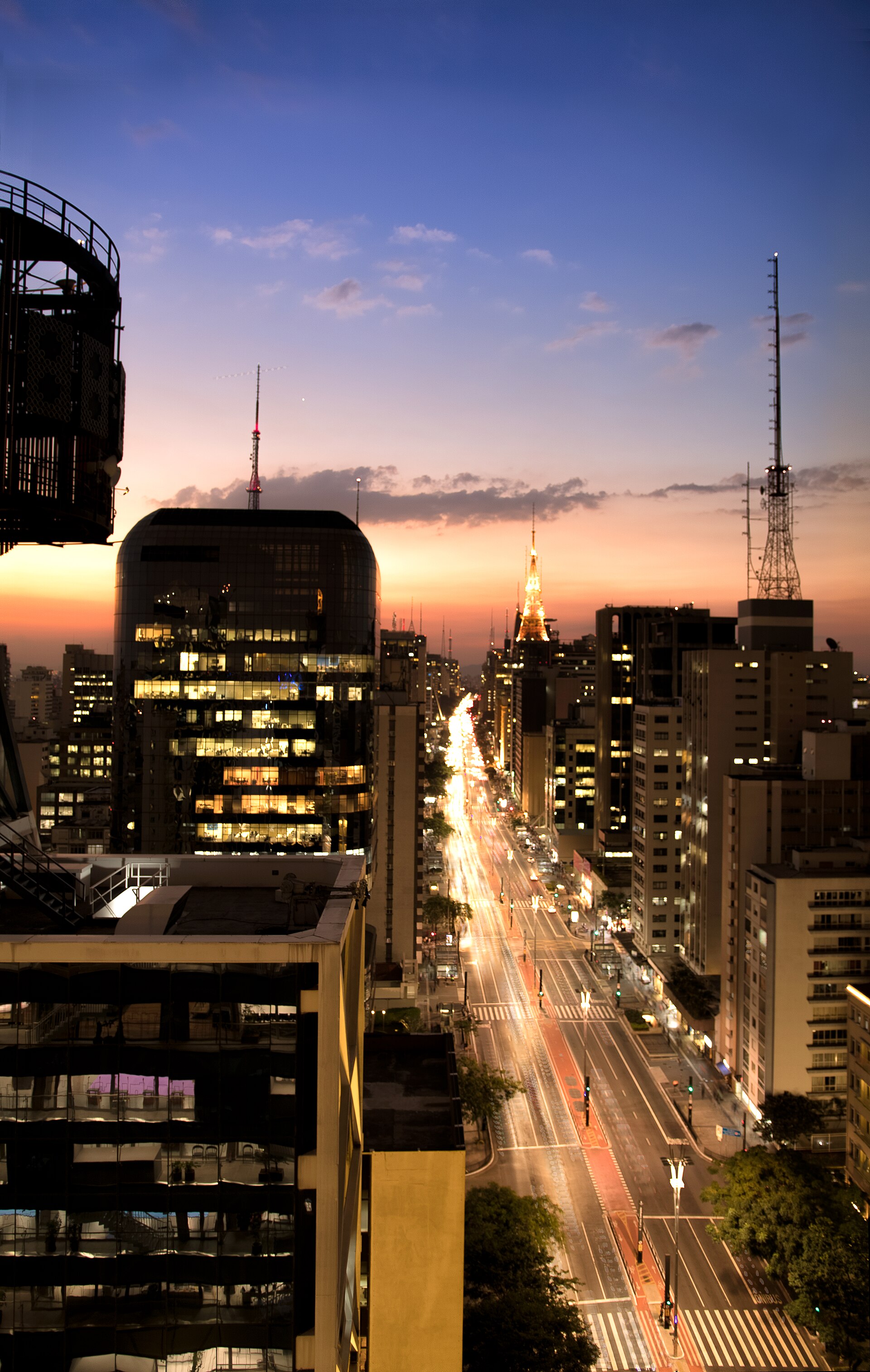
Avenida Paulista isn’t just another street in São Paulo—it’s the city’s beating heart, where finance, culture, and daily life collide in a way that feels both grand and deeply human. This is where the pulse of Brazil’s largest metropolis is strongest, a place where towering glass skyscrapers share the sidewalk with historic mansions, and where the energy of the crowd never seems to fade. Whether it’s a weekday morning, when suited professionals rush to their offices, or a Sunday afternoon, when the street becomes a pedestrian playground, Paulista always feels alive.
The avenue’s story begins in the late 1800s, when São Paulo’s coffee barons—flush with wealth from the booming export trade—decided to build a new boulevard that would reflect their status. At the time, this was the edge of the city, a stretch of land far from the colonial center. But ambition turned it into something far greater. European architects were commissioned to design lavish mansions in eclectic and neoclassical styles, their ornate facades a statement of power and taste. A few of these buildings still stand today, though most have been replaced by the sleek, modern towers that now define the avenue’s skyline.
What makes Paulista unique is how it balances these two eras. Walk down the street, and you’ll pass the Museu de Arte de São Paulo, better known as MASP, its bold red pillars holding the building aloft like a modernist sculpture. Inside, the museum’s collection spans centuries, from European masters to Brazilian modernists, making it a must-visit for anyone interested in art. Just a short stroll away, the Casa das Rosas, a preserved mansion from the early 20th century, now houses a literature museum, offering a quiet contrast to the bustle outside.
But Paulista isn’t just about business and high culture. On weekends, the street transforms. Cars are banned, and the avenue becomes a stage for the city’s creativity. Musicians set up on corners, artists display their work on the pavement, and vendors sell everything from fresh coconut water to handmade crafts. Locals and visitors alike wander the wide sidewalks, stopping to chat, snap photos, or grab a bite at one of the many cafés. The atmosphere is festive, almost like a street fair that never ends. It’s one of the few places in São Paulo where the city’s scale feels manageable, where you can stand in the middle of the avenue and take it all in without the usual rush.
This street has also been a witness to Brazil’s most pivotal moments. Paulista has hosted some of the country’s largest protests, from the demonstrations against the military dictatorship in the 1980s to the massive rallies for democracy in recent years. It’s a place where people come to be heard, where a single sign or chant can ripple through the crowd and echo far beyond the avenue. Even on ordinary days, you might see activists gathering signatures or street performers drawing a crowd, a reminder that Paulista has always been more than just a thoroughfare—it’s a public square in the truest sense.
For all its urban energy, Paulista isn’t without moments of calm. The avenue is lined with trees, their leaves providing shade even on the hottest days. Small parks and green spaces offer a respite from the concrete, the most notable being Parque Trianon, a pocket of Atlantic Forest that feels worlds away from the city. Here, the air is cooler, the noise of traffic muffled by the dense foliage. It’s a place where office workers eat lunch on benches, where couples sit under the trees, and where the city’s relentless pace slows, if only for a little while.
As evening falls, Paulista takes on a different character. The office towers light up, their reflections dancing on the glass facades of neighboring buildings. The sidewalks fill with people heading to dinner, drinks, or one of the many cultural events that take place along the avenue. Bars spill onto the pavement, live music drifts from open windows, and the street hums with conversation. It’s a reminder that Paulista doesn’t shut down when the workday ends—it simply shifts into a new rhythm.
For many Paulistanos, Avenida Paulista is more than just a place to work or visit. It’s where they meet friends after a long day, where they bring visitors to show off the city, where they’ve celebrated milestones and protested injustices. It’s a street that holds memories, whether it’s the first time you saw MASP’s iconic red pillars or the time you got caught in a sudden downpour under the trees. Even those who spend their days in the avenue’s office towers often step outside during lunch, just to feel the energy of the crowd.
Walking down Paulista is like flipping through the pages of São Paulo’s story. You’ll see the layers of history in the architecture, the mix of old and new, the way the street adapts to whatever the city throws at it. It’s not a perfect place—there’s traffic, noise, and the occasional chaos that comes with any major urban center. But that’s part of what makes it real. Paulista doesn’t try to be a postcard; it’s a living, breathing space where the city’s contradictions play out in plain sight. And perhaps that’s why it feels so essential—because it’s not just a street, but a reflection of the people who make São Paulo what it is.