The Archaeological Museum in Anuradhapura is one of those rare places where the past doesn’t just sit behind glass—it lingers in the air, as if the weight of centuries hasn’t quite faded. This city was once the beating heart of ancient Sri Lanka, a capital that thrived for over a thousand years, and the museum gathers the fragments of that era, piecing them together into something almost tangible. There’s no tourist hustle here, no crowds pressing in for a quick photo. Instead, the quiet halls invite you to slow down, to let each object speak in its own way, without fanfare or explanation.
The museum itself is housed in a building that carries its own history. Constructed during the British colonial period, it was meant to preserve the island’s heritage, and the architecture reflects that purpose—high ceilings, sturdy wooden doors, and windows that filter the light into soft, shifting patterns on the floors. The layout guides visitors through time, starting with the earliest artifacts and moving forward, as if turning the pages of a book where every chapter reveals another layer of life from centuries ago. The first rooms hold everyday objects: clay pots, tools, jewelry—things that were once ordinary, used by people going about their lives in the early centuries of the Common Era.
Among the most striking exhibits are the sculptures and architectural fragments. Stone Buddhas stand in various poses, their styles evolving over time, reflecting how religious art changed on the island. Some are nearly intact, their serene expressions and delicate carvings still vivid, while others are broken, their missing pieces hinting at the passage of time. Nearby, intricately carved reliefs depict scenes from Buddhist legends, where every gesture and fold of fabric carries meaning. These aren’t just decorative—they were meant to teach, to inspire, to connect the viewer to something greater.
A separate hall is dedicated to stone inscriptions—ancient edicts and chronicles etched in Sinhala, Pali, and Tamil. These aren’t just historical records; they’re evidence of how writing developed, how laws were shaped, and how cultures interacted. Some of the slabs are covered in tiny, almost indecipherable marks, the kind that might look like scratches to the untrained eye but hold entire stories for those who know how to read them. Coins from different eras are displayed here too, ranging from simple copper pieces to silver and gold, some stamped with the faces of rulers, others with sacred symbols. They’re small but heavy with significance, each one a reminder of trade, power, and faith.
The museum doesn’t focus solely on Buddhist heritage. Its collection also includes artifacts from other cultures that left their mark on the island. There are Hindu deities brought by traders or settlers from southern India, their forms familiar yet distinct from the Buddhist sculptures nearby. Pottery unearthed from ancient trading posts speaks of a time when Anuradhapura was a crossroads, where merchants from across Asia met and exchanged goods. These objects serve as a reminder that the city wasn’t just a religious center—it was a place where ideas, languages, and traditions mingled.
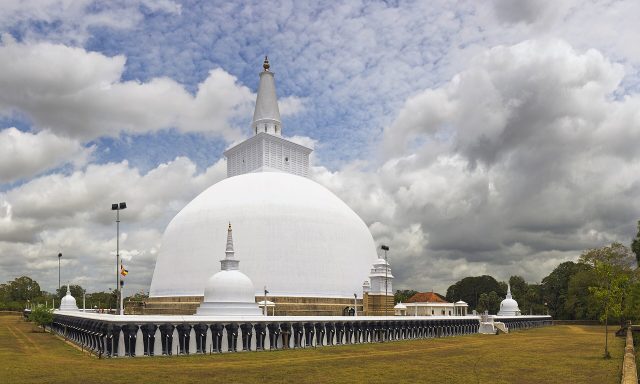
One of the most compelling parts of the museum is the collection of scale models, painstakingly recreated based on archaeological evidence. Miniature stupas, palaces, and monasteries offer a glimpse of what Anuradhapura looked like at its height, when tens of thousands of monks lived within its boundaries and pilgrims from across the Buddhist world flocked to its sacred sites. Some models are so detailed that you can make out individual stones in the masonry or the patterns on wooden beams. They’re not just educational tools—they’re a way to imagine the city as it once was, bustling with activity, its streets lined with structures that have long since crumbled.
Visiting the museum isn’t just about looking at objects—it’s about stepping into a different time. After wandering through the halls, the inner courtyard offers a moment to pause. Here, larger stone carvings and fragments of columns are displayed under the open sky, surrounded by greenery and the quiet hum of the city beyond. Sitting on a bench, it’s easy to picture the scene centuries ago: monks walking these same paths, the sound of prayers and bells filling the air, the rhythm of life in a city that was both spiritual and worldly.
What makes this museum special isn’t its size or grandeur—it’s its authenticity. There are no flashy reconstructions or interactive displays, just real objects that have survived the centuries. That’s why it feels so essential. It doesn’t entertain; it makes you think about how fragile the past is and how much it shapes the present. For anyone who comes to Anuradhapura to understand the soul of Sri Lanka, the museum isn’t just a stop on the itinerary—it’s a key to unlocking something deeper. The artifacts here aren’t relics of a dead civilization; they’re echoes of a place that still lives, if you know how to listen.