In Kyiv’s Pechersk district, a stretch of pavement holds the weight of recent history. The Alley of the Heavenly Hundred Heroes remembers those who died during the Euromaidan protests in early 2014, when Ukraine faced a turning point. The alley stands near the streets where the most violent clashes happened—where protesters and riot police confronted each other in winter’s bitter cold. The location wasn’t chosen by chance.
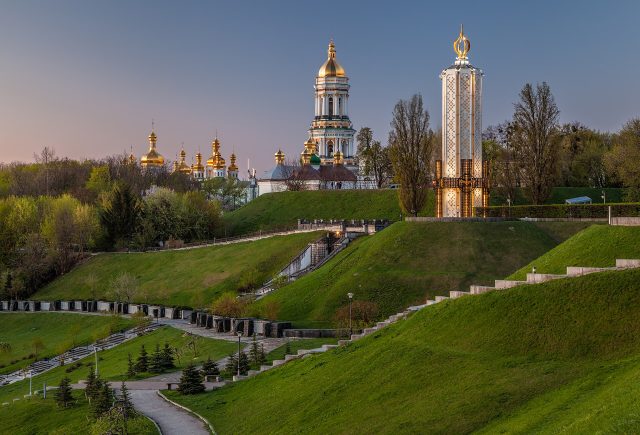
Granite steles line the path, each bearing a name. No grand monuments or dramatic sculptures—just rows of names carved into stone. At the center, a simple cross wrapped in blue and yellow ribbons. The trees along the path soften the memorial’s starkness, making it feel like a place for quiet reflection rather than mourning.
The protests began in winter 2013–2014 after the government refused to sign an association agreement with the European Union. What started as a call for closer ties with Europe became a nationwide uprising against corruption and authoritarianism. Kyiv’s Maidan Nezalezhnosti, or Independence Square, became the movement’s heart, but protests spread to nearby streets, including Institutska. On February 20, 2014, snipers fired on protesters there, killing dozens in hours. The alley was later built to honor those who fell that day.
The term "Heavenly Hundred" appeared after the shootings. Though around a hundred people died, the name wasn’t meant to be exact—it described a group bound by shared sacrifice. Today, it’s used across Ukraine to refer to those killed during the revolution. The alley preserves their memory, turning names from abstract symbols into real people who once stood on these streets. For many Ukrainians, the Heavenly Hundred are more than historical figures—they’re friends, family, or fellow citizens who became symbols of resistance.
Visiting the alley feels personal. Someone might place flowers at a stele, light a candle, or stand in silence. The atmosphere is quiet, respectful—a recognition that these deaths mattered. The memorial is especially crowded on February 20, the Day of Remembrance for the Heavenly Hundred. But even on ordinary days, the alley feels alive with memory.
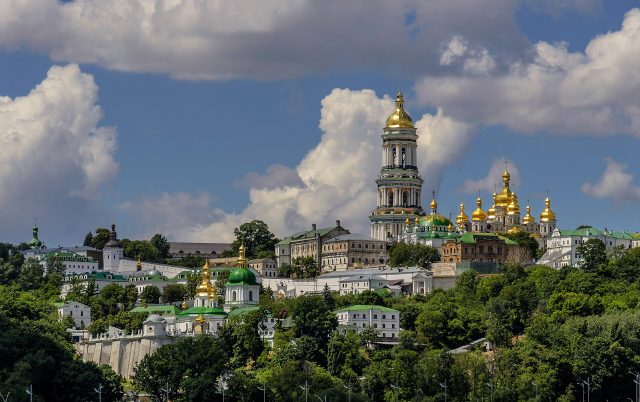
Pechersk is one of Kyiv’s most central districts, home to government buildings, embassies, and landmarks like the Kyiv Pechersk Lavra. The alley sits among them, a quiet counterpoint to the city’s bustle. The contrast is deliberate—it shows how the past isn’t distant but part of the present. The memorial isn’t separate from the city; it’s woven into its fabric, a reminder that 2014 reshaped Ukraine.
The alley’s design is simple. No towering statues or elaborate details—just clean lines and raw stone. The steles are arranged in neat rows, evoking a military cemetery’s solemnity without militarism. The focus is the names, each one a life cut short. The alley doesn’t compete with Kyiv’s other landmarks—it adds to them.
The alley has become more than a memorial. It hosts commemorations, discussions, and educational events. Survivors of the protests share their stories here, and exhibitions of Euromaidan photographs and documents are sometimes held nearby. For younger Ukrainians, it’s a way to learn about the revolution beyond textbooks. For those who lived through it, the alley is a place to reconnect with the past.
Kyiv is a city of layers, where every neighborhood holds its own memories. Pechersk, with its mix of government institutions, religious sites, and cultural landmarks, is no exception. The alley fits into this landscape because it’s deeply human. It doesn’t demand attention—it invites reflection. In a city where history is often tied to power, this memorial stands apart. It’s about ordinary people who stood up for what they believed in.
For visitors, the alley offers a way to understand how Ukraine’s recent past shapes its present. It’s not just for history buffs—it’s for anyone who wants to grasp what it means to fight for change. There are no guided tours, no plaques explaining every detail. Instead, there’s silence, broken only by the murmur of a prayer or the rustle of flowers. The alley doesn’t tell you what to think—it lets you feel. And in that quiet, it becomes one of Kyiv’s most powerful places.