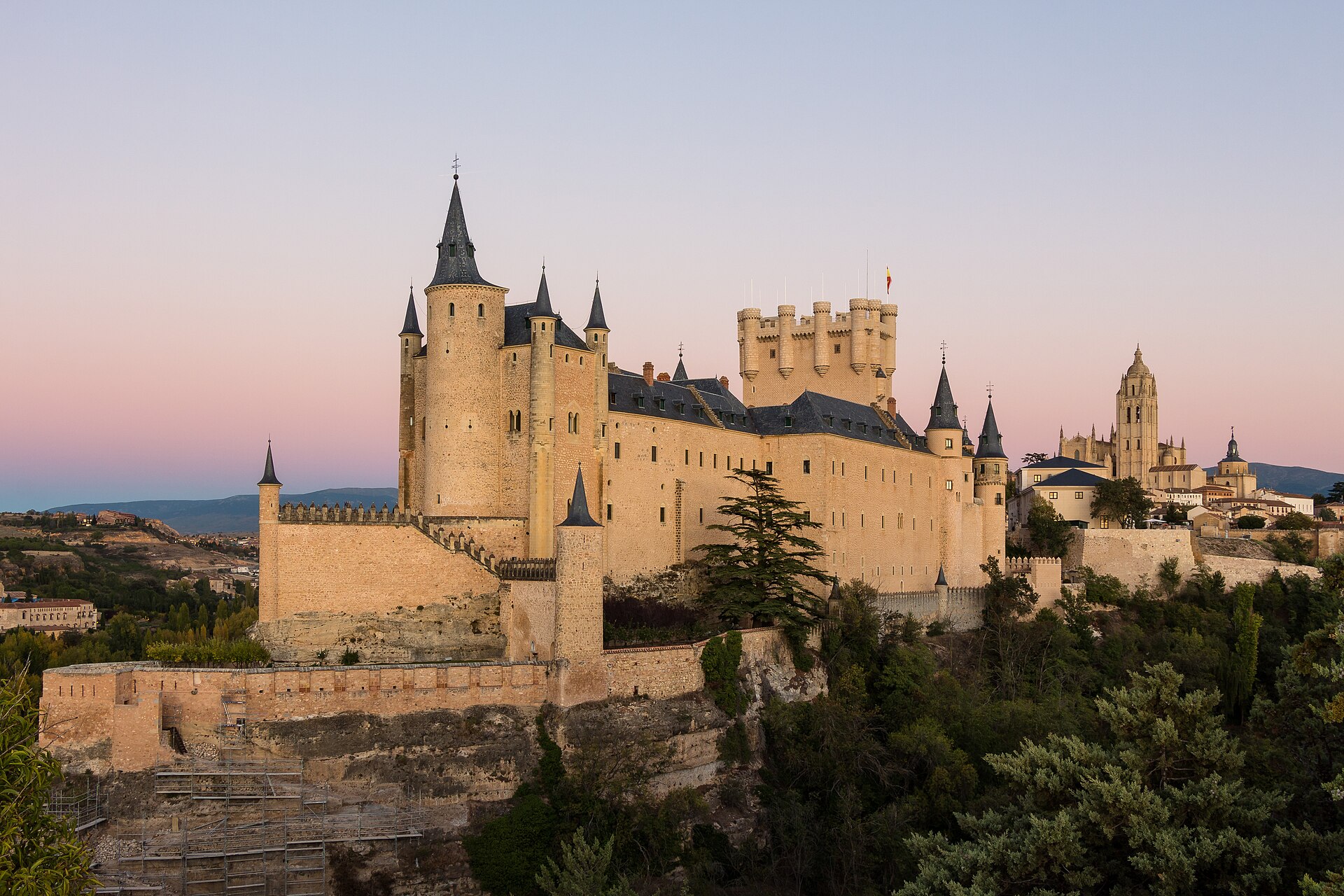
Perched on a rocky outcrop where the Eresma and Clamores rivers meet, the Alcázar of Segovia is more than just a castle—it’s a place where Spain’s past feels almost tangible. Its jagged silhouette, with pointed towers and battlements, has watched over the city for centuries, evolving from a modest Moorish fortress in the 8th century into one of Castile’s most iconic landmarks. Over time, it grew from a wooden stronghold into a stone fortress, then into a royal residence where kings and queens shaped the course of history. The Alcázar’s walls have seen coronations, treaties, and the comings and goings of figures who defined an era, yet its origins remain surprisingly humble.
The architecture here is a patchwork of influences, each layer revealing a different chapter of Spain’s story. The Moorish roots are still visible in the arched courtyards and intricate stonework, remnants of a time when Muslim rulers held sway. Later, in the 12th and 13th centuries, Gothic elements were added—soaring towers, grand halls, and vaulted ceilings that once echoed with the voices of royalty. The most striking feature is the Tower of Juan II, with its twelve rounded battlements, a structure so picturesque it could have been plucked from a medieval romance. Inside, the halls are adorned with faded frescoes, carved fireplaces, and tapestries that hint at the lives of the monarchs who once walked these floors.
This was a place of power, where history was made. Isabella of Castile was proclaimed queen here in 1474, a moment that would set the stage for Spain’s golden age. Years later, she and Ferdinand of Aragon received Christopher Columbus within these walls before his first voyage to the Americas. The air in the Alcázar still carries the weight of those events—armor stands in the Hall of Kings, ancient maps hang on the walls, and the heavy fabrics of the tapestries seem to muffle the sounds of the present. It’s easy to imagine the rustle of silk gowns or the clank of a guard’s armor echoing through the corridors.
By the 19th century, the Alcázar had fallen into disrepair. After the royal court moved to Madrid, the fortress was left to decay, and a fire in 1862 destroyed much of its interior. Fortunately, the military academy that later occupied the site undertook its restoration, preserving what remained. Today, some rooms feel deliberately sparse, as if frozen in time, inviting visitors to fill in the gaps with their own imagination. The absence of velvet ropes or "do not touch" signs only adds to the sense that this is a living space, not just a museum.
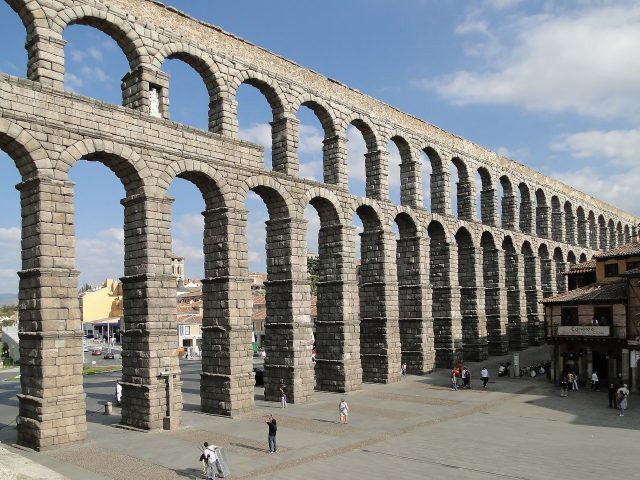
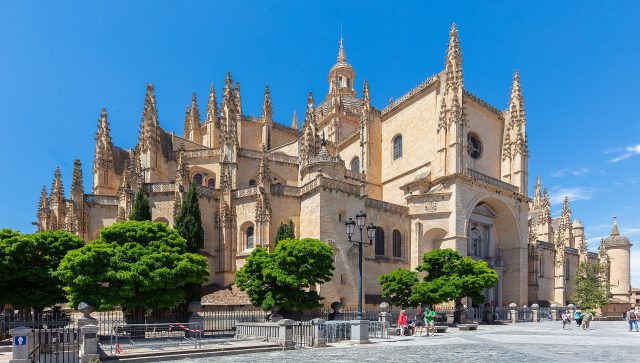
The climb to the upper terraces is worth every step. From here, Segovia unfolds below like a medieval tapestry—the Roman aqueduct cutting through the city, the cathedral’s towering spires, the labyrinth of narrow streets where every building has its own story. On clear days, the view stretches beyond the city to the rolling hills of Castile, dotted with oaks and pines. At dusk, the castle is bathed in golden light, its shadows stretching across the hillside, as if the past itself is reaching out. It’s a view that has remained unchanged for centuries, a silent witness to the passage of time.
The Alcázar doesn’t feel like a typical tourist attraction. There are no barriers keeping visitors at a distance—you can touch the cold stone walls, peer into the dungeons where prisoners were once held, or sit in the throne room and imagine yourself in the place of kings. The basement still houses medieval instruments of torture, a stark reminder that life in the Middle Ages wasn’t just about chivalry and grandeur. These details make the castle feel alive, as if it’s choosing who to reveal itself to.
Despite being one of Segovia’s most popular sites, the Alcázar never feels crowded. Its vast halls and winding staircases give visitors room to explore at their own pace, whether they spend an hour or half a day wandering its corridors. Historians might linger over the old maps and weapons, while romantics will be drawn to the fairy-tale silhouette against the sunset. Photographers will find endless angles, from the intricate stonework to the sweeping views of the countryside.
The castle has inspired more than just kings and queens—it’s said to have been the model for Disney’s Sleeping Beauty castle, though its magic doesn’t need that legend to be felt. In winter, frost clings to its towers, turning it into a scene from a storybook. In spring, almond blossoms frame its walls, and in autumn, the stone takes on the warm hues of fallen leaves. Even in summer, the thick walls keep the interior cool, offering respite from the heat.
What makes the Alcázar of Segovia special is that it doesn’t just preserve history—it lets you step into it. You don’t need a guide to feel the weight of the past here; the castle speaks for itself. Stand on the tower, look out over the same hills that generations of kings and soldiers once surveyed, and it’s easy to understand why this place has endured. The Alcázar isn’t just a relic—it’s a bridge between then and now, waiting for those who are willing to cross it.