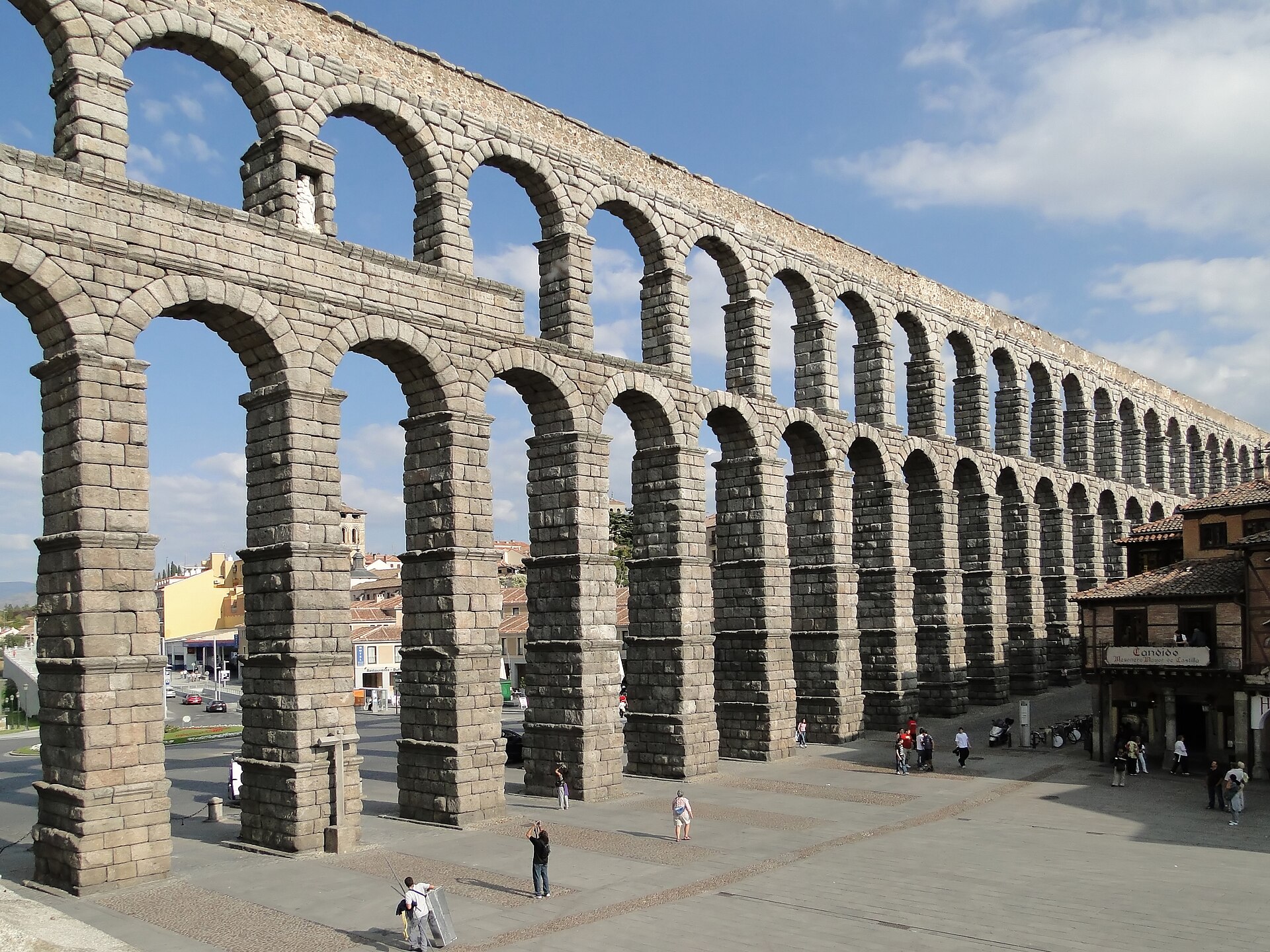
The aqueduct of Segovia is one of those rare structures that make you pause and wonder how people, two thousand years ago, without modern technology, could create something so enduring and magnificent. It rises above the city like a silent giant of stone, a witness to centuries of history, wars, and change. More than just an ancient engineering feat, it is a living part of Segovia’s story—a symbol of its resilience and grace, still standing with an almost defiant elegance.
Built in the latter half of the first century AD, when this region was under Roman rule, the aqueduct is often attributed to the reign of Emperor Domitian, though historians continue to debate the exact date. Its purpose was simple yet vital: to carry water from the Riofrío River, fifteen kilometers away, into the heart of Segovia. The system relied on gravity alone, with a carefully calculated gradient ensuring water flowed smoothly through the stone channels, over valleys and uneven terrain, until it reached the city’s reservoirs. Remarkably, it functioned without interruption for nearly two millennia before being replaced by more modern infrastructure in the 19th century.
What makes the aqueduct so striking is its construction. Composed of two tiers of arches, it was built entirely from massive granite blocks, fitted together without mortar. There are 167 arches in total, with the lower tier supporting the upper one, creating an illusion of lightness despite the sheer weight of the stone. At its highest point, the structure reaches nearly thirty meters, while its full length stretches over fifteen kilometers—though only a portion is visible within the city. The precision of the Roman engineers is astonishing, especially considering they worked without advanced tools or complex calculations. The aqueduct’s design is a testament to their understanding of physics, geography, and craftsmanship.
One of the most remarkable aspects of the aqueduct is how well it has survived the centuries. In the Middle Ages, it served not only as a water supply but also as a defensive structure, with soldiers using its arches for cover and lookouts stationed along its upper level. Later, during the Renaissance, it became a symbol of Segovia’s power and prestige, with local rulers ensuring its preservation. When one of the arches collapsed in the 16th century, it was meticulously restored using the same techniques as the original builders, allowing the aqueduct to remain largely unchanged to this day.
Today, the aqueduct is Segovia’s most famous landmark, drawing visitors from around the world. Yet it hasn’t become a mere museum piece—it remains woven into the fabric of daily life. Streets pass beneath its arches, locals meet for coffee in its shadow, and tourists wander along its base, tracing the lines of history with their fingers. At night, when the streetlights cast long shadows across the stone, the aqueduct takes on a timeless quality, as if the centuries between its creation and the present moment have dissolved.
For all its grandeur, the aqueduct still holds mysteries. Historians and engineers continue to puzzle over how the Romans managed to fit the granite blocks so precisely, some weighing several tons, without the aid of modern machinery. Some theories suggest the use of wooden scaffolding and pulley systems, but no definitive evidence has survived. Another enigma is why the aqueduct has withstood earthquakes, which have struck the region over the centuries. The answer may lie in the flexibility of its design—the arches can shift slightly, absorbing the tremors that might have toppled a more rigid structure.
To the people of Segovia, the aqueduct is more than a tourist attraction. It is a part of their identity, a reminder of the layers of history beneath their feet. This land has been shaped by Roman legions, Moorish rulers, and Castilian kings, and the aqueduct has stood through it all, silent but unyielding. Its image appears on the city’s coat of arms, on souvenirs, and even on bottles of local wine—a testament to how deeply it is embedded in Segovia’s culture.
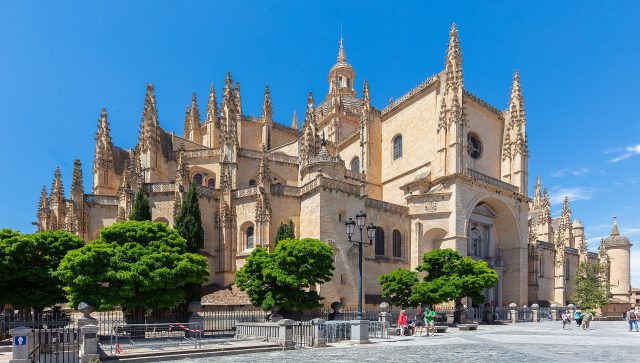
When visiting the aqueduct, it’s worth taking a moment to look beyond the structure itself. It stands on a slight elevation, offering views of the old city with its narrow streets, Gothic cathedral, and medieval walls. The best time to see it is at sunset, when the stone glows warmly in the fading light, and the shadows stretch long and soft across the ground. It’s easy to see why this place has inspired artists and writers for generations—the way the aqueduct blends into the landscape, both dominating and harmonizing with it, feels almost poetic.
The aqueduct of Segovia is more than an ancient monument. It is a symbol of human ingenuity, a bridge between the past and the present. It reminds us that great engineering can be both functional and beautiful, and that some creations are meant to outlast their creators. Though water no longer flows through its channels, the aqueduct continues to serve a purpose—as a quiet witness to history, a source of inspiration, and a place where one can simply stand and feel the weight of time.