Perched on a rocky hill overlooking Almería, the Alcazaba is a fortress that seems to grow naturally from the landscape, its ancient walls bearing witness to centuries of power struggles, trade, and cultural shifts. Built in the 10th century under the orders of Abd al-Rahman III, the Caliph of Córdoba, it was more than just a military stronghold—it was a statement of dominance for Muslim rulers along the Mediterranean coast of the Iberian Peninsula. At the time, Almería was one of the most important ports of Al-Andalus, and the Alcazaba stood as its impenetrable core, shielding the city from raids and invasions.
The fortress has seen its share of conquests. In the 11th century, it was expanded under the Taifa of Almería, and after the Reconquista, when the city fell to Christian rule, the Alcazaba retained its strategic importance. The Castilian kings reinforced its walls, added new towers, and built cisterns, turning it into a key stronghold for controlling the region. Walking up the winding paths to its gates today, it’s easy to imagine the bustle of life that once filled this place—soldiers changing guard, merchants haggling in the markets below, and rulers receiving envoys in the shade of orange trees.
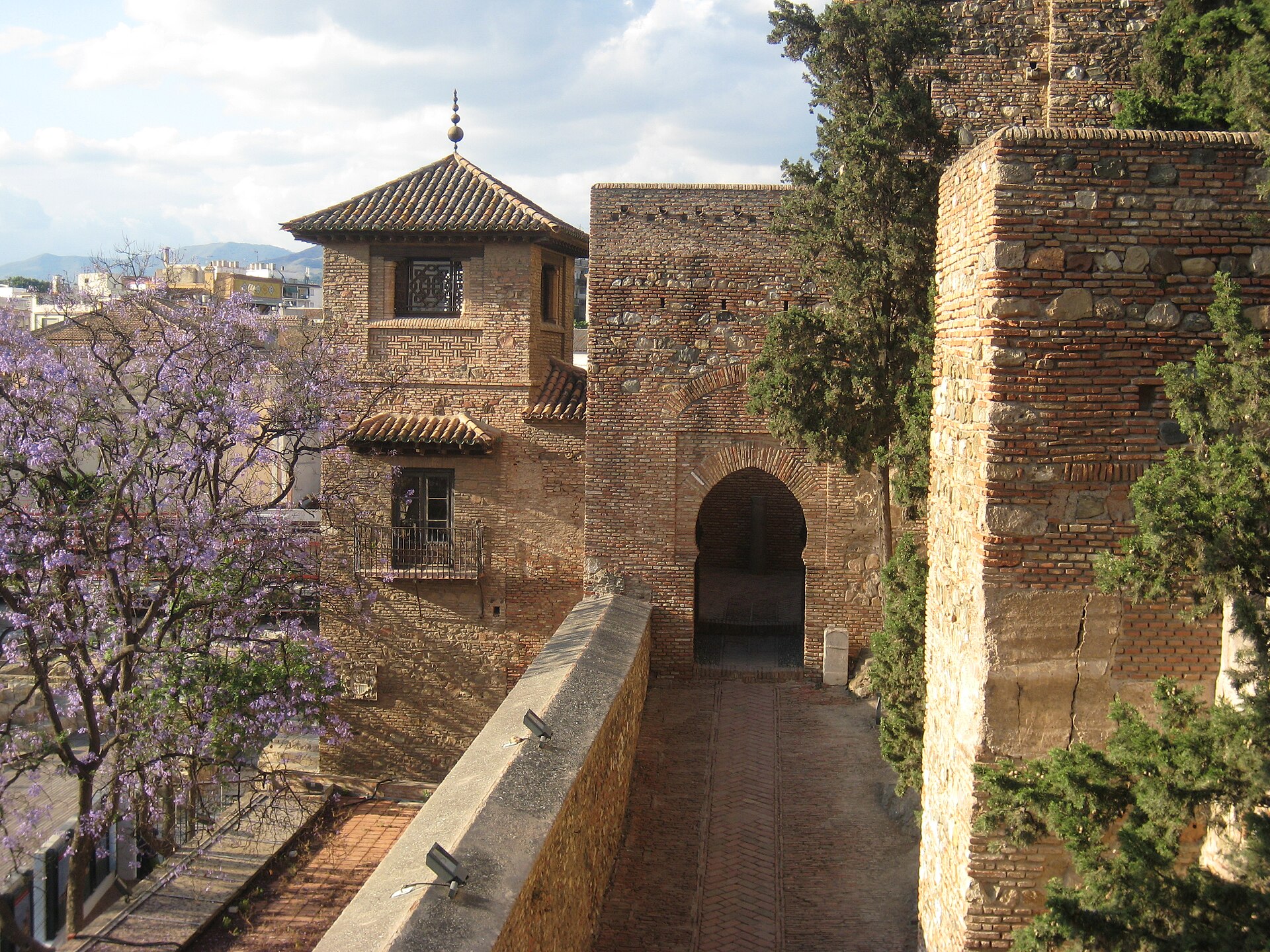
The architecture of the Alcazaba is a conversation between eras and cultures. The Muslim section is defined by its austerity and purpose: thick walls, crenellated towers, and a maze of narrow passages designed to confuse invaders. Inside, remnants of a palace with marble columns and fountains hint at the opulence of the rulers who once lived here. The Christian additions, built after the fall of Al-Andalus, are more imposing—thick walls with arrow slits, spacious halls for garrisons, and a church that stands as a testament to the new order. The Torre del Homenaje, or Tower of Homage, offers one of the best views of the city, the port, and the Mediterranean beyond. Centuries ago, this was where lookouts would signal the approach of enemy ships.
Wandering through the fortress feels like stepping into another time. There are no crowds here, just the cry of gulls and the rustle of wind through the orange groves. The inner courtyards, with their remnants of gardens and water features, evoke a sense of daily life—women washing clothes by the fountains, children playing among the columns, and guards keeping watch from the walls. Even the underground cisterns, which collected rainwater, remain intact. In a region where water was scarce, these were vital for survival.
What makes the Alcazaba so compelling is how seamlessly it blends into the city’s fabric. On one hand, it looms over Almería like a reminder of its glorious past; on the other, it feels very much a part of modern life. Below, the old town hums with activity—narrow streets lined with cafés, bustling squares, and a port where ships still load and unload, just as they have for centuries. In the evening, as the sun dips below the horizon, the fortress walls glow with golden light, and time seems to slow, as if the weight of history has softened its pace.
This isn’t just an open-air museum. The Alcazaba is a place where history isn’t just observed—it’s felt. The roughness of the stones under your fingers, the coolness of the underground passages, the wind sweeping through empty halls—all of it makes the past tangible. You could spend hours exploring every corner, or simply sit on a bench, gazing out at the sea and wondering how many people have walked these same paths over the centuries. The fortress doesn’t shout its stories; it lets you discover them for yourself.
Today, the Alcazaba is one of the best-preserved fortresses from the Muslim era in Spain. Unlike the Alhambra or Seville’s Alcázar, it hasn’t been overrun by tourists, and that’s part of its charm. There are no long lines or crowds, just the chance to experience Al-Andalus as it once was, unfiltered by tourist myths. For those interested in the history of the Iberian Peninsula, the fortress is a revelation—a place where Arab, Christian, and even Roman influences intertwine, as Almería’s roots stretch back to antiquity.
In recent years, the Alcazaba has become a stage for cultural events. During the summer, its courtyards host classical music concerts, theater performances, and open-air film festivals. The sound of violins or guitars echoing against the ancient walls creates a striking contrast—modern art framed by medieval architecture. But even on a quiet day, when there are no performances, the fortress doesn’t disappoint. It carries on at its own unhurried, majestic pace, as befits a place with such a rich and layered past.