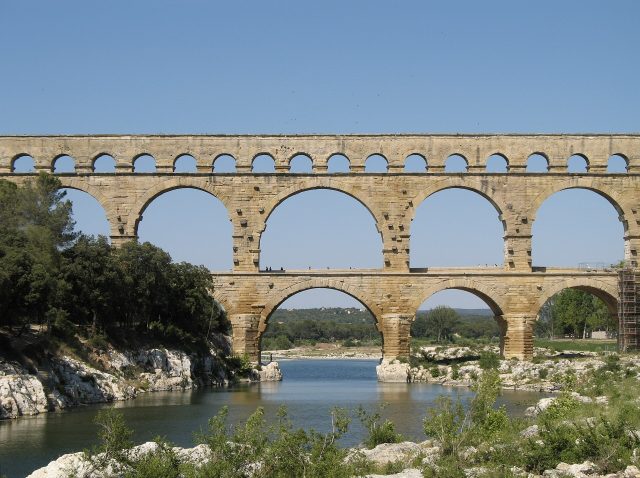
The Pont du Gard is one of those rare places that makes you pause and consider just how much the ancient world was capable of. This Roman aqueduct, spanning the Gardon River, isn’t just an engineering marvel—it was part of a sophisticated water system built in the first century AD to supply the thriving Roman city of Nîmes, some thirty miles away. The aqueduct stretched nearly thirty miles from its source in Uzès, but the Pont du Gard was its most striking segment. Rising nearly 160 feet high and stretching over 900 feet long, it remains the tallest Roman aqueduct bridge ever constructed, a testament to the precision and ambition of its builders.
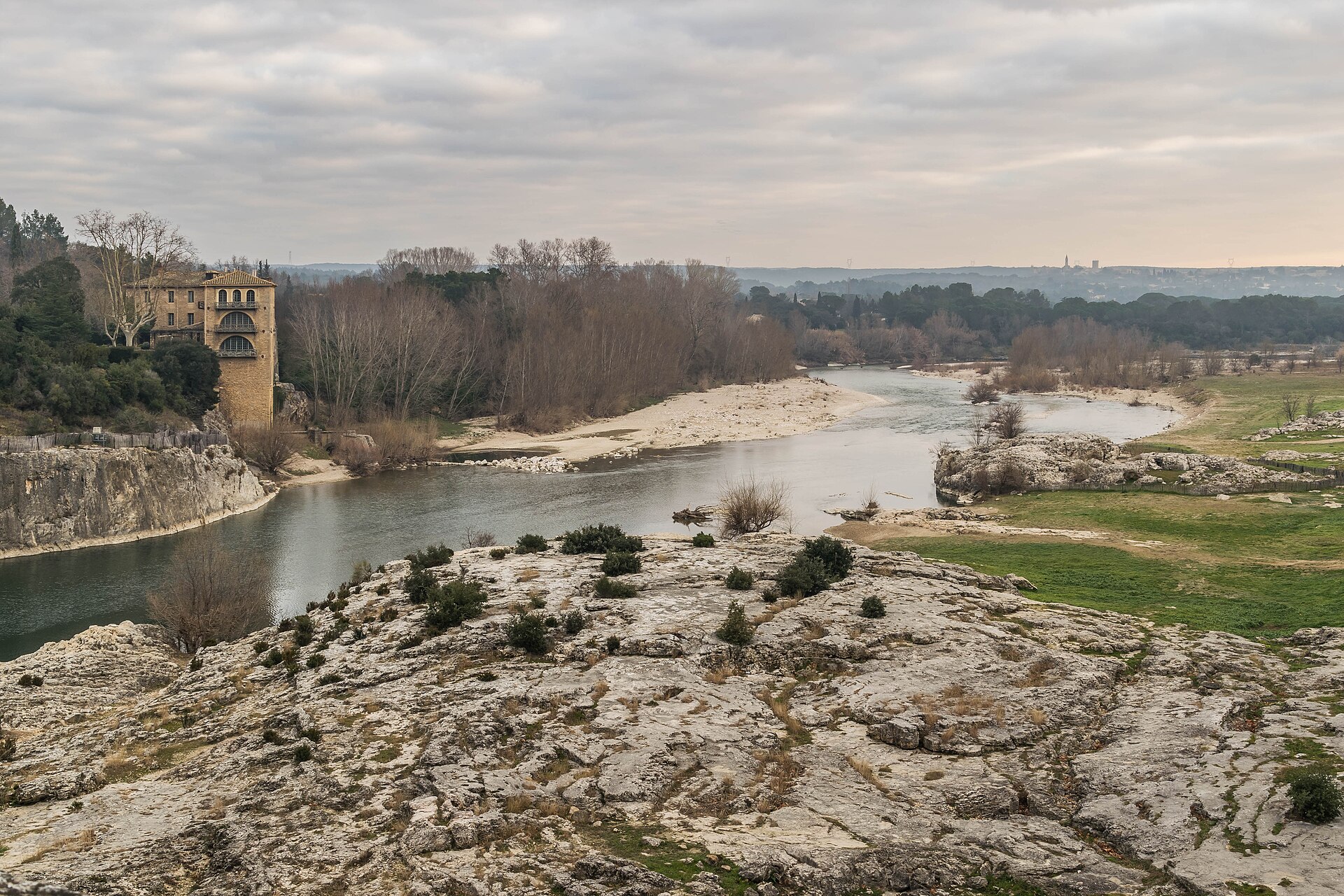
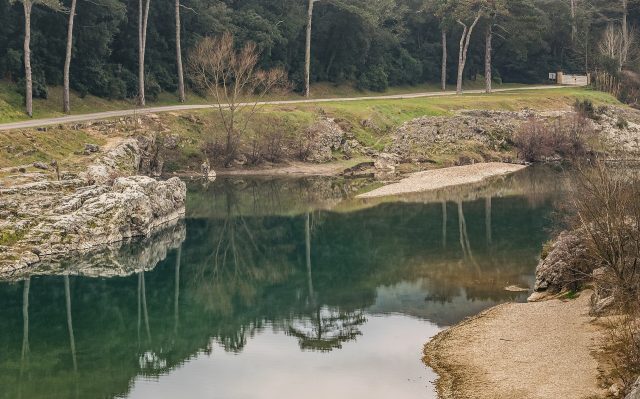
What’s remarkable is how little the structure has changed over the centuries. The three tiers of limestone arches, assembled without mortar, still stand with an almost defiant solidity. The stones were cut and fitted so precisely that even today, the seams between them are barely perceptible. Over time, wind and water have worn the surface, but the bridge retains its original form, as if time itself has hesitated to alter it. Below, the Gardon River flows lazily, its clear waters forming quiet pools where visitors often wade in the summer heat. The surrounding landscape is classic Mediterranean—low-growing oaks, wild rosemary, and the occasional burst of lavender, their scents mingling with the damp earth and river mist.
The Pont du Gard’s story doesn’t end with the Romans. In the Middle Ages, it became a practical crossing for travelers, and by the 18th century, a road was built across its upper tier to accommodate carts and pedestrians. The bridge was reinforced to handle the weight, though the modifications were subtle enough to preserve its original character. Later, as modern infrastructure developed, the aqueduct was no longer needed for transport, and it gradually transformed into the historical monument it is today. Its inclusion on UNESCO’s World Heritage list feels almost inevitable—there’s a quiet grandeur here that transcends its physical presence, a sense of continuity that makes you wonder how many footsteps have echoed across these stones over the centuries.
Visitors can do more than just admire the bridge from a distance. A well-maintained path leads up to the top tier, where the view opens up across the river valley and the rolling hills beyond. On clear days, the horizon seems endless, broken only by the occasional rustle of leaves or the distant murmur of other travelers. Summer brings the most crowds, but even then, it’s easy to find a quiet spot to sit on the warm stone and listen to the river below. In winter, the site is nearly deserted, and the stillness amplifies the sense of stepping into another era, where the past feels almost tangible.
Nearby, a small museum offers a deeper look into the aqueduct’s construction and function. The exhibits go beyond technical details, painting a picture of the people who maintained the system—workers who descended into the channels to clear sediment, engineers who calculated the precise gradient needed to keep the water flowing. Models and interactive displays make the history accessible, even for those who might not consider themselves history buffs. The museum is compact but thoughtfully curated, providing just enough context to appreciate the scale of what the Romans achieved.
The area around the Pont du Gard is worth exploring as well. Hiking trails wind through the hills, following old Roman roads that once connected Nîmes and Uzès. Along the way, you might stumble upon remnants of ancient structures, vineyards heavy with grapes, or groves of gnarled olive trees. Small villages dot the landscape, their stone houses and narrow streets seemingly untouched by time. Locals still practice traditional crafts—winemaking, olive oil pressing, basket weaving—and in some villages, you can stop by tiny shops to sample goat cheese, honey, or a bottle of local wine. The pace here is unhurried, the kind of place where a conversation with a shopkeeper might stretch into an invitation for coffee.
The best time to visit is in the spring or early autumn, when the weather is mild and the landscape is either bursting into bloom or glowing with the warm hues of fall. Summer can be intensely hot, though the shade of the trees and the cool river offer some relief. It’s a popular season for swimming and picnicking along the banks, with families and groups spreading out blankets under the sun. Autumn brings a different kind of beauty, as the valley takes on shades of gold and russet, and the light slants low across the hills. Winter is quieter, with fewer visitors, but the starkness of the season somehow makes the bridge feel even more imposing, its arches standing out against the bare trees and gray sky.
What makes the Pont du Gard special isn’t just its age or its architectural brilliance—it’s the way it connects the past to the present. It’s a reminder that some things endure, not just in stone, but in the ideas they represent. The Romans built this not just to last, but to serve a purpose, and in doing so, they created something that still feels alive. There’s no grand spectacle here, no over-the-top tourism—just a quiet, enduring presence that invites you to slow down and really look. To stand on the bridge is to feel the weight of history, but also the lightness of a moment where time seems to pause.