Évora’s Aqueduto da Água de Prata is one of those places where the past lingers in the most unassuming way. Built in the 16th century, it stretches across hills and valleys, a testament to how engineering challenges were met long before modern technology. Even now, parts of it still carry water, not as a relic but as a working piece of the landscape, where stone arches rise above country roads and vineyards like a quiet reminder of what once was.
Construction began in 1531 under King João III, who wanted to solve Évora’s chronic water shortages. The project was entrusted to Francisco de Arruda, an Italian architect already known for his work in Lisbon and other Portuguese cities. What started as a royal decree turned into a decades-long endeavor, finally completed in 1622. Generations of stonemasons and laborers worked on it, quarrying stone from nearby sites that still bear the marks of their tools. The scale of the effort is easy to overlook today, but the sheer persistence of the undertaking is written into every block.
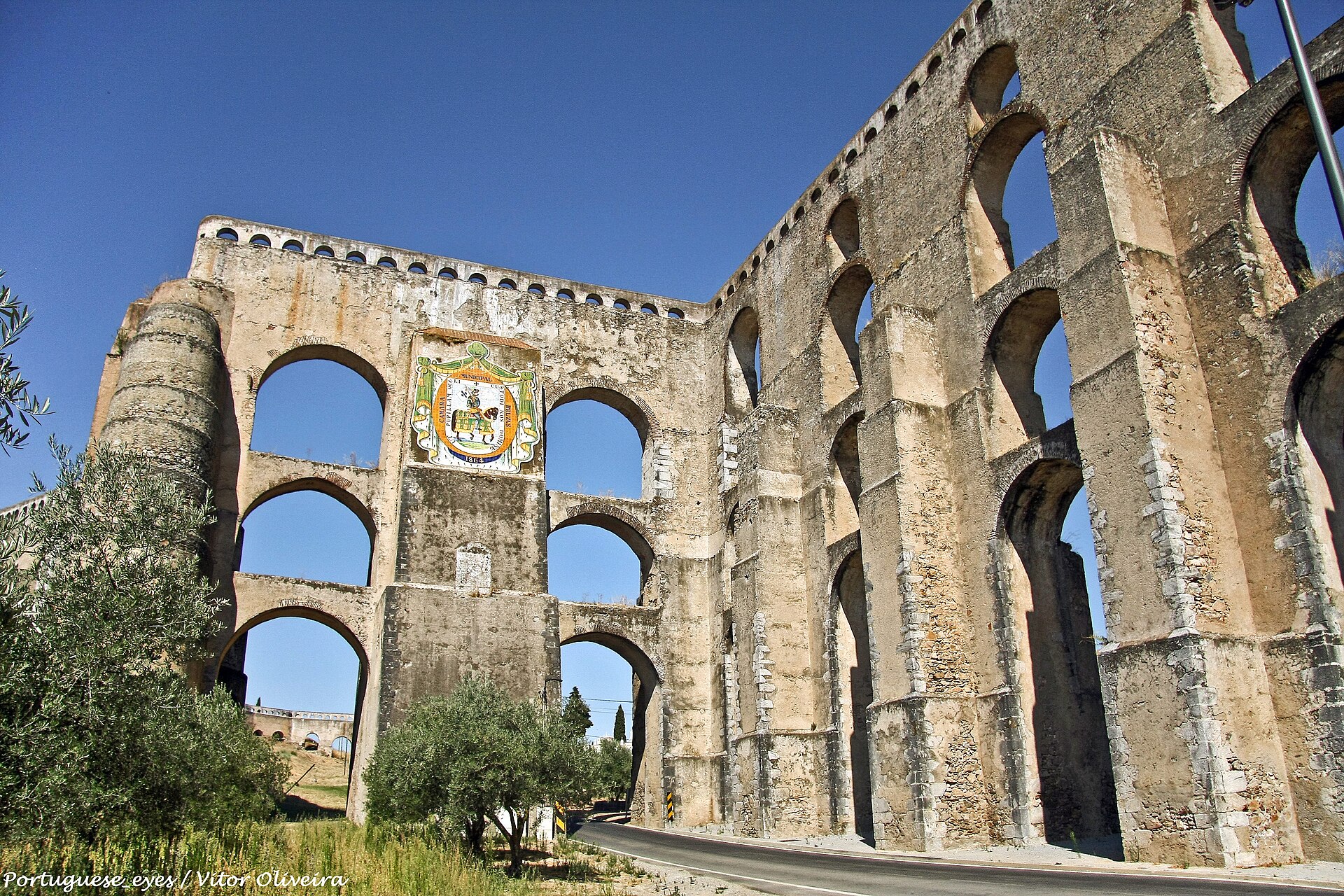
The aqueduct runs nearly nine kilometers, beginning at the springs near Graça do Divor and ending in the heart of Évora. Its design is deceptively simple—tall arches of massive stone give way to lower spans, following the natural contours of the land. In places, it towers twenty meters high, its walls thick enough to withstand centuries of weather and time. Water once flowed along the top, hidden beneath stone slabs, feeding fountains and cisterns throughout the city. The system wasn’t just functional; it shaped the rhythm of daily life, dictating where people gathered and how they moved through the streets.
What’s striking is how the aqueduct wove itself into the fabric of the region. Small settlements sprang up along its route, home to workers who maintained the channels and farmers who tilled the land nearby. Some of these villages still exist, and walking the paths beside the aqueduct feels like stepping into a slower, older world. The landscape shifts as you go—open fields give way to cork oak groves, then to vineyards where grapes for Alentejo wines have been grown for centuries. The air smells of dry earth and wild herbs, and the only sounds are the wind and the occasional rustle of leaves.
Today, the aqueduct is a favorite route for locals and visitors alike, especially where it crosses a valley and the arches stretch into the distance. From here, the views of Évora’s surroundings are expansive, and on clear days, the city’s towers are visible on the horizon. In some spots, old bridges and crossings remain, narrow paths where livestock and carts once passed. There’s no grand entrance or visitor center—just the quiet persistence of stone and the occasional plaque explaining a fragment of history.
Though it no longer serves its original purpose in full, the aqueduct still tells a story about how water shaped medieval cities. Évora has several fountains that once relied on its flow, and a few still work, like the Fonte da Porta de Moura in the city center. Decorated with King João III’s coat of arms, it’s one of those places where you can almost hear the chatter of people who came here centuries ago to fill their jugs. The connection isn’t just symbolic; it’s tangible, embedded in the worn stone and the way the light catches the water.
Time hasn’t been kind to every part of the aqueduct. Some arches were damaged by earthquakes or wars, others eroded by wind and rain. In the 19th century, sections were dismantled to make way for roads, but much of it survived. Now a protected national monument, it undergoes periodic restoration, though the work is careful not to erase the marks of age. The moss growing between the stones, the cracks where plants have taken root—these aren’t flaws but part of its character.
What makes the Aqueduto da Água de Prata special isn’t its grandeur but its quiet resilience. There are no ornate carvings or soaring domes, just the straightforward elegance of a structure built to last. Walking along it, you’re not just seeing a piece of history; you’re following the same paths people have walked for hundreds of years. The land around it hasn’t changed much—rolling hills, olive groves, the occasional farmhouse—and that continuity makes the aqueduct feel less like a monument and more like a living part of the landscape. It’s a place where the past isn’t preserved behind glass but woven into the present, as natural as the vines growing at its base.