
Storozhynets
Ukraine · 8 places
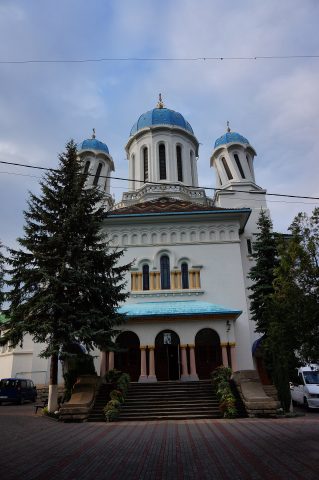
Photo: Сергій Криниця (Haidamac), CC BY-SA 3.0
Stozhyntsi is a quiet town tucked away in the southern reaches of Bukovina, where time moves at its own unhurried pace. The streets here are lined with old linden trees, their branches forming a natural canopy over the cobblestones, while the houses wear their history in the form of intricately carved window frames and faded pastel facades. There’s no rush, no city noise—just the kind of place where you might pause to watch a cat doze in a sunlit doorway or listen to the distant chime of a church bell. The town sits at the foothills of the Carpathians, close enough to the mountains that the air carries the scent of pine and damp earth, but Stozhyntsi itself has its own quiet charm. The locals will tell you the town’s real treasure isn’t in monuments or museums, but in the way people here still know how to find joy in small things—a shared meal, a conversation on a park bench, the first cup of coffee in the morning.
The town’s past is woven into the fabric of Bukovina, a region that has seen empires rise and fall. Founded in the late 14th century as a fortress along a trade route, Stozhyntsi spent centuries as a borderland, shifting between Moldavian rule, the Ottoman Empire, Austria-Hungary, Romania, and later the Soviet Union. Each era left its mark, and you can still see it today if you know where to look. There are houses with the clean lines of Austrian architecture, Orthodox churches with faded frescoes, and the crumbling remains of old fortifications that locals simply call *horodyshche*—the hillfort. The town center is particularly striking, where a handful of historic buildings cluster around a small square: the town hall, a few churches, and a synagogue that speaks to the diversity of those who once lived here. It’s the kind of place where history isn’t confined to plaques or guidebooks but lingers in the way people speak, the food they cook, and the stories they pass down.
Stozhyntsi is also a gateway to the real Bukovina, a place where cultures have blended over centuries. Ukrainians, Romanians, Moldovans, and Roma have all called this region home, and their traditions live on in the town’s crafts, music, and daily life. You can still find potters shaping clay into bowls, weavers creating intricate rugs, and artisans stitching the vibrant embroidery that Bukovina is known for. The local market is a good place to see this in action—handwoven carpets, earthenware jugs, and embroidered shirts are sold alongside fresh produce and homemade preserves. Music is another thread that ties the community together. On weekends, it’s not uncommon to hear live folk tunes drifting from a café or see impromptu dances break out in the square. There’s a sense that here, traditions aren’t preserved for tourists but are simply part of how people live.
The landscape around Stozhyntsi is as much a part of its character as the town itself. Rolling hills and dense forests surround the area, while the Siret River winds its way through the valley, softening the contours of the land. In summer, the countryside is perfect for slow exploration—hiking along forest trails, picnicking by the river, or wandering through the town park, where old statues peek out from beneath the trees. Winter transforms the scene entirely. Snow blankets the rooftops, and the forests become a quiet, frozen world, ideal for cross-country skiing or simply walking through the hush of a snowy afternoon. A few wellness retreats and guesthouses dot the outskirts, offering mineral springs and a chance to unwind far from the noise of bigger cities.
What makes Stozhyntsi special is that it doesn’t try to be anything other than itself. There are no crowds, no tourist traps, no pressure to see and do everything in a hurry. Instead, it offers something rarer: the chance to experience Bukovina as it really is—not the postcard version, but the living, breathing one. The town invites you to slow down, to notice the way the light falls on an old church wall or how the scent of baking bread drifts from a bakery in the morning. It’s the kind of place where history isn’t just something you read about but something you feel in the rhythm of daily life. And sometimes, the quietest corners hold the most meaning.
See & Do
8 places
Places on the map
Marker colour follows the categoryClimate and weather
Detailed weather: Storozhynets- Average temperature
- 10 °C
- Precipitation per year
- 613 mm
- Sunshine hours per day
- 5.8 h
Average air temperature
°C
-1
1
5
11
15
20
21
21
16
10
4
1
Jan
Feb
Mar
Apr
May
Jun
Jul
Aug
Sep
Oct
Nov
Dec


