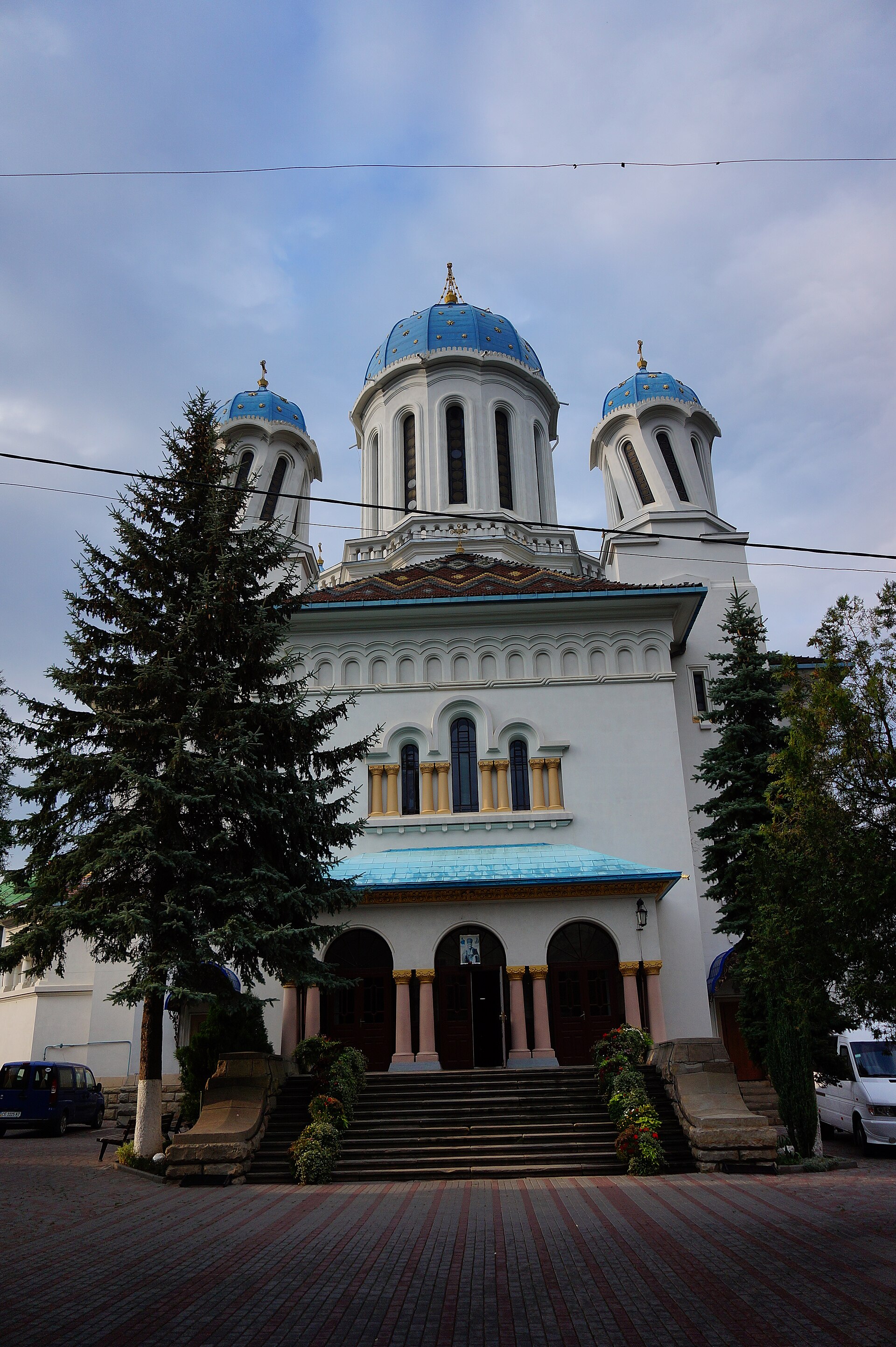
Storozhynets is a quiet town where the past lingers in the corners, and few places hold that sense of timelessness like the Church of St. Nicholas. Perched on a low hill near the center, it doesn’t dominate the skyline, but its modest presence feels natural, as if it has always been part of the landscape. Built in the early 1900s, the church has watched the town change around it—through shifting borders, political upheavals, and the slow rhythm of daily life. Its whitewashed walls and single dome stand among the surrounding greenery, while the bell tower still rises above the rooftops, a reminder of the way things used to be.
The history of the church is tied to Storozhynets, a town shaped by empires and cultures. Over the centuries, this corner of Bukovina has been touched by Austrian, Romanian, and Ukrainian influences, and the church reflects that layered identity. It has served different congregations, yet its purpose has always been the same: a place where people gather to pray and to feel connected. Even during the Soviet era, when religious life was suppressed, the church survived. It wasn’t destroyed, but it wasn’t allowed to be what it once was.
Inside, the church is simple. There’s no gilded opulence—just the warmth of wood and the soft glow of candlelight. The iconostasis, crafted by local hands, bears the marks of time, its details worn smooth by generations of touch. The frescoes on the walls have faded, but their outlines still tell stories. The icon of St. Nicholas, the patron of travelers and those in need, draws the most attention. Locals say people come to it to pray, to seek comfort, or to light a candle in hope or gratitude.
The small park surrounding the church is where time slows. Old trees cast shade over benches, and even on busy days, the space feels apart from the rest of the town. People come here to sit, to talk, or to let the quiet settle over them. On holidays, the church comes alive—the peal of bells, the murmur of voices, the scent of wax and incense. Christmas and Easter are especially moving, when the town gathers, and the church becomes the heart of the community.
Storozhynets moves at its own pace. The Church of St. Nicholas is one of those places where that slower rhythm is most apparent. It isn’t a tourist attraction; there are no crowds, no souvenir stalls, no guided tours. What you’ll find is something harder to define—a sense of stillness, a connection to the past, the feeling that some things endure. The church doesn’t demand attention, but it rewards those who take the time to notice it.
If you find yourself in Storozhynets, step inside if the doors are open. Sit on one of the benches under the trees and listen to the leaves. There’s no grand spectacle—just the quiet persistence of a place that has seen change but remains, in its own way, unchanged. In a world that moves too fast, that’s something rare. The Church of St. Nicholas is a living piece of the past, still here, still waiting.