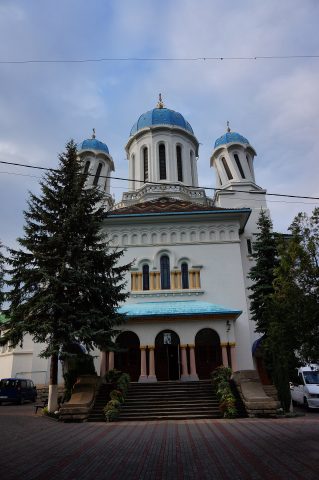
Storozhynets sits in the foothills of the Carpathians. The town has long been a stop between the plains of Bukovina and the mountain villages. Independence Square is where this history is visible. It hosts fairs, official ceremonies, and public gatherings. Over time, it has absorbed the town’s rhythms.
The architecture here is layered. Low, two-story buildings with tall windows stand next to Soviet-era structures. A few modern facades appear among them. At the center, a monument anchors the space—its form changes with the times. Today, locals meet here after work. Elderly men play chess under the trees. Children run between benches. The buildings carry the weight of generations. Their details—weathered signs, faded stucco, wrought-iron balconies—show the past.
Storozhynets was never a major hub. Its importance came from its position as a crossroads. The square was where travelers and merchants paused. In Soviet times, it became the administrative core. Government offices and the post office stood here. Some of those buildings remain, their functions unchanged. The political symbols of the past have faded. For longtime residents, the square is a living archive.
The atmosphere changes with the seasons.
Summer brings activity. Cafés spill onto sidewalks. Shopkeepers call out to passersby. The scent of fresh bread mixes with warm air. Winter makes it quieter. Snow dusts the ground. A decorated fir tree stands at the center. Children skate on a makeshift rink. Spring and autumn bring color. Trees lining the square burst into leaves. The air carries the scent of damp earth and woodsmoke.
Independence Square is an open-air museum. The buildings around it bear marks of different eras—Austro-Hungarian, Romanian, Soviet, and Ukrainian. One structure may have been a travelers’ inn. Another could be a pharmacy from the early 1900s. Today, they look modest. Closer inspection reveals traces of their past: a faded sign in German script, a decorative cornice worn smooth, a balcony railing with an old pattern. The square doesn’t announce its history. It lets you discover it if you look.
The square is the social heart of Storozhynets. The town gathers here for holidays—Victory Day, City Day, festivals. In summer, farmers’ markets sell berries, honey, and handmade crafts. In winter, Christmas carols fill the air. Families come to admire the lights. For many locals, the square holds personal memories—childhood games, first dates, daily routines. It’s where strangers become neighbors.
Storozhynets is called the gateway to the Carpathians. Independence Square is the first place visitors see. It’s a starting point for those heading into the mountains. The town has attracted more tourists in recent years. The square has adapted. It offers a place to rest, grab coffee, or buy a souvenir. For locals, it’s a point of pride. For travelers, it’s an introduction to the region’s warmth.
The square has changed. Some buildings have been restored. New businesses have opened. A few corners still show neglect. Some projects remain unfinished. Yet the square endures. It’s not a place of grand monuments. What it lacks in spectacle, it makes up for in authenticity. The past isn’t preserved in glass cases. It’s woven into everyday life.
Independence Square stands quietly. Storozhynets has weathered wars, political shifts, and economic changes. The square embodies that endurance. It’s a living space. It holds the stories of those who passed through and those who call it home. For visitors, it’s an invitation to look beyond the obvious. To see the layers of history and culture that make this corner of Ukraine what it is.