Mumbai
India · 10 places
Photo: Dr Vikramjit Kakati, CC BY-SA 4.0
Mumbai is a city that never pauses, not for a moment. By day, its streets hum with the relentless energy of commuters crammed into trains, vendors hawking steaming cups of chai and sizzling snacks to passersby, and the constant murmur of a metropolis in motion. By night, the glow of neon signs and the distant crash of waves against the shore keep the rhythm alive. Here, wealth and struggle exist side by side—glass towers rise above narrow alleys where life unfolds in its most unfiltered form. The city thrives on contrasts, where the urgency of business and the slow pulse of the Arabian Sea create a beat all its own.
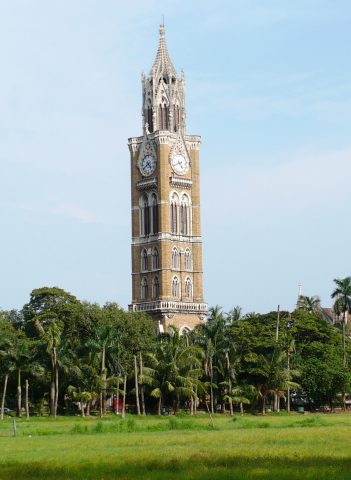
Centuries ago, Mumbai was little more than a scattering of fishing villages on seven islands, their shores connected over time by landfills and bridges. Today, it stands as India’s financial heart, home to stock exchanges, corporate headquarters, and banks that drive the country’s economy. The past lingers in the architecture—British colonial buildings like the grand Chhatrapati Shivaji Terminus, with its Gothic spires, or the stately General Post Office, its arches a reminder of the city’s days as Bombay. History isn’t confined to museums here; it’s etched into the stone of old churches and the labyrinth of streets where every corner tells a story.
No visit to Mumbai is complete without diving into its street food. The air is thick with the scent of spices, frying oil, and the salty tang of the sea. Vendors serve up crispy pakoras, spiced potato patties tucked into soft buns called vada pav, or bhel puri—a tangy, crunchy mix of puffed rice, vegetables, and chutneys, often scooped into a makeshift paper cone. In the evenings, Marine Drive comes alive with families strolling along the promenade, teenagers zipping by on rollerblades, and elderly men hunched over chessboards. The skyline glows in the distance, a glittering backdrop to the city’s endless motion.
Beyond the urban sprawl, the coastline offers a different pace. Juhu Beach, with its dark sands and lively shacks, draws crowds looking for a taste of seaside revelry. Further north, quieter stretches like Uttan and Manori provide a respite—fishing boats bob in the shallows, and the horizon blurs where the ocean meets the sky. In the nearby Sanjay Gandhi National Park, the ancient Kanheri Caves stand as a testament to the region’s layered history. Carved into basalt cliffs by Buddhist monks over two millennia ago, the caves echo with the drip of water and the rustle of leaves, a quiet counterpoint to the city’s frenzy.
Mumbai is loud, chaotic, and unapologetically itself. There’s no single center—each neighborhood pulses with its own identity. Bandra buzzes with trendy cafes and art galleries, while Dadar’s markets and old cinemas hum with the energy of everyday life. To know Mumbai is to let it seep into your senses: the sharp tang of spices at Crawford Market, the symphony of train horns at Victoria Terminus, the way the setting sun turns the skyline into a canvas of pink and gold. It’s a city that lingers in the memory, not just for what it shows you, but for how it makes you feel—alive, overwhelmed, and utterly captivated.
See & Do
10 places


Places on the map
Marker colour follows the categoryClimate and weather
Detailed weather: Mumbai- Average temperature
- 28 °C
- Precipitation per year
- 3207 mm
Average air temperature
°C
26
27
29
30
31
30
28
28
28
29
29
27
Jan
Feb
Mar
Apr
May
Jun
Jul
Aug
Sep
Oct
Nov
Dec