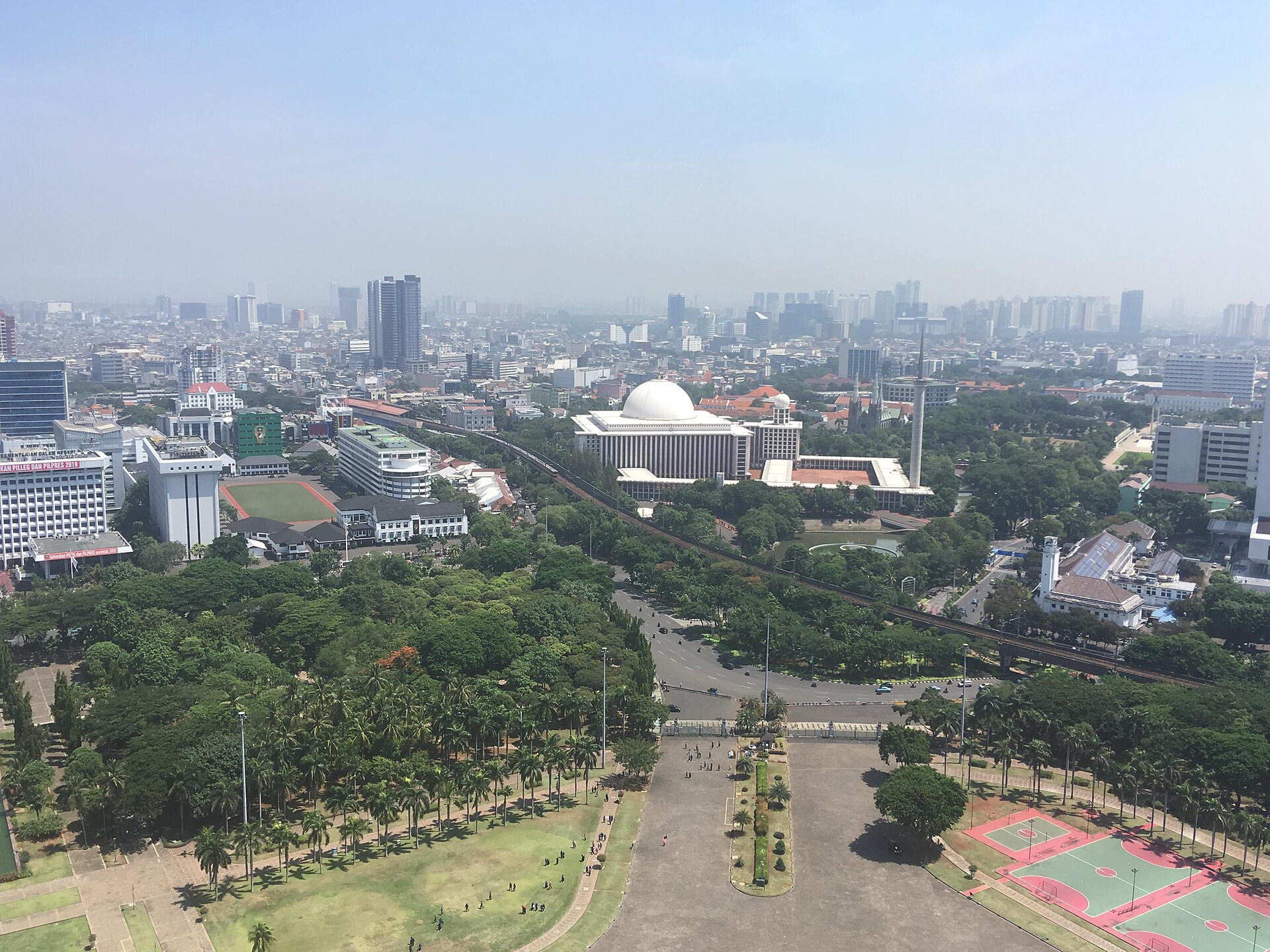
Jakarta’s Istiqlal Mosque stands as a quiet giant in the heart of Indonesia’s bustling capital, a place where the city’s relentless energy seems to pause for a moment. Built to commemorate the nation’s independence, it is the largest mosque in Southeast Asia, a title that carries weight not just in scale but in symbolism. The name Istiqlal means independence in Arabic, a nod to the country’s hard-won sovereignty, and the mosque itself feels like a bridge between Indonesia’s past and its modern identity. Its vast prayer hall, capable of accommodating over a hundred thousand worshippers, is a rare space in Jakarta where the usual urban chaos gives way to something more measured—whether you’re there for prayer, reflection, or simply to take in the architecture.
The story of Istiqlal begins in the 1950s, when Indonesia’s first president, Sukarno, envisioned a grand mosque that would reflect the nation’s Muslim majority while embracing its pluralistic spirit. The design was chosen through an open competition, and the winning proposal came from Friedrich Silaban, a Christian architect from North Sumatra. This detail alone speaks to the mosque’s broader significance—it was never meant to be just a place of worship for one community, but a symbol of national unity. Construction took nearly two decades, with the mosque finally opening its doors in 1978. The delays were partly due to political upheavals, including the transition from Sukarno’s rule to Suharto’s New Order, but the finished structure emerged as a testament to perseverance.
From the outside, Istiqlal’s design is striking in its simplicity. The mosque’s most recognizable feature is its massive dome, supported by twelve columns that represent the birthday of the Prophet Muhammad. The number twelve also echoes Indonesia’s founding principles, the Pancasila, which emphasize unity in diversity. The dome itself is clad in stainless steel, giving it a sleek, modern appearance that contrasts with the more ornate styles of older mosques. Below it, the main prayer hall stretches out in a vast, uncluttered space, its high ceilings and minimalist decor creating an atmosphere of openness. The lack of intricate carvings or colorful tiles might surprise visitors expecting traditional Islamic ornamentation, but this austerity was intentional—a reflection of Sukarno’s vision of a mosque that was both grand and accessible.
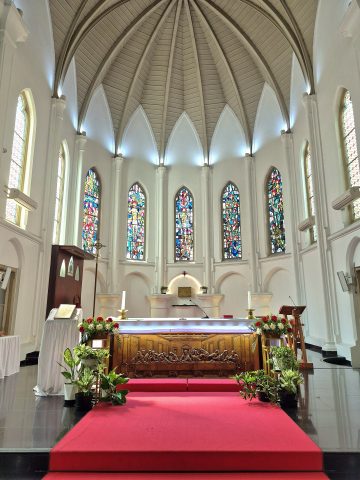
One of the most interesting aspects of Istiqlal is how it interacts with its surroundings. The mosque sits directly across from Jakarta’s Catholic Cathedral, a juxtaposition that feels deliberate. The two buildings, one a symbol of Islam and the other of Christianity, stand side by side in the city center, separated only by a small park. This proximity isn’t accidental; it was part of Sukarno’s broader effort to foster interfaith harmony in a country where religion plays a central role in public life. On certain occasions, like Christmas or Eid, the two communities come together in the park between the buildings, a quiet reminder of Indonesia’s long tradition of religious coexistence. For visitors, this contrast is one of Jakarta’s most compelling sights—not just for its architectural beauty, but for what it represents.
Inside, the mosque’s scale becomes even more apparent. The main prayer hall is a single, vast expanse, with rows of red carpet stretching toward the mihrab, the niche indicating the direction of Mecca. The absence of columns in the central space is a feat of engineering, made possible by the dome’s design. Natural light filters in through tall, narrow windows, casting soft shadows that shift with the time of day. The acoustics are surprisingly intimate; even when the mosque is full, the sound carries in a way that feels personal rather than overwhelming. On Fridays, the weekly congregational prayers draw massive crowds, and the surrounding streets buzz with activity as worshippers arrive from all corners of the city. For those who visit outside of prayer times, the mosque is often quieter, offering a chance to appreciate its details—the geometric patterns on the walls, the calligraphy adorning the dome, or the way the light plays across the marble floors.
Beyond its religious function, Istiqlal has become a cultural landmark. It hosts events that go beyond worship, from interfaith dialogues to exhibitions on Islamic art and history. The mosque’s library holds a collection of texts on religion, philosophy, and Indonesian culture, open to anyone with an interest in learning. During Ramadan, the atmosphere shifts again, with nightly taraweeh prayers drawing thousands and the surrounding area transforming into a lively hub of food stalls and community gatherings. Even for those who don’t observe the fast, the month brings a different rhythm to the mosque, one that blends devotion with a sense of shared experience.
Visitors to Istiqlal are often struck by how unassuming it feels despite its size. There’s no grand entrance fee or elaborate security process—just a request to dress modestly and remove shoes before entering. The mosque’s staff are accustomed to tourists, offering polite guidance without fuss. For many, the most memorable part of the visit isn’t the architecture itself, but the way the space feels alive with the daily rhythms of Jakarta. The call to prayer echoes across the city five times a day, a sound that has become part of the capital’s soundtrack. Whether you arrive during a quiet morning or the height of Friday prayers, Istiqlal offers a moment of stillness in a city that rarely slows down.
In a country where religion and national identity are deeply intertwined, Istiqlal occupies a unique place. It’s not just a mosque, but a symbol of Indonesia’s aspirations—its struggles, its diversity, and its hopes for the future. The fact that it was designed by a Christian architect, built by a secular government, and now serves a nation of over 270 million people speaks to the complexities of Indonesian society. For locals, it’s a place of worship and community; for visitors, it’s a window into the country’s soul. In a city as chaotic and fast-paced as Jakarta, Istiqlal stands as a reminder that some things—faith, unity, history—are worth building to last.