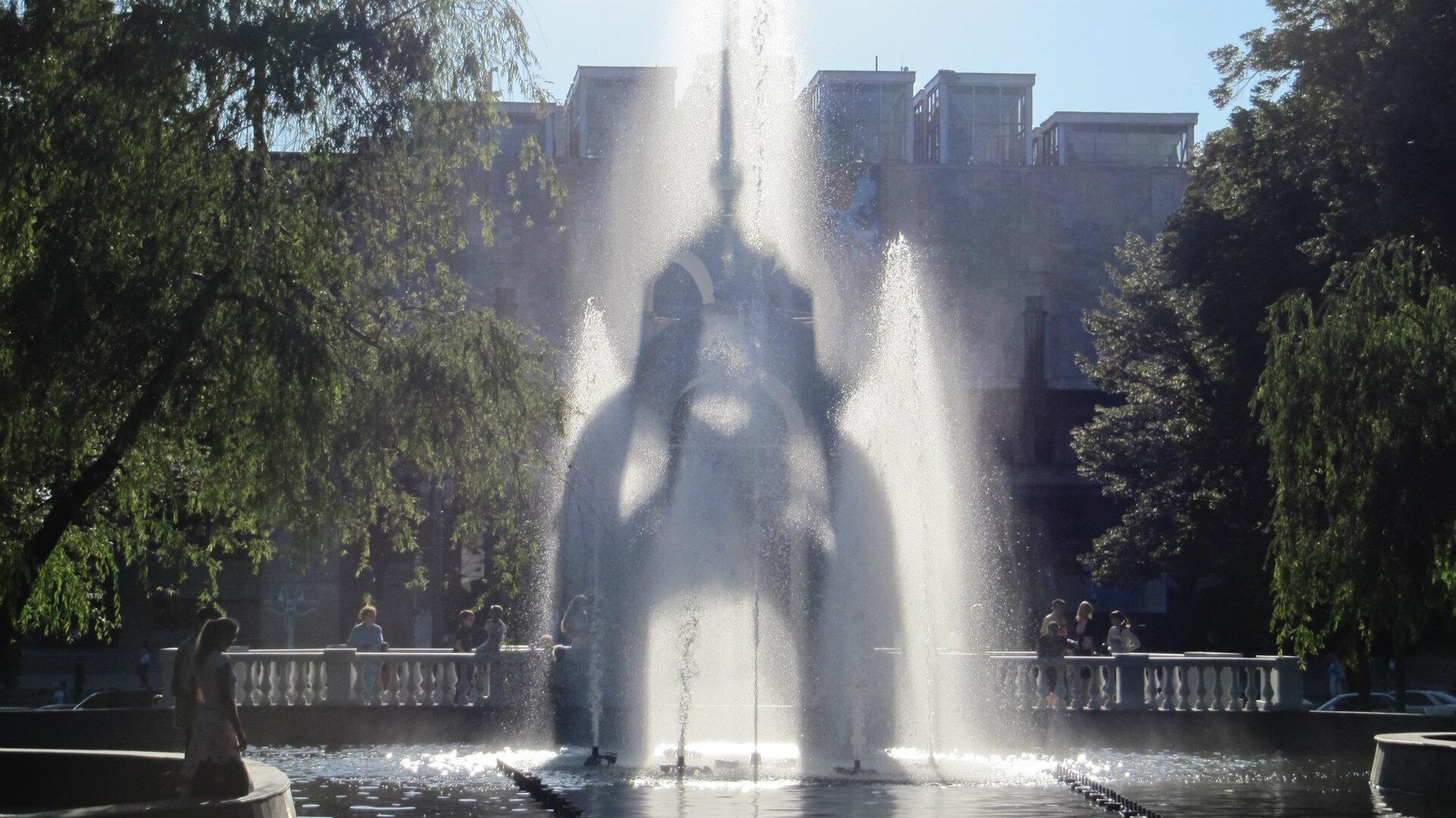
Kharkiv’s Mirror Stream is one of those places that feels like it has always been here, though it only appeared in the middle of the 20th century. Tucked away in a quiet corner of Shevchenko Park, this modest yet elegant fountain has become a symbol of the city, a spot where locals and visitors alike pause to catch their breath. It’s not grand like some of Europe’s famous fountains, nor does it boast centuries of history, but there’s something undeniably charming about the way the water arcs gracefully over the basin, reflecting the trees and sky above. For many in Kharkiv, it’s simply part of the rhythm of daily life—a place to meet, to rest, or to steal a moment of quiet in the middle of a bustling city.
The fountain was built in 1947, a time when Kharkiv was still recovering from the devastation of World War II. The city had been heavily damaged during the war, and the construction of the Mirror Stream was part of a broader effort to restore public spaces and bring a sense of normalcy back to urban life. The design is straightforward but effective: a semicircular stone wall curves gently around a shallow pool, with water cascading down its surface in a thin, even sheet. The effect is almost like a curtain of glass, hence the name. At night, when the lights come on, the water takes on a soft glow, turning the fountain into a small but striking feature of the park.
What makes the Mirror Stream special isn’t just its design, but the role it plays in the life of Kharkiv. The fountain sits in Shevchenko Park, one of the city’s oldest and most beloved green spaces, named after the Ukrainian poet Taras Shevchenko. The park itself dates back to the 19th century and has long been a favorite spot for walks, picnics, and gatherings. Over the years, the Mirror Stream has become a natural focal point within the park, a place where people naturally gravitate. In the warmer months, you’ll often see children playing near the water, couples strolling along the paths, or elderly locals sitting on the benches, watching the world go by.
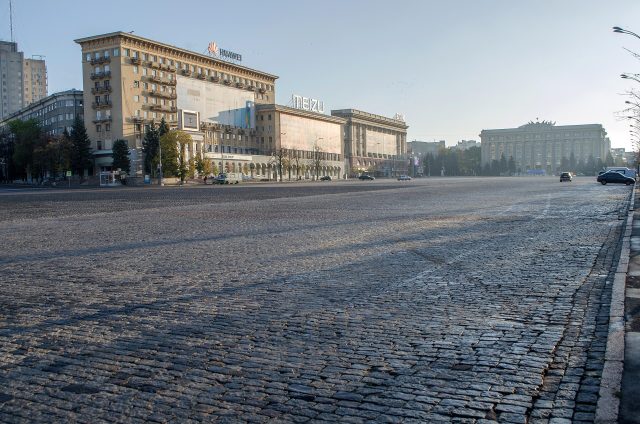
The fountain’s location is no accident. Shevchenko Park is situated in the heart of Kharkiv, close to some of the city’s most important landmarks, including Freedom Square and the Kharkiv State Academic Opera and Ballet Theatre. This central position means the Mirror Stream is easily accessible, yet it retains a sense of seclusion. The park’s mature trees and winding paths create a buffer from the noise of the city, making it feel like a small oasis. Even on busy days, the area around the fountain has a relaxed, unhurried atmosphere, as if time moves just a little slower here.
Architecturally, the Mirror Stream is a fine example of mid-20th-century Soviet design, though it’s far from the grandiose style often associated with that era. The simplicity of the fountain’s form—clean lines, minimal ornamentation—reflects a practical approach to urban planning, one that prioritized functionality and accessibility. The stone used in its construction is local, blending seamlessly with the natural surroundings. Over the decades, the fountain has weathered well, its surface softened by time and the elements. It’s not a monument in the traditional sense, but it has become a quiet landmark, a piece of the city’s identity that feels both permanent and unassuming.
For visitors, the Mirror Stream offers a glimpse into the everyday life of Kharkiv. It’s not the kind of place that demands attention or insists on being photographed, though many people do pause to take a picture. Instead, it invites you to slow down and observe. On a typical summer evening, you might see a group of teenagers laughing as they try to catch the falling water, or an older man feeding pigeons by the edge of the pool. In winter, when the fountain is turned off, the stone wall becomes a backdrop for snow, and the park takes on a different kind of beauty. The Mirror Stream doesn’t need to be spectacular to be meaningful—it’s enough that it exists, a small but enduring part of the city’s fabric.
Kharkiv itself is a city of contrasts, where Soviet-era architecture stands alongside modern developments, and where the past and present coexist in unexpected ways. The Mirror Stream fits neatly into this narrative. It’s not a relic of a distant era, nor is it a cutting-edge attraction. It’s simply a place that has found its place in the city’s story, a quiet witness to the changes that have shaped Kharkiv over the decades. For those who take the time to visit, it offers a moment of reflection—not just in the literal sense of the water’s surface, but in the way it connects the past with the present.
If you find yourself in Kharkiv, the Mirror Stream is worth seeking out, not because it’s a must-see attraction in the traditional sense, but because it offers something more subtle: a sense of place. It’s a reminder that sometimes the most memorable spots in a city aren’t the ones that make it into guidebooks, but the ones that feel like they belong to the people who live there. Whether you visit in the golden light of a summer evening or on a crisp winter morning, the fountain has a way of making you feel like you’ve stumbled upon a small secret, one that Kharkiv has been keeping for decades.