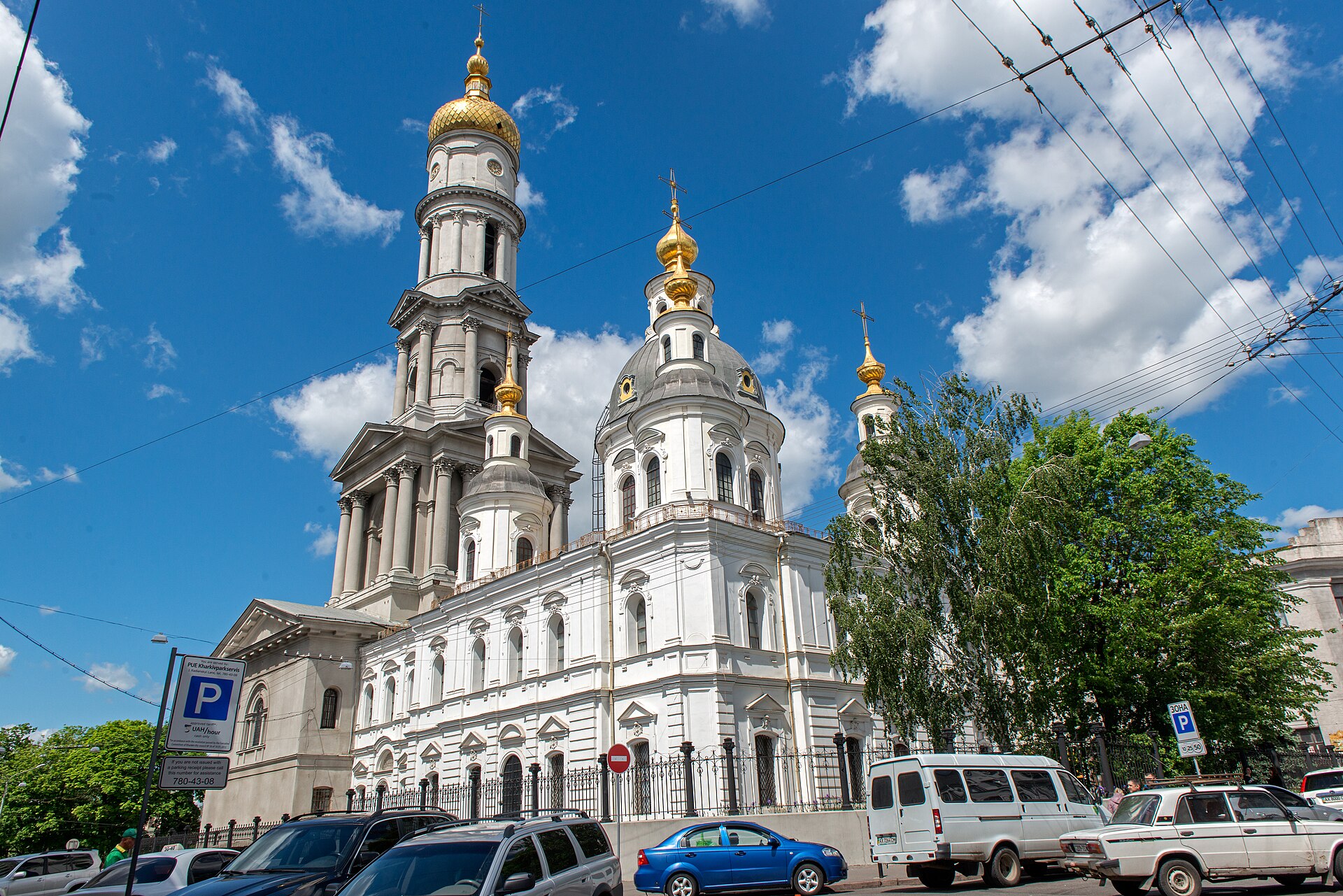
Kharkiv’s Uspensky Cathedral stands as one of the city’s most enduring landmarks, a quiet witness to centuries of change. Built in the late 18th century, it was conceived as a symbol of both spiritual devotion and imperial ambition, reflecting the architectural tastes of the time. The cathedral’s design blends elements of Ukrainian Baroque with classical influences, creating a structure that feels both grand and approachable. Its tall bell tower, once the tallest in the city, was meant to dominate the skyline, a visual reminder of the Orthodox Church’s presence in a region shaped by shifting borders and cultural currents.
The history of the cathedral is closely tied to Kharkiv’s own development. When construction began in 1771, the city was still a modest provincial center, far from the political and economic powerhouses of the Russian Empire. Yet even then, it was growing, and the cathedral was intended to serve not just as a place of worship but as a focal point for the community. Over the decades, it became a gathering place for generations of residents, hosting everything from religious ceremonies to public events. The building itself has seen its share of upheaval—surviving wars, revolutions, and periods of neglect—yet it remains a constant in a city that has reinvented itself many times over.
Inside, the cathedral retains much of its original character. The iconostasis, a masterpiece of woodcarving, draws the eye with its intricate details and gilded accents. The icons themselves, some dating back to the 18th and 19th centuries, offer a glimpse into the religious art of the period, blending traditional Orthodox styles with local interpretations. The space is dimly lit, the air thick with the scent of incense and candle wax, creating an atmosphere that feels both solemn and intimate. Even those who don’t consider themselves religious may find something compelling in the way the light filters through the high windows, casting long shadows across the worn stone floors.
The cathedral’s role in Kharkiv’s cultural life has evolved over time. In the 19th century, it was a center of intellectual and artistic activity, with local writers, musicians, and scholars often gathering in its shadow. The surrounding square, now a busy urban space, was once a place where merchants set up stalls, pilgrims rested, and townspeople exchanged news. During the Soviet era, the cathedral faced restrictions, like many religious sites, but it was never fully abandoned. Instead, it became a symbol of resilience, a place where faith persisted even when official policies discouraged it. Today, it stands as a working church, a historical monument, and a reminder of the layers of history that make up Kharkiv.
For visitors, the cathedral offers more than just a glimpse into the past. It’s a place where the city’s present and history intersect. On any given day, you might see elderly parishioners lighting candles, tourists snapping photos of the frescoes, or students sitting on the steps outside, chatting between classes. The surrounding area has changed dramatically over the years—modern buildings now crowd the old streets, and the sounds of traffic often drown out the tolling of the bells—but the cathedral itself remains a quiet anchor. It’s not just a relic to be observed from a distance; it’s a living part of Kharkiv’s daily rhythm.
The architecture of the Uspensky Cathedral is worth lingering over. The exterior, with its pale yellow walls and white accents, has a certain elegance, though the years have softened its edges. The bell tower, though no longer the tallest in the city, still commands attention, its tiers narrowing as they rise toward the sky. The main dome, crowned with a cross, is visible from several blocks away, a familiar sight to anyone who has spent time in the city center. Inside, the proportions of the space create a sense of height and openness, despite the ornate decorations that cover nearly every surface. The acoustics are remarkable—even a whispered prayer seems to carry through the nave, adding to the sense of reverence.
Kharkiv itself is a city of contrasts, and the cathedral embodies that duality. It’s a place where the sacred and the secular coexist, where history is not just preserved but actively lived. On weekends, the square in front of the cathedral often fills with people—some heading to services, others simply passing through on their way to nearby cafes or shops. The building has seen empires rise and fall, wars come and go, yet it endures, a testament to the persistence of faith and community. For those who take the time to step inside, it offers a moment of stillness in a city that is always moving forward.
There’s something deeply human about the Uspensky Cathedral. It’s not just a monument to be admired from afar; it’s a place where people have gathered for centuries, seeking solace, connection, or simply a moment of quiet. The worn steps, the flickering candles, the faint scent of old wood and incense—all of it speaks to the countless lives that have passed through its doors. In a city that has seen so much change, the cathedral remains a constant, a reminder that some things endure even as the world around them shifts. Whether you come for the history, the architecture, or the atmosphere, it’s a place that lingers in the memory long after you’ve left.