Los Andes Railway Station stands on the edge of town, where the Andes begin their slow rise into the sky and the air carries the scent of dry earth and eucalyptus. Unlike the glass-and-steel transport hubs of today, this building feels untouched by time. Its heavy wooden beams, tall arched windows, and the soft light that spills across the spacious hall all speak of a different era. Once a vital link in Chile’s railway network, connecting the capital to the northern provinces and Pacific ports, the station now feels more like an open-air museum—though the occasional whistle of a passing train still breaks the silence.
The station was built in the early 20th century, when Chile’s railways were expanding rapidly. Those were years of ambitious infrastructure projects, and Los Andes became a key stop on the Transandine Railway, a line that connected Chile to Argentina. The route wasn’t just an engineering marvel for its time; it was a lifeline for trade, carrying copper, wine, fruit, and other goods across the mountains. The station in Los Andes served as a midpoint where trains paused for maintenance and locomotives were swapped. Its architecture reflects the spirit of the age—clean lines, symmetry, and meticulous detailing, all hallmarks of public buildings from that period.
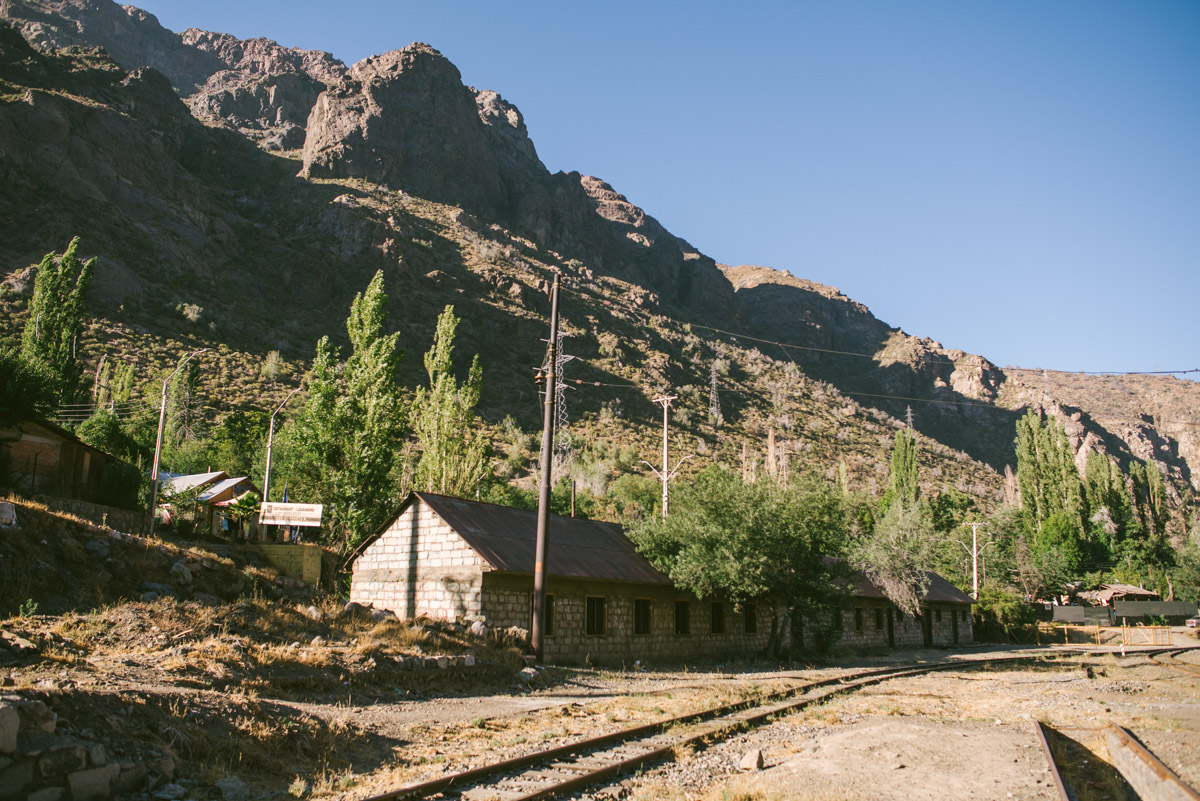
The building itself blends neoclassical design with local touches. The facade features pilasters and cornices, while the roof is covered in the same red tiles found on many Chilean buildings. Inside, the original wooden benches remain, along with high ceilings and an old clock that once marked the departures of long-gone trains. Outside, a small park surrounds the station, where locals sit in the shade of trees. Nearby, overgrown tracks and a few retired carriages—some repurposed as cafes or workshops—hint at the station’s former life.
Today, the station no longer plays the central role it once did. The Transandine Railway closed long ago, and passenger trains now pass through Los Andes only rarely. Yet the building hasn’t been abandoned. It’s kept in good condition, and occasionally hosts cultural events, exhibitions, or concerts. Local authorities have made an effort to preserve it as a historical landmark, and the care shows in the details—old photographs on the walls, plaques explaining the architecture, and a general sense that this place still matters.
For travelers, the station offers a quiet glimpse into Chile’s past. There are no crowds, no tourist traps, no commercial hustle—just the slow rhythm of a small town where time moves differently. You can sit on a bench, watch the occasional passerby, or walk along the tracks, imagining the bustle that once filled this space. The station serves as a reminder that railways weren’t just about movement; they were symbols of progress, stitching the country together.
Los Andes itself is an unassuming town with a distinct character. Nestled in the Aconcagua Valley, surrounded by mountains, it’s known for its mild climate and fertile land. Vineyards and orchards stretch across the countryside, while the town itself retains many colonial-era buildings. The station isn’t just an architectural relic here—it’s part of the town’s identity. Locals treat it with respect, as a witness to the region’s history.
If you find yourself in Los Andes, the station is worth visiting for more than just photos. It’s a place where you can feel the pulse of Chilean provincial life, far from tourist trails. There are no guides, no souvenir shops, no forced hospitality—just authenticity, something increasingly rare in the modern world. You can step inside, sit on a wooden bench, and imagine the scene a century ago: passengers waiting for trains to Santiago or Valparaíso, the station alive with movement. In moments like these, history stops being abstract and becomes something you can almost touch.
The station in Los Andes is more than just a building. It’s a reminder of how cities and countries change. Once a hub of activity, a place of arrivals and departures, it has become a quiet corner where time seems to stand still. Yet even now, it tells a story—of the people who worked here, the trains that rolled away into the distance, and a country that grew alongside its railways. For those who know how to listen, places like this say more than any guidebook ever could.