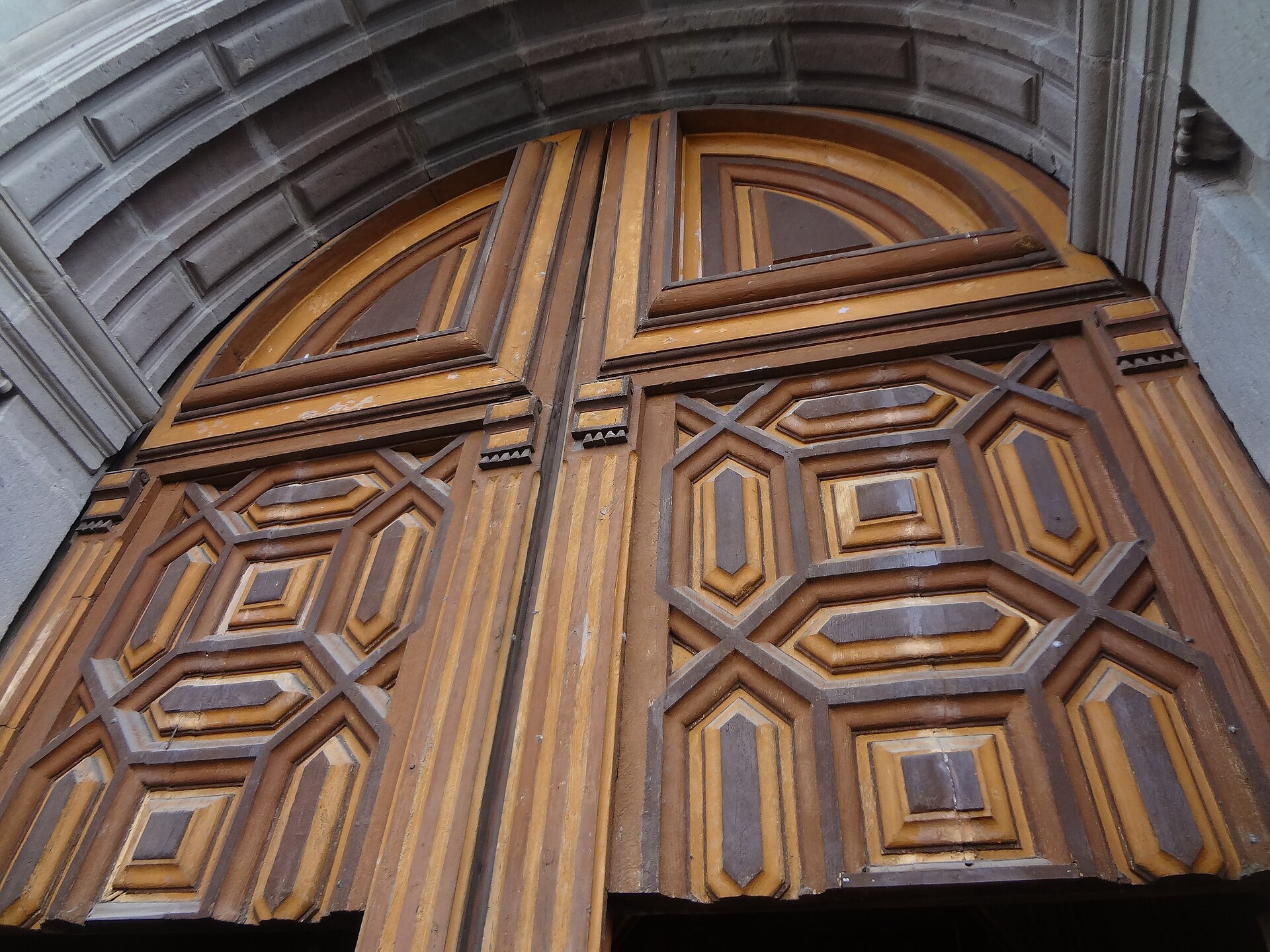
San Francisco Church in Los Andes is the kind of place that doesn’t demand attention but quietly lingers in your memory long after you’ve left. Tucked away on one of the town’s central streets, it blends into the low-slung buildings with their terracotta roofs, easily overlooked if you’re not looking for it. Yet once you pause and really look, the details begin to reveal themselves—the heavy wooden doors worn smooth by time, the faded carvings on the facade that once must have been vivid, now peeking through layers of chipped paint. Inside, the space opens up into a high-ceilinged hall where light filters through stained glass, casting muted colors across the walls.
The church’s story is woven into the fabric of Los Andes itself. The town emerged in the late 19th century as a key transit point between Chile and Argentina, and the church was one of its first permanent structures. Built in the early 1900s, when Los Andes was still transitioning from a small settlement into a proper town, it served as more than just a place of worship. Back then, it was a gathering spot where people exchanged news, celebrated festivals, and marked the rhythms of daily life. Today, as the town has grown and modernized, the church remains one of the few tangible links to that earlier era.
Architecturally, San Francisco Church is a typical example of Chilean religious buildings from its time. It’s not a grand Gothic cathedral with soaring spires and intricate stained glass, but a sturdy, unassuming structure built to last. The facade follows neoclassical lines, with symmetrical columns and a triangular pediment that gives it a sense of quiet dignity. Inside, the simplicity continues—wooden pews, an altar dedicated to Saint Francis, and exposed beams overhead that once supported the roof and now feel like part of the building’s history. The walls bear the marks of time, with cracks and peeling paint, but these imperfections only add to its character.
Los Andes is the kind of town most travelers pass through on their way to more famous destinations like Valparaíso or Santiago. But if you take the time to linger, you’ll find a place that moves at its own unhurried pace, a little sleepy but full of quiet life. The church is very much a part of that rhythm. In the mornings, parishioners come to pray, while in the evenings, locals gather on the square out front, sitting on benches to chat or simply watch the world go by. On feast days, the church comes alive with hymns and the scent of incense, filling the space with a sense of community.
For the town, the church is more than just a religious site—it’s a keeper of memories. Like many Chilean towns, Los Andes has seen its share of history unfold within these walls, from celebrations of victory to moments of collective grief. Even as the town has changed over the decades, the church remains a constant, a bridge between past and present. For some, it’s where they were baptized or married; for others, it’s simply a familiar landmark, a quiet presence in the middle of town.
A visit inside takes no more than half an hour, but that’s enough to absorb the atmosphere. There are no crowds, no rush—just the hush of the space and the soft glow of stained glass. If you’re lucky, you might hear someone playing the organ, its notes filling the hall with a sense of life. Occasionally, the church hosts concerts or exhibitions, but more often than not, it stands as it has for over a century, waiting for those who choose to step inside.
Los Andes isn’t a tourist hotspot, and San Francisco Church isn’t the kind of place that makes it into guidebooks. That’s precisely what makes it special. It doesn’t try to impress or be anything other than what it is—a modest, aging church in a small Chilean town, still carrying on in its own quiet way. If you ever find yourself in this part of the country, it’s worth stopping by, even just for a few minutes. Not for anything grand, but for the chance to feel the unchanging spirit of a place that has stood still while the world around it has moved on.