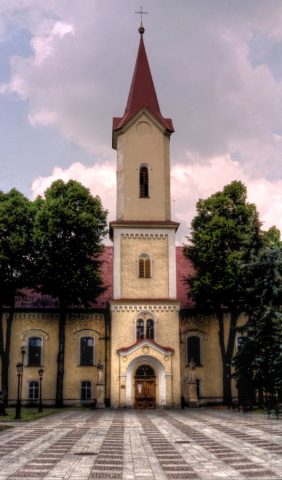
Revuca is one of those quiet Slovak towns that rarely makes it onto tourist itineraries. There are no crowds, no neon signs, no famous landmarks drawing in visitors by the thousands. Yet sometimes, it’s in places like this—unassuming, overlooked—that you find something truly special. The Railway Museum here is one such discovery, tucked away in an old locomotive depot. It doesn’t feel like a typical museum with polished displays and touchscreens. Instead, everything is real, worn by time, and all the more meaningful for it.
The museum’s story is woven into the broader history of railways in the Austro-Hungarian Empire. By the late 19th century, Revuca had become a key junction, linking Hungary’s industrial centers with Slovakia’s mining regions. The local depot was a vital hub where steam locomotives were serviced, hauling coal, ore, and other goods across the region. Even after the empire’s collapse and the formation of Czechoslovakia, the railway remained a lifeline, especially during the industrial boom of the early 20th century. Hundreds of workers kept the depot running, their labor inseparable from the town’s identity.
Today, the museum occupies the original depot grounds, preserved almost exactly as they were. The main building is a long brick structure with towering doors, once used for locomotives to pass through. Inside, the vast workshops still smell of oil and coal, their heavy metal frameworks standing as silent witnesses to decades of activity. There are no glass cases here—trains and machinery sit on tracks or in open sheds, as if ready to spring back to life. The collection includes steam engines from different eras, freight cars, handcars, and even old railway cranes. Some look meticulously restored, while others bear the marks of time, but each tells a story of an era now past.
The steam locomotives are the stars of the show. The oldest dates back to the early 1900s—a hulking machine with massive wheels and copper fittings that still gleam beneath the dust. Nearby stands a locomotive from the First Czechoslovak Republic, and further along, Soviet-era engines that operated here until the 1970s. Each one reflects a different chapter in railway history: the evolution of technology, the growth of industry, the expansion of routes. But what lingers most isn’t just the engineering—it’s the sense of connection to the past. Standing next to a locomotive that once hauled trains through the Carpathians, you can almost hear its whistle echoing across the valleys.
Beyond the trains, the museum offers glimpses into the daily lives of railway workers. A vintage service car sits in one corner, its interior preserved from the mid-20th century: wooden benches, cast-iron stoves, simple lockers for tools. Nearby, you’ll find railway lanterns, signal flags, uniforms, and old timetables. Each item is a fragment of the routines that kept the railway running. The walls are lined with photographs—crews posing proudly, repair work in progress, depot celebrations. The faces are serious, weary, but there’s a quiet pride in them, a sense of belonging to something larger than themselves.
The museum isn’t just an open-air exhibit. Inside one of the buildings, a small hall delves deeper into Slovakia’s railway history. Documents, maps, and route diagrams trace the network’s development, with a particular focus on the post-World War II period, when the country rebuilt and modernized its railways. The shift in priorities is fascinating—from the early days of laying new tracks to later efforts in electrification and speed. Interactive displays let visitors try their hand at controlling a miniature train, a nod to the precision and coordination that once defined railway operations.
Visiting the museum leaves a bittersweet impression. On one hand, it’s a tribute to progress—the way railways connected remote regions and transformed lives. On the other, there’s a palpable nostalgia for a time when steam engines weren’t relics but a part of everyday life. Revuca isn’t a tourist hotspot, and the museum doesn’t try to entertain with flashy exhibits or gimmicks. It simply exists, honoring the people who built, maintained, and rode these trains, and those who still remember the sound of their whistles.
For anyone fascinated by industrial history or the atmosphere of old railway yards, this museum is a hidden gem. There are no crowds, no rush, no guided tours you’re obliged to join. You can wander at your own pace, examine the exhibits, take photos, or just sit on a bench, listening to the occasional rumble of a passing train. Time moves slower here, and that’s perhaps the museum’s greatest charm. It doesn’t aim to dazzle or impress—it just tells its story, honestly and without embellishment.