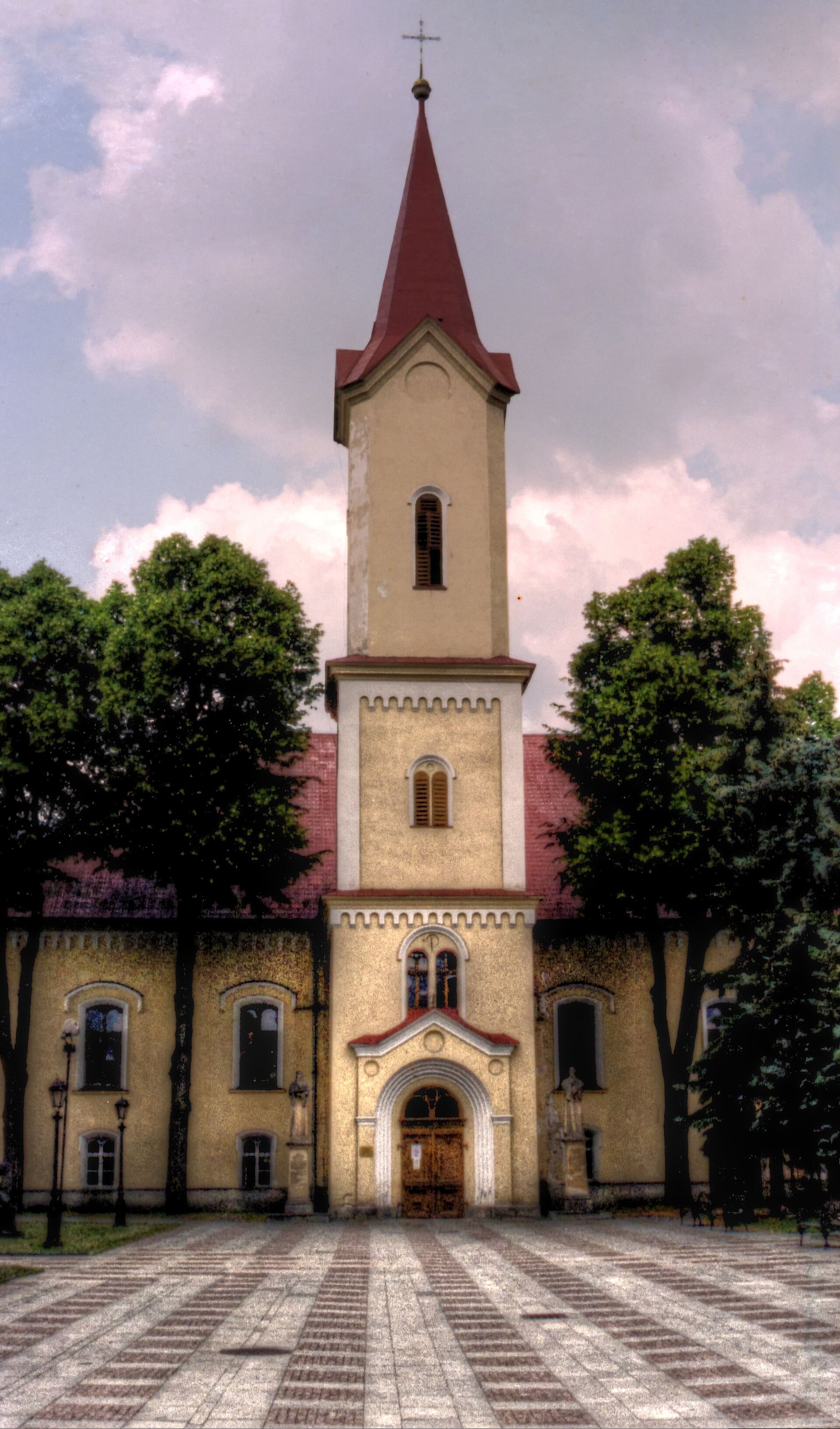
The Evangelical church in Revúca is the kind of place that doesn’t demand attention but lingers in memory long after you’ve left. The town itself is small, its pace unhurried, and the church fits seamlessly into this quiet rhythm. Perched on a gentle hillside, slightly removed from the main square, it stands as if watching over the town with quiet dignity. Its whitewashed walls, modest spire, and clean lines reflect the understated character of Slovakia’s countryside, where grandeur is rarely the point.
The church’s history is deeply tied to the Reformation that swept through Central Europe in the 16th century. At the time, Slovakia was part of the Kingdom of Hungary, and many towns and villages embraced Protestant teachings. Revúca was no exception. The local population, mostly craftsmen and merchants, gradually turned away from Catholic traditions. The first Evangelical church here appeared in the mid-1500s, though that building didn’t survive. The current structure was built later, in the 18th century, when Protestants were finally permitted to construct their own places of worship—albeit under strict conditions.
The architecture of the church is typical of Evangelical churches from that era. Its exterior is simple and functional: a rectangular nave, a steep roof, and a small tower with a spire. Inside, the design is equally restrained, in keeping with Protestant values that favored modesty over ornamentation. There are no elaborate altars, gilded icons, or frescoes like those found in Catholic churches. Instead, the space is bright and uncluttered, with wooden pews, a plain pulpit, and an organ that once filled the air during services.
The 18th century brought a shift in religious tolerance under the so-called "Toleration Patents" issued by Empress Maria Theresa and her son, Joseph II. These decrees allowed Protestants to build churches, but with restrictions: no towers could exceed a certain height, no bells were permitted, and entrances had to be placed on the sides rather than the front. The church in Revúca, like many others, was built with these limitations in mind, and its modest appearance still carries that sense of restraint.
Today, the church remains active, though Revúca is no longer the bustling medieval trading town it once was. Services are held less frequently now, but the building still draws visitors—not just the faithful, but also travelers interested in the history of the Reformation in Slovakia, or even passersby seeking a moment of quiet. Inside, you might find old books, perhaps dating back to the days when the church was the heart of the town’s spiritual life.
Beside the church lies a small cemetery where generations of Revúca’s residents are buried—craftsmen, teachers, merchants. The gravestones are simple, many worn by time, their inscriptions faded. There are no grand monuments here, just quiet reminders of the lives once lived. On still days, when the wind rustles through the trees and sunlight falls softly on the stones, the place feels suspended in time, as if the past is just beneath the surface.
Revúca isn’t a tourist hotspot, and that’s part of its charm. There are no crowds, no souvenir stalls, no guides competing for attention. The church, like the town itself, exists on its own terms, untouched by the expectations of visitors. If you find yourself here, take a walk through the narrow streets, climb the hill to the church, and pause for a while. In places like this, where history doesn’t shout but whispers, you might just sense something real.