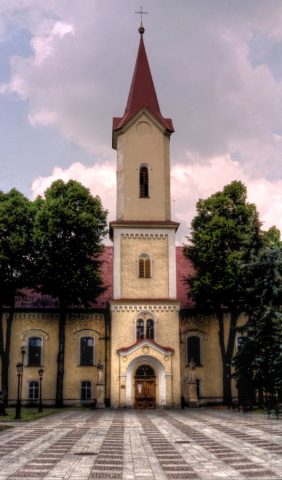
Revúca is one of those quiet Slovak towns where life moves at its own unhurried pace. Nestled among low-slung houses with terracotta roofs and winding streets, the Church of St. Ladislaus stands as a quiet landmark, its tower visible from a distance, guiding visitors toward the heart of the town. It’s not just a place of worship but a living piece of history, where architecture and daily life have intertwined for centuries.
The church was built in the late 18th century, a time when the region was flourishing thanks to mining and trade. Revúca, once a hub for miners and merchants, saw its wealth invested in grander buildings, and the church became one of them. Originally designed in the late Baroque style, it underwent a transformation in the 19th century when Gothic Revival elements were added. The result is a building that carries the marks of both eras—elegant yet austere, with a facade that hints at its layered past.
From the outside, the church’s pointed arches and tall, narrow windows give it a distinctly Gothic appearance. Inside, however, the space feels open and airy, despite the heavy columns and vaulted ceilings. The wooden altar, hand-painted and dedicated to St. Ladislaus—a revered Hungarian king and patron saint of Slovakia—dominates the sanctuary. The walls are adorned with faded frescoes and statues depicting scenes from the lives of saints, their details softened by time but still commanding a sense of reverence.
One of the church’s most understated treasures is its organ. While not as grand as those found in Europe’s great cathedrals, its sound is perfectly suited to the acoustics of the space. On Sundays and during religious festivals, the music fills the nave, and occasionally, small concerts of sacred music are held here. Locals take pride in the instrument, saying it was made for this very place, as if its tones were meant to resonate within these walls.
For generations, the Church of St. Ladislaus has been woven into the fabric of Revúca’s life. It has witnessed baptisms, weddings, and funerals, serving as a constant presence through the town’s joys and sorrows. During the Soviet era, when religious practice was restricted, the church remained one of the few places where people could gather and preserve their traditions. Today, it continues to play a central role, not just as a place of worship but as a quiet refuge where locals come to sit, reflect, or simply admire the craftsmanship of the interior.
Surrounding the church is a small park, a favorite spot for residents to unwind in the warmer months. Old trees cast dappled shade over benches, and a few modest monuments honor notable figures from the town’s past. In winter, the scene transforms—the snow dusts the branches, and the glow of streetlights reflects off the church windows, creating a scene that feels almost storybook. For visitors, it’s a chance to experience the unhurried rhythm of life in Revúca, where time seems to slow down.
Unlike the more tourist-heavy destinations in Slovakia, Revúca offers a different kind of appeal. There are no crowds here, no hurried footsteps or commercial hustle. Instead, the Church of St. Ladislaus stands as a quiet testament to the town’s history, a place where the past feels tangible. It doesn’t aim to impress with grandeur or opulence, and that’s precisely what makes it special. It’s a part of the town’s soul, a place that has witnessed change yet remains unchanged in spirit.
If you find yourself in Revúca, take a moment to step inside. Listen to the silence, study the details, and you might begin to understand why this place holds such meaning for those who call the town home. The Church of St. Ladislaus isn’t just a historical monument—it’s where the everyday meets the extraordinary, where the past lingers in the present, and where a community’s story is quietly told.