Kisantu’s railway station is one of those quiet places where history lingers in the details. Built in the early 20th century, it served as a stop on the line connecting Kinshasa to the southern regions. The station was a transit point where administrators, traders, and travelers passed through during the colonial era.
The architecture reflects its colonial origins: low-slung brick buildings and wide verandas designed for the climate. The station was built to last, not to impress. Over time, the paint has faded, and the wooden shutters have warped, but the structure remains standing. The platform, once used daily, now sits empty, though the tracks still carry occasional freight or passenger trains.
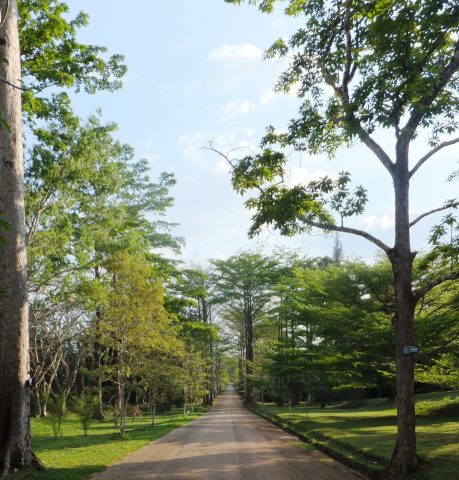
The station’s location adds to its character. Kisantu is known for its botanical garden, a mix of introduced and native plants. The station sits on the edge of this green space, contrasting the precision of the railway with the wild growth of the garden. The two coexisted—one bringing people and goods, the other offering a retreat.
The decline of Kisantu’s station reflects the broader fate of Congo’s railways. Once an ambitious network, the system has suffered from neglect and conflict. Many lines fell into disrepair, leaving stations like this as reminders of past ambitions. Yet Kisantu’s station endures. It hasn’t been demolished or repurposed. It stands as a quiet witness, its walls holding forgotten stories.
Visitors find little here—no plaques, no guided tours. The station offers a moment of reflection. Time moves differently in places like this. The peeling paint and rusted tracks make history feel tangible. The air is still, broken only by birds from the garden or the distant rumble of a train.
If you visit Kisantu, the station is worth a detour. It doesn’t demand attention like the botanical garden, but it holds its own quiet importance. Small corners like this carry layers of history. The garden may be the main attraction, but the station is its counterpart—a piece of the past that persists.
Walk along the platform. For a moment, you might hear echoes of the past: voices, suitcases, a train whistle. The sensation fades quickly, leaving only the heat, the stillness, and the sense that some places are meant to be passed through.