- Home
- Democratic Republic of the Congo
- Kisantu Botanical Garden

Kisantu Botanical Garden
Democratic Republic of the Congo · 7 places
Photo: PClement, CC BY-SA 3.0
Kisantu is one of those quiet, unassuming places that rarely makes it onto tourist maps, and that’s precisely why it appeals to those who seek something real. Tucked away in the Central Kongo province, about a hundred kilometers southwest of Kinshasa, it sits along the banks of the Inkisi River, far from the noise and crowds of the capital. The streets are lined with palm trees, and life moves at its own unhurried pace, shaped by the rhythms of the land rather than the demands of visitors. The surrounding savanna and tropical forests give the area a wild, untamed feel, while the climate—hot and humid—divides the year neatly into dry and rainy seasons.
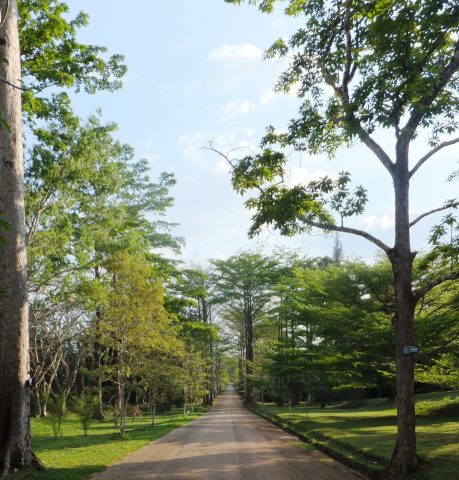
The city’s most notable feature is its botanical garden, established in the early 20th century during the Belgian colonial era. Today, it remains one of the few places in the country where you can still see a well-preserved collection of local flora. Though small, the garden is home to rare trees, vines, and orchids, with shaded paths offering a cool respite from the midday heat. Locals often come here to relax, and for visitors, it’s one of the few reasons to linger in Kisantu. Beyond that, there’s little in the way of traditional attractions, but that’s part of the charm—this isn’t a place built for tourists.
Life in Kisantu unfolds at a leisurely pace. Mornings bring activity to the market, where vendors sell fresh fruit, vegetables, and fish caught in the river. By noon, the streets empty as the heat drives everyone indoors. Evenings are when the town comes alive again—neighbors gather outside their homes, children play in dusty clearings, and the sound of Congolese music drifts from open windows. There are no luxury hotels or fancy restaurants here, just simple guesthouses and small eateries serving local dishes like fufu with spicy sauce or fried fish with cassava.
Despite its modest size, Kisantu plays a significant role in the region. The Catholic mission, founded during colonial times, still serves as a hub for education and healthcare. Many residents work in small workshops or farm the surrounding land, growing cassava, corn, and bananas. The city also acts as a stopover for travelers moving between Kinshasa and more remote parts of the province, though few stay long.
For those who do, Kisantu offers a glimpse of Congo as it really is—unpolished, unscripted, and far removed from the usual tourist experience. There are no guided tours or curated itineraries, just the chance to wander, observe, and get a sense of how life unfolds beyond the capital. Time moves differently here, and that’s why the place lingers in the memory long after you’ve left.
See & Do
All of them
Places on the map
Marker colour follows the categoryClimate and weather
Detailed weather: Kisantu Botanical Garden- Average temperature
- 26 °C
- Precipitation per year
- 2057 mm
Average air temperature
°C
27
27
27
27
27
25
24
25
26
27
26
27
Jan
Feb
Mar
Apr
May
Jun
Jul
Aug
Sep
Oct
Nov
Dec