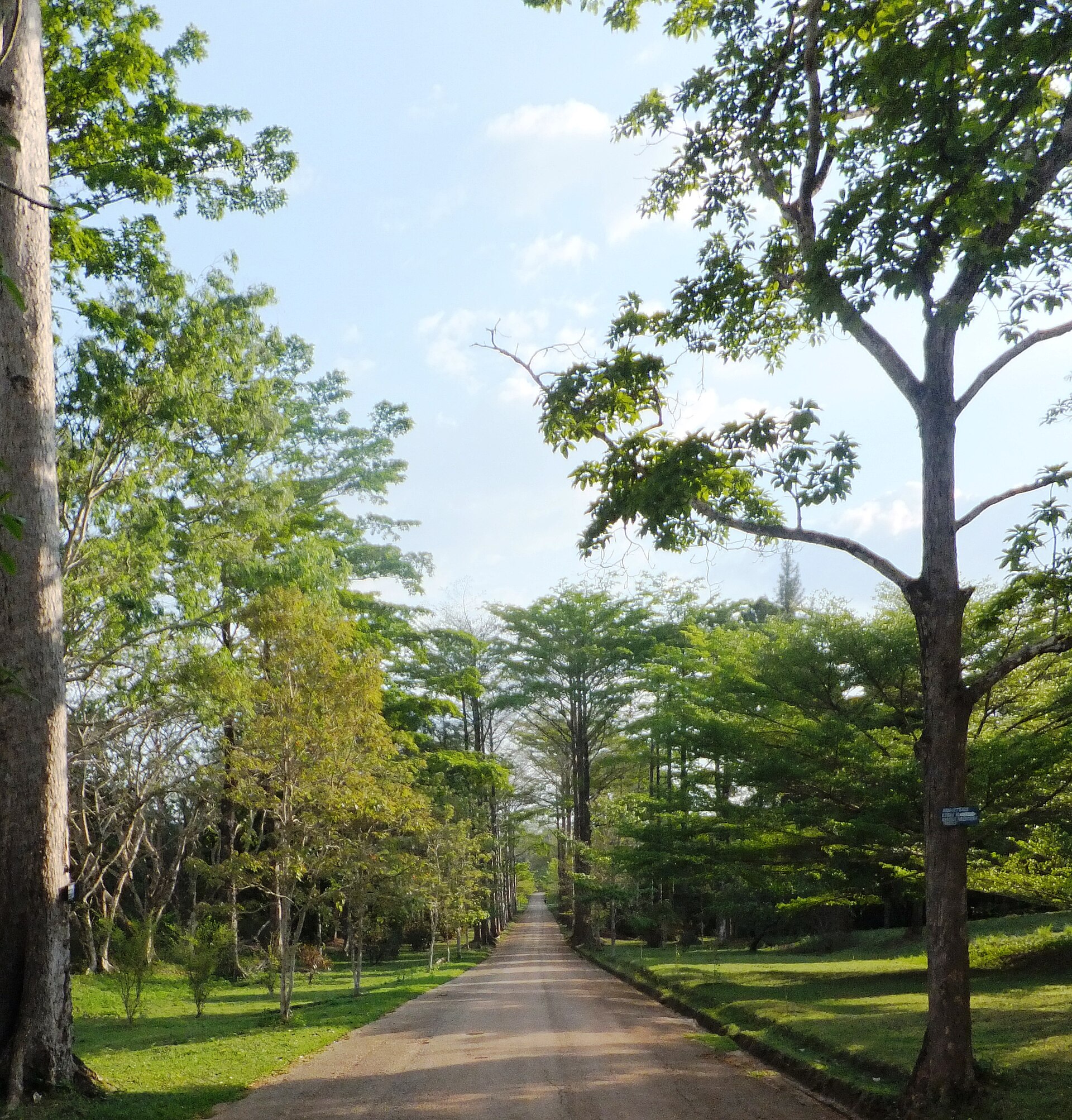
Kisantu Botanical Garden is one of those rare places in the Democratic Republic of the Congo where time seems to move at its own pace, untouched by the rush of the outside world. Established in the early 20th century under Belgian colonial rule, the garden was originally conceived as a scientific hub for studying Central Africa’s tropical flora. Over the decades, it has grown into something far more enduring—a living archive of plants, a quiet retreat from the noise of cities, and a place where the rhythms of equatorial nature still dictate the day.
Spanning roughly a hundred hectares, the garden holds an astonishing variety of plant life. Towering trees form a canopy overhead, their branches stretching like vaulted ceilings over winding paths, while ferns, orchids, and vines weave through the undergrowth, creating the illusion of a wild forest. Among the most striking features are the collections of medicinal plants, some of which have been used by local communities for generations. The garden also preserves rare species brought from other parts of Africa and beyond, including baobabs, palms, and ebony trees, each with its own story of adaptation and survival. Walking through the grounds, it’s easy to forget you’re in a cultivated space—nature here feels untamed, yet carefully observed.
The architecture of Kisantu is unassuming, almost blending into the landscape. The old Belgian buildings, remnants of the colonial era, are simple and functional—laboratories, administrative offices, and small staff residences that have weathered decades of tropical climate. They don’t compete with the surrounding greenery; instead, they complement it, evoking the feel of a secluded research outpost. Some of these structures are still in use today, and if you visit at the right time, you might catch glimpses of botanists or students at work, their focus entirely on the plants around them.
More than just a place for leisurely strolls, Kisantu serves as an educational center, offering insights into the region’s ecosystems and the cultural significance of its flora. Guided tours often highlight how local communities have relied on these plants for centuries—how bark was woven into fabric, fruits turned into remedies, and certain trees revered as sacred. For many Congolese, the garden is a connection to heritage, a place to understand how nature shaped the lives of their ancestors. It’s a reminder that the land here isn’t just scenery; it’s a living part of history.
The garden changes with the seasons, offering a different experience depending on when you visit. During the rainy season, the grounds come alive—streams swell, leaves glisten, and the air is thick with the scent of blooming flowers. In the dry season, some trees shed their foliage, revealing hidden corners of the garden and altering the light that filters through the branches. No matter the time of year, there’s always a quiet spot to sit, listen to the birds, or simply absorb the stillness.
Unlike many tourist destinations, Kisantu remains a place of quiet discovery. There are no crowds here, just the occasional family enjoying a weekend outing or students taking a break from their studies. For visitors from abroad, the garden can be an unexpected revelation—a contrast to the country’s more famous national parks and wildlife reserves. It offers something slower, more introspective, a chance to engage with nature on its own terms.
Beyond its beauty, Kisantu plays a vital role in conservation. In recent decades, efforts have focused on preserving endangered plant species, some of which are at risk of disappearing entirely. The garden’s staff work not only to maintain their collections but also to reintroduce certain species into the wild. It’s a quiet but essential mission, one that underscores how fragile ecosystems can be and how much they depend on human care.
A visit to Kisantu Botanical Garden is less about ticking off sights and more about stepping into a different rhythm. You could spend an hour wandering the paths or a full day watching the light shift through the trees. In the end, what lingers isn’t just the memory of what you saw, but the sense of stillness, the quiet understanding that this place has endured, and the hope that it will continue to do so.