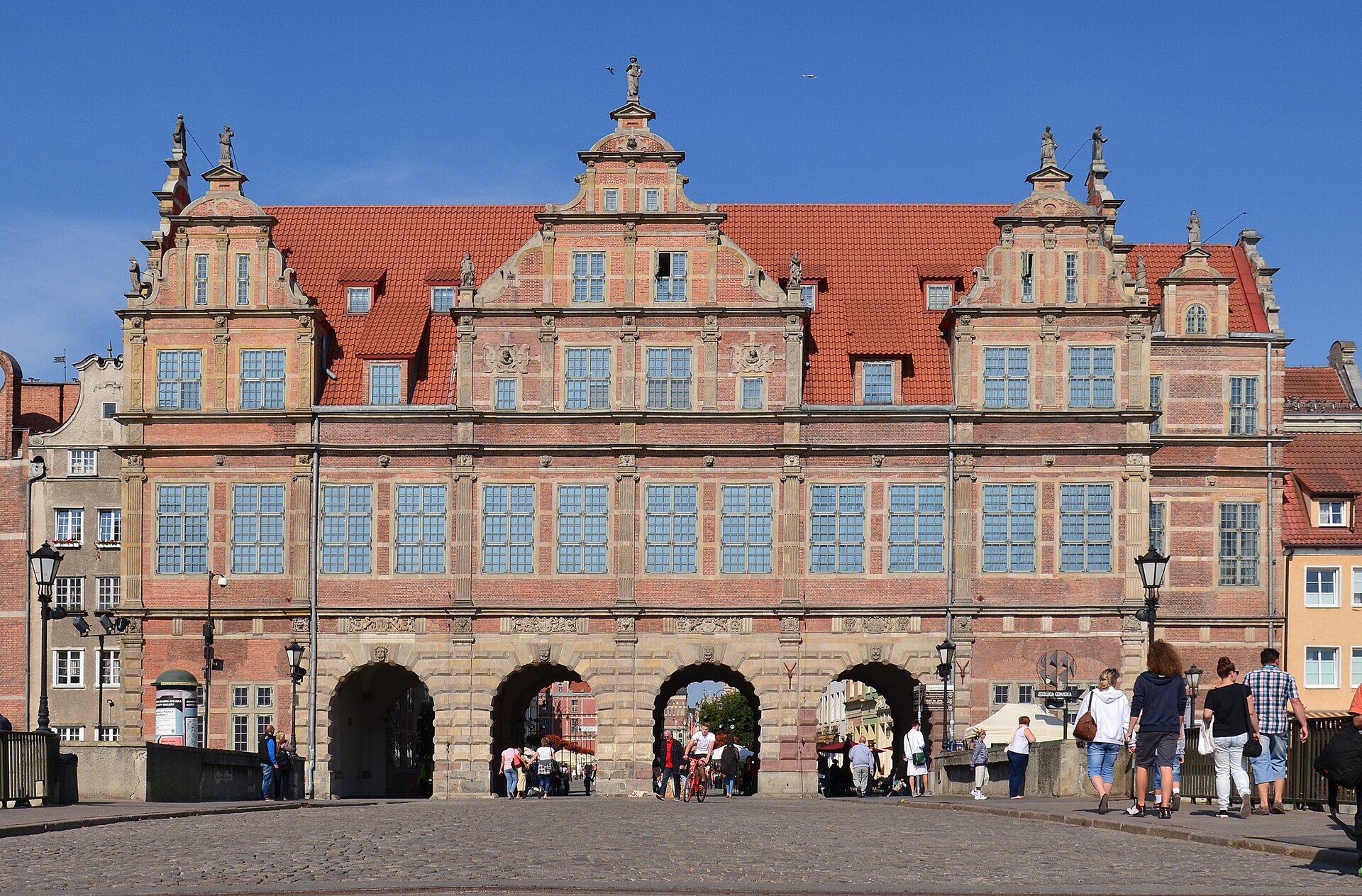
The Green Gate in Sztutowo is one of those places that feels like a quiet portal to another era. Standing where the Vistula River gently curves around the old town, it carries the weight of centuries without any fanfare. Built in the 14th century as part of a formidable defensive wall, these gates were meant to withstand sieges and repel the raids of Teutonic Knights. Sztutowo was no ordinary settlement—it was a vital trading post, and its fortifications had to be strong enough to protect merchants and their goods. Today, little remains of those walls, but the Green Gate still stands, a rare survivor of medieval military architecture.
The name comes from the green-glazed tiles that once covered its roof, though time has worn most of them away. What remains is the sheer presence of the structure itself—tall, unyielding, built from heavy bricks that seem to defy the years. The arch is wide enough for a horse-drawn cart to pass through, yet the narrow arrow slits above it remind you that this was no welcoming entrance. Guards once stood here, watching for threats, ready to lower the portcullis at the first sign of danger. The gate wasn’t just a passage; it was part of a layered defense system, complete with moats and drawbridges, designed to keep the city safe.
Over time, Sztutowo’s strategic importance faded, and the Green Gate became something else—a landmark, a meeting point, a silent witness to the town’s changing fortunes. It has been restored more than once, but always with care to preserve its original character. Walking through it now, you can almost hear the clatter of hooves on cobblestones, the murmur of merchants haggling over goods, the creak of the wooden gate as it rose to admit travelers. Inside, traces of the old mechanisms remain, along with small chambers where guards likely lived and kept watch.
What makes the Green Gate special isn’t just its age, but how it fits into the life of Sztutowo today. The town is small, unhurried, a place where medieval relics coexist with quiet streets and riverside promenades. The gate marks the edge of the old quarter, a natural starting point for exploring the historic center. Nearby, cafés and little shops offer a place to pause, and in summer, the area comes alive with local festivals and markets. The gate isn’t just a relic; it’s part of the town’s rhythm, a backdrop to daily life.
The architecture is pure northern Polish Gothic—sturdy, unadorned, built to last. There are no intricate carvings or grand flourishes here, just solid brickwork and clean lines. This was a structure meant for war, not beauty, yet there’s a quiet elegance to it, especially in the late afternoon when sunlight catches the rough texture of the bricks. The gate doesn’t demand attention; it simply endures, a testament to the people who built it and the generations that have passed through it.
Sztutowo isn’t a place that draws crowds. It doesn’t have the fame of Kraków or Gdańsk, and that’s part of its charm. The Green Gate isn’t roped off or treated like a museum piece—it’s still part of the town’s fabric. Locals walk through it on their way to work, children play nearby, and fishermen cast their lines from the riverbank just beyond. There’s no performative history here, no staged reenactments. Just a gate that has seen centuries come and go, still standing where it always has.
If you visit in the evening, when the setting sun turns the bricks golden and the river glows with reflected light, it’s easy to imagine Sztutowo as it once was. The gate feels like a bridge between past and present, a reminder that history isn’t just something you read about. It’s in the stones beneath your fingers, in the way the wind moves through the arrow slits, in the quiet persistence of a structure that has outlasted wars, fires, and the slow march of time. Sometimes, all it takes is a moment of stillness to feel that connection.