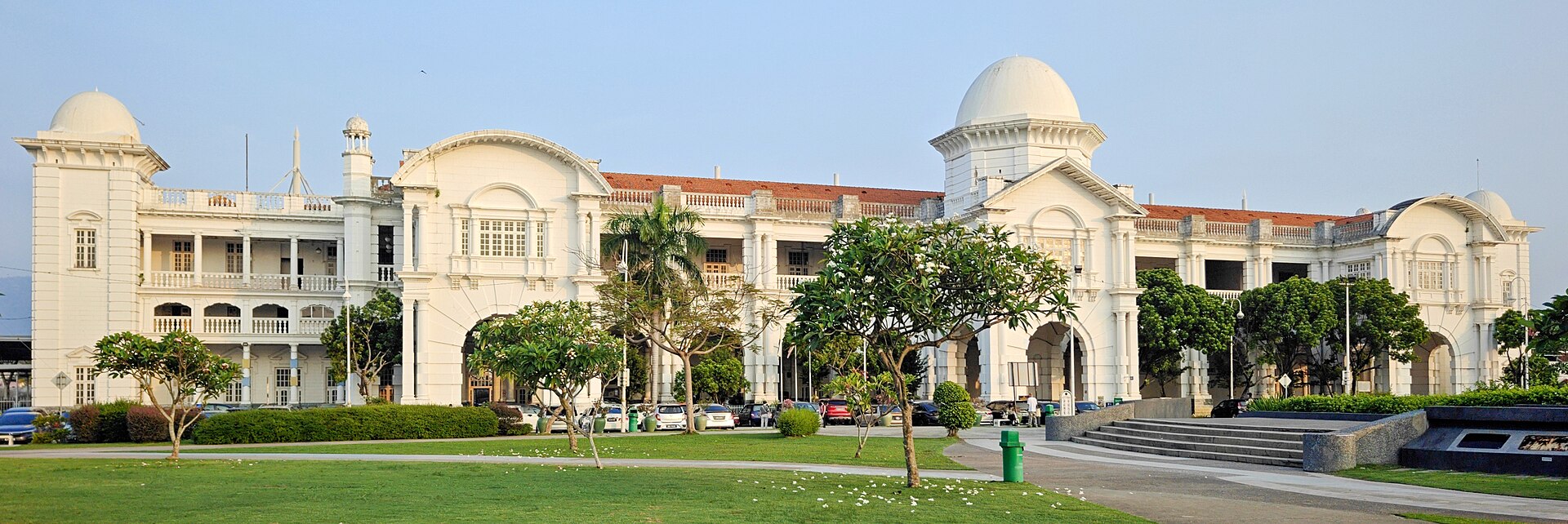
Ipoh’s railway station is one of those rare places that feels suspended in time, a quiet witness to the city’s layered past. Built in the early 20th century, it stands at the intersection of history and the present, a reminder of an era when Malaya was under British rule and Ipoh thrived as a tin-mining boomtown. More than just a transport hub, the station is an architectural relic that speaks of the city’s golden age without uttering a word.
The building’s design is often described as Moorish Revival, though its details reveal a blend of influences. Whitewashed walls, arched windows, and domes give it an airy elegance, while sturdy columns and intricate plasterwork lend it gravitas. The central dome, crowned with a weather vane, once guided travelers from afar. Inside, high ceilings, marble floors, and vintage chandeliers hint at its former grandeur, though modern renovations have softened some of its original splendor.
When the station opened in 1917, Ipoh was at its peak. Trains didn’t just carry passengers—they transported tin, rubber, and spices to Penang and Singapore, fueling the region’s economy. The station became a symbol of progress, connecting the city to the wider world. Even now, it’s easy to imagine the bustle of porters, merchants haggling over goods, and steam engines hissing as they pulled away into the distance.
Over the decades, the station’s role has shifted. By the mid-20th century, tin mining declined, and Ipoh lost some of its former prominence. Yet the station endured, surviving wars, economic downturns, and even threats of demolition during periods of rapid development. Today, it remains a functioning railway terminal, but it’s also a place where locals and visitors come to soak in the atmosphere of old Ipoh. Tourists snap photos, commuters rush to catch trains, and couples pose for wedding portraits against its historic backdrop.
The station is deeply tied to Ipoh’s identity. The city grew from the wealth of its mines, becoming a melting pot of cultures—Malay, Chinese, Indian, and European. The station, designed by the British but adorned with Eastern architectural flourishes, embodies this fusion. Even as Ipoh has settled into a quieter pace, the station stands as a reminder of its past glory.
Architecturally, the station is notable not just for its facade but for its layout. Originally, it was conceived as a complex, housing not only passenger terminals but also offices, a hotel, and a restaurant. Some of these spaces now sit empty or serve new purposes, but the main building retains its original function. Inside, faded train schedules and wooden benches still evoke the days when travelers waited for journeys to begin or end.
The station’s atmosphere is a mix of nostalgia and everyday life. Mornings are lively—vendors sell local snacks, taxi drivers call out to passengers, and trains depart for Kuala Lumpur, Penang, and beyond. By evening, the crowds thin, and the station grows quiet, its marble floors reflecting the glow of lamplight. In those moments, time seems to slow, as if the past and present are gently overlapping.
For many visitors, the station is their first introduction to Ipoh. Unlike the frenetic energy of modern transit hubs, it greets travelers with a sense of calm dignity. Even if you’re not catching a train, it’s worth lingering here for a while—sitting on a bench, listening to the murmur of voices, and imagining the stories that have unfolded within these walls.
Though the station no longer plays as central a role as it once did, it remains a vital part of Ipoh’s rhythm. Trains come and go less frequently than in the capital, but each journey still connects the city to other places, other lives. Perhaps that’s why the building is still cherished—not just as a monument, but as a living piece of Ipoh’s ongoing story.