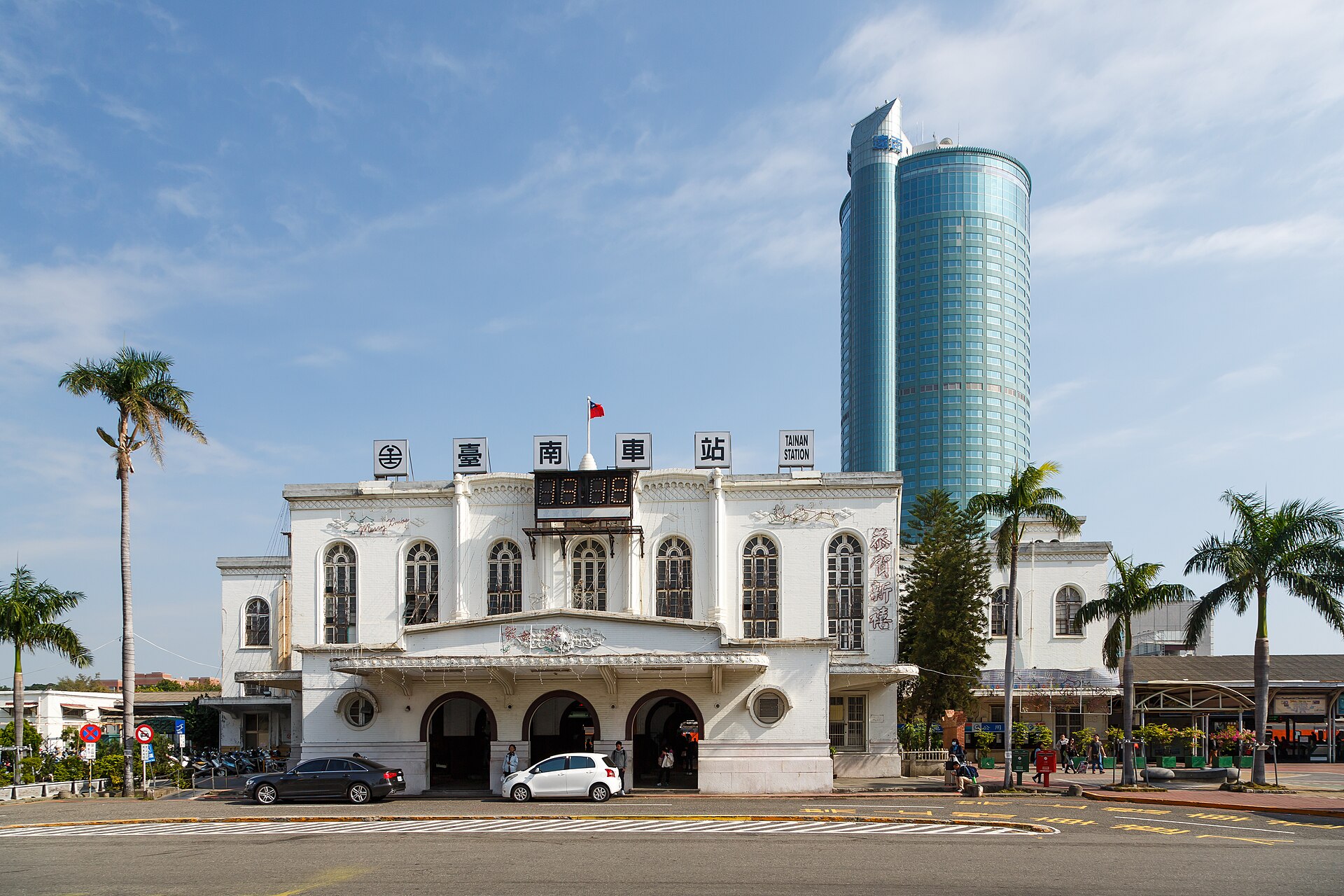
Tainan Railway Station doesn’t announce itself. It has settled into the city’s rhythm over decades, becoming a building that witnessed history without demanding attention. Built in 1936 under Japanese rule, it has outlasted empires and regimes, retaining its original purpose. Today, it remains a working station, its role shifting from a transit hub to a living archive of the city’s past.
The architecture reflects its era, blending Japanese modernism with restrained elegance. The facade has clean lines and symmetry, with tall windows that fill the interior with light. Inside, wooden paneling, wide staircases, and decorative details remain, though the space has been adapted for modern use. The building incorporates change, letting old and new coexist.
For generations, the station has been more than a place to catch a train. In the early 20th century, it was the city’s gateway, welcoming travelers, merchants, and officials. After World War II, it remained a vital link between southern Taiwan and the rest of the country. Now, though high-speed rail has shifted to a newer line, the old building still sees daily traffic. Some places endure because they become part of everyday life.
The station’s design reflects the architectural trends of its time—Japanese rule brought European styles to Taiwan, reinterpreting them locally. The result is a building that fits its surroundings. Its proportions, materials, and colors suggest a structure built to last, one that doesn’t apologize for its presence.
In recent years, the station has become a cultural space. The main hall hosts exhibitions, concerts, and community events. Locals come not just to travel but to linger, sitting on benches or watching passengers. For visitors, it offers a glimpse of the city’s daily life, far from tourist brochures. There’s no spectacle here, just the quiet rhythm of a place that has seen decades of arrivals and departures.
Tainan wears its history lightly, and the railway station is no exception. Unlike many buildings from the same era, it hasn’t been demolished or gutted. It still serves its original function, and it carries a quality that makes it worth preserving. It’s not a museum or a relic—it’s a working space where past and present overlap.
Even if you’re not catching a train, it’s worth a visit.
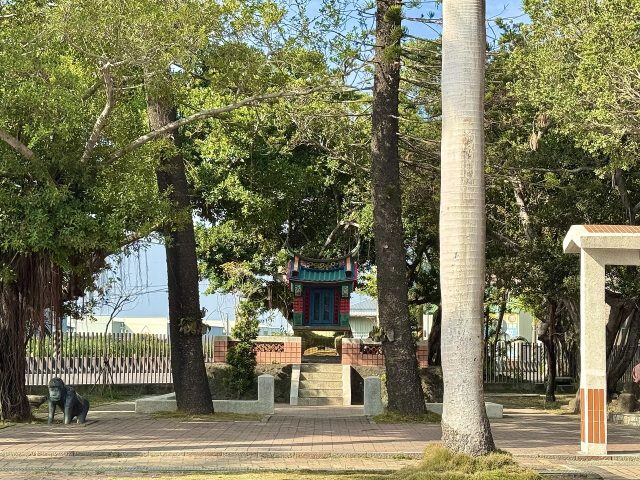
The station sits in central Tainan, near ancient temples, parks, and markets where vendors sell traditional sweets and handmade crafts. The neighborhood is a snapshot of urban Taiwan: narrow streets, low-slung buildings, signs in Chinese and Japanese, the scent of street food mixing with flowering trees. There’s no rush, just the steady rhythm of a city that has found its pace.
Visit in the evening, and the station changes. Old-fashioned lamps cast a warm glow, softening the architecture. It’s easy to imagine the station as it once was, when trains arrived on schedule and passengers weren’t in a hurry. Ticket machines, digital displays, and a café selling coffee have been added, but they don’t feel out of place. They’ve become part of the station’s story.
What makes Tainan Railway Station special isn’t grandeur. It doesn’t try to impress. Its charm lies in its unassuming presence, in how it has become part of daily life. You might walk past it, or you might pause and notice the details—the light through the windows, footsteps on wooden floors, quiet conversations. It doesn’t demand attention but rewards it if you give it.
Sometimes, the most compelling stories endure quietly.