The National Museum of Taiwan Literature sits in the heart of Tainan, a city that has long been considered the cultural soul of the island. Once the ancient capital of Taiwan, Tainan carries layers of history in its streets, temples, and quiet corners, and the museum itself is no exception. Housed in a building from the early 20th century, it was originally constructed during the Japanese colonial period as the city hall. The architecture reflects that era of transition—neoclassical elements blend with Japanese design, creating a space that feels both grand and intimate. High ceilings, wide corridors, and large windows allow natural light to soften the edges of the past, making the building more than just a repository of books and manuscripts. It’s a place where history lingers in the details, from the worn wooden floors to the way the afternoon sun falls across the courtyard.
The museum is dedicated to the full breadth of Taiwanese literature, tracing its evolution from folk tales and classical poetry to modern novels and experimental works. The exhibits move through different periods, showing how literature on the island has been shaped by political upheavals, colonial rule, and the resilience of local traditions. Early texts in classical Chinese sit alongside works written in Taiwanese Hokkien, Japanese, and the languages of Indigenous peoples, revealing the linguistic diversity that has always been part of Taiwan’s identity. One of the most compelling sections focuses on writers who worked under martial law and censorship, when literature became a quiet act of resistance—a way to say what couldn’t be spoken aloud.
What makes the museum feel alive is its refusal to be a static archive. Permanent exhibits are complemented by rotating displays that highlight individual authors, literary movements, or the intersections between writing and other art forms. Interactive installations invite visitors to engage with the texts in different ways: listening to recordings of poems read by actors, watching short films inspired by novels, or even hearing the voices of writers themselves. For those who want to go deeper, the museum hosts lectures, workshops, and discussions with scholars, translators, and contemporary authors. It’s a place where literature isn’t just preserved but actively explored, debated, and brought into the present.
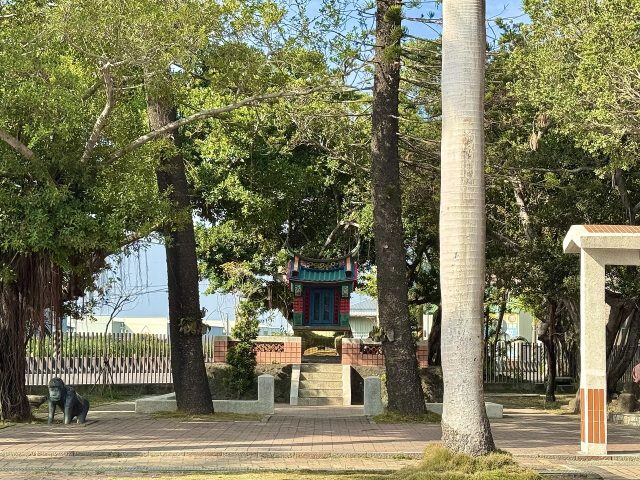
Outside, the museum’s small garden offers a quiet counterpoint to the exhibits inside. Shaded by trees and bordered by low stone walls, it’s a space to sit with a book, watch the light shift on the old building, or simply pause. The garden isn’t just an afterthought—it reflects a long-standing connection in Taiwanese culture between nature and the written word. Many classic works were inspired by the island’s landscapes, and writers often sought solitude in mountains or by the sea to compose their verses. In that sense, the garden extends the museum’s purpose, reminding visitors that literature isn’t just about words on a page but about the world that gives them meaning.
Tainan itself is a city steeped in literary history. Many of Taiwan’s most celebrated writers lived and worked here, and the streets, temples, and markets have served as backdrops for countless stories. Walking through the city after visiting the museum, it’s easy to imagine the characters of novels lingering in the same alleys, or to picture poets sitting in a teahouse, jotting down lines about the changing seasons. The museum doesn’t just tell the story of Taiwanese literature—it helps visitors see how those stories have shaped the city, how they’re woven into the fabric of daily life. A stroll through Tainan becomes a kind of literary pilgrimage, where every corner might hold a reference to a book or a memory of a writer who once walked there.
For those interested in Taiwan’s broader history, the museum offers a unique lens. Literature has always been a mirror of society, and on an island with such a complex past, that reflection is especially revealing. The exhibits touch on the struggles for self-determination, the Japanese colonial era, and the fraught relationship with mainland China, but they do so through personal narratives rather than grand political statements. Visitors encounter letters, diaries, and unpublished manuscripts that reveal how ordinary people experienced these upheavals. There’s no heavy-handed ideology here, just the voices of those who lived through history and tried to make sense of it through words.
The museum’s collection isn’t limited to works by Taiwanese writers. It also includes translations of foreign literature and pieces by international authors who have written about Taiwan. This openness reflects the island’s long history of cultural exchange—its ability to absorb outside influences while maintaining its own identity. In that way, the museum isn’t just a guardian of national memory but a bridge between different worlds. It reminds visitors that literature is never created in isolation, that even the most local stories carry echoes of broader human experiences.
A visit to the National Museum of Taiwan Literature is more than just a tour of exhibits. It’s an invitation to slow down and consider how stories shape our understanding of place and identity. There’s no fanfare or spectacle here, just a quiet acknowledgment of how words can preserve the past, inspire the present, and connect people across time. In a world that often feels overwhelmingly fast, places like this serve as a reminder that some things endure—the need to tell stories, to listen, and to find meaning in the act of creation itself. The museum doesn’t just house literature; it keeps the conversation going.