Anping Fort stands where the past lingers in the air, a quiet witness to centuries of change in what is now Tainan. Built by the Dutch in the 17th century when the island was known as Formosa, it was the first European stronghold on Taiwan’s soil. Originally named Fort Zeelandia after the Dutch province, it served as a trading post, military bastion, and administrative hub during the early years of European presence in Asia. The fort’s walls tell the story of a time when distant empires reached across the sea, leaving behind traces of their ambitions and conflicts.
The Dutch era was brief. In the mid-1600s, the fort fell to Koxinga, the Ming loyalist who drove out the Europeans and turned Taiwan into a base of resistance against the Qing dynasty. Under his rule, the island became a refuge for those who refused to accept Manchu rule, and the fort took on a new role in a different struggle. When the Qing eventually took control, the strategic importance of Anping Fort faded, though its walls remained, bearing the marks of both Dutch and later Chinese modifications.
The architecture is unadorned but purposeful. Thick red-brick walls, narrow gun slits, and sturdy bastions speak of a time when defense was measured in stone and mortar. Inside, the ruins of old structures—a Dutch church, warehouses—hint at the fort’s former life. Much of the original layout has been lost to time, but the remaining fragments offer a glimpse into how the fort once functioned, a self-contained world of trade and defense.
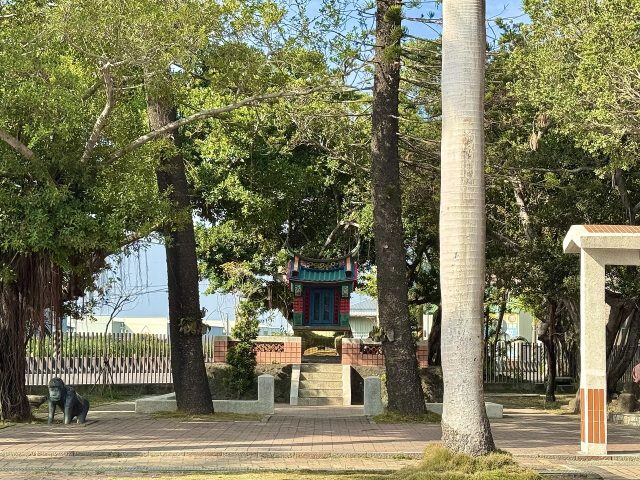
Today, Anping Fort is a peaceful place, more park than fortress. Shaded paths wind around the grounds, where locals come to escape the city’s hustle. From the ramparts, the view stretches across the harbor, a reminder of the sea that once connected this place to the wider world. The water is calmer now, but the breeze still carries the salt of distant voyages.
Tainan itself is a city steeped in history, and Anping Fort is one of its quieter chapters. As Taiwan’s former capital, the city retains a sense of the past, unhurried and unspoiled by mass tourism. There are no crowds here, just the occasional visitor wandering the grounds or sitting on a bench, letting the weight of history settle around them.
The fort has not always been so well-preserved. By the 20th century, it had fallen into disrepair, its walls crumbling under neglect. Restoration efforts began in recent decades, though the work is ongoing. The approach is careful, focusing only on what can be accurately reconstructed. As a result, the fort feels like a patchwork of eras—some sections meticulously restored, others left as they were, raw and unpolished.
For those drawn to history, Anping Fort offers more than just ruins. A small museum on the grounds displays artifacts unearthed during excavations—coins, pottery, weapons—each piece a fragment of the past. Together, they form a mosaic of life here over the centuries, from Dutch merchants to Qing soldiers.
Visiting the fort is simple. There’s no need for tickets or guided tours; just arrive during daylight hours and take your time. The grounds are open, the atmosphere unhurried. This isn’t a place for grand gestures or dramatic revelations. Instead, it invites quiet reflection, a chance to step into the layers of time that have shaped Taiwan.
Anping Fort won’t overwhelm you with spectacle. There are no palaces or ornate carvings, just the quiet dignity of a place that has endured. But for those who appreciate authenticity, it holds a different kind of beauty—one that reveals itself slowly, in the details of weathered brick and the whisper of the wind through the old walls. History isn’t always loud; sometimes, it’s found in the spaces between the stones.