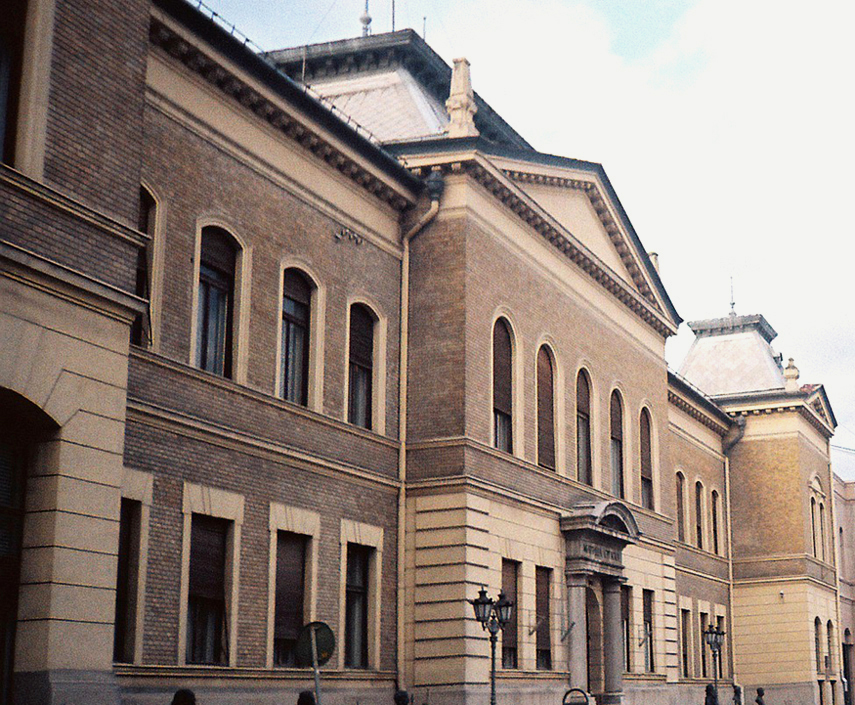
Novi Sad’s quiet streets hold a building that feels like a living archive of Serbian culture. The Matica Srpska building, set back from the main thoroughfares, doesn’t announce itself with grand facades or towering spires. Instead, it sits modestly, its pale yellow walls blending into the surrounding architecture, as if inviting only those who already sense its significance. Inside, the air carries the scent of aged paper and polished wood, a reminder that this place has been a custodian of Serbian identity for nearly two centuries.
Founded in 1826 in Pest, then part of the Habsburg Empire, Matica Srpska was conceived as an institution to preserve and promote Serbian language, literature, and scholarship at a time when national consciousness was fragile. The name itself—*matica*, meaning "queen bee" in Serbian—hints at its role: a hive of intellectual activity, nurturing ideas that would shape the nation’s future. When the institution moved to Novi Sad in 1864, the city was already a cultural crossroads, a place where Serbian, Hungarian, and Austrian influences intersected. The building became a physical anchor for this legacy, a place where writers, historians, and linguists could gather beyond the reach of political censorship.
The architecture of the building reflects its dual purpose: part scholarly retreat, part public institution. The exterior is unassuming, with a neoclassical symmetry that was common in 19th-century Central Europe. Tall windows let in soft light, illuminating the reading rooms where generations of researchers have pored over manuscripts. Inside, the grand staircase and high ceilings suggest formality, but the worn wooden floors and the occasional creak of a door betray the building’s age and the countless footsteps it has absorbed. The library, one of the oldest and most important in Serbia, holds over three million items, including rare books, periodicals, and personal archives of Serbian luminaries. Some of the volumes date back to the 15th century, their pages brittle with time, their contents a testament to the resilience of Serbian thought.
What makes Matica Srpska more than just a repository of books is its role in shaping Serbian culture during periods of upheaval. In the 19th century, when Serbia was still under Ottoman rule and later navigating the complexities of Habsburg administration, the institution became a symbol of continuity. It published the first Serbian literary journal, *Letopis Matice Srpske*, which remains in print today, offering a platform for writers to explore national themes. During the Yugoslav era, it walked a delicate line, preserving Serbian heritage while avoiding the pitfalls of nationalism. Even in the 1990s, when the region was torn apart by war, Matica Srpska remained a place of quiet resistance, a reminder that culture could outlast conflict.
Today, the building is both a working institution and a monument. Scholars still come here to study, and the library continues to expand its collections, though the digital age has changed how knowledge is accessed. The reading rooms are quieter now, but the sense of purpose remains. Visitors who wander in might find an exhibition on Serbian folk art or a lecture on the history of the Vojvodina region, where Novi Sad is located. The exhibitions are often understated, focusing on depth rather than spectacle, but they offer a glimpse into the layers of history that have shaped this part of Europe.
Beyond its scholarly function, Matica Srpska is a place where the past feels tangible. The portraits of Serbian writers and intellectuals lining the halls—figures like Vuk Karadžić, the reformer of the Serbian language, or Jovan Sterija Popović, a playwright who captured the spirit of 19th-century Novi Sad—create a sense of connection across time. Their names might not be as widely recognized as those of European literary giants, but within these walls, they are giants. The building itself, with its mix of grandeur and intimacy, mirrors the institution’s dual role: it is both a guardian of tradition and a space where new ideas can take root.
For those who stumble upon it by accident, Matica Srpska might seem like just another historic building in a city full of them. Novi Sad, after all, is a place where Austro-Hungarian palaces stand beside Orthodox churches, where cobblestone streets lead to riverside promenades, and where the past is never far from the surface. But for those who take the time to step inside, the building reveals itself as something more—a place where the story of Serbia is not just preserved but lived. It’s not a museum in the traditional sense, where artifacts are displayed behind glass. Instead, it’s a place where history is still being written, one page at a time.