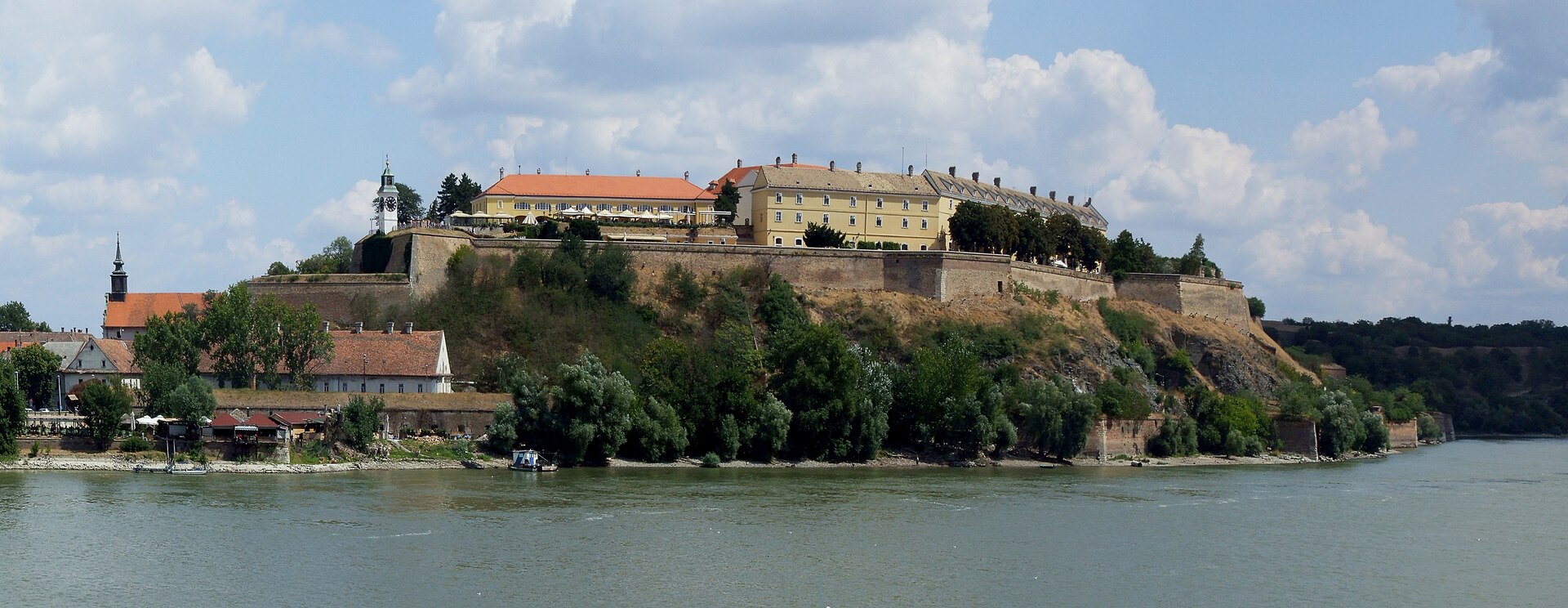
Perched on the banks of the Danube, Petrovaradin Fortress is one of those rare places where history feels alive without trying too hard. The massive stone walls rise abruptly from the river, their honey-colored ramparts catching the light at different angles throughout the day. From a distance, it looks like something out of a medieval legend—imposing, almost untouchable—but once you cross the wooden bridge over the dry moat, the fortress reveals itself as a quiet, almost sleepy complex of courtyards, tunnels, and hidden corners. It’s not just a relic; it’s a place where people still gather, where the past and present coexist without much fuss.
The fortress has stood here in some form for centuries, though the version you see today is largely the work of the Habsburgs in the 17th and 18th centuries. Before them, the site had been occupied by Romans, Byzantines, Hungarians, and Ottomans, each leaving traces that are still visible if you know where to look. The Habsburgs, however, turned it into a military stronghold designed to withstand sieges and artillery fire, which is why the walls are so thick and the bastions so angular. The underground tunnels, stretching for kilometers, were built for defense and supply, though today they’re more famous for their eerie atmosphere and the occasional guided tour that takes visitors through the dimly lit passages.
What makes Petrovaradin different from many other European fortresses is that it never really stopped being used. Even after its military significance faded in the 19th century, it remained a garrison, a prison, and later a cultural space. The clock tower on the main bastion, with its unusually large minute hand, was added in the 18th century and still keeps time—though it’s said to be deliberately slow so that the fortress guards could finish their shifts without rushing. The tower has become one of the symbols of Novi Sad, visible from almost anywhere in the city, a quiet reminder of the fortress’s enduring presence.
Inside the walls, the atmosphere is a mix of grand and unassuming. The central courtyard, once a parade ground, is now a place where locals walk their dogs or sit on benches with coffee. The buildings that line it—former barracks, officers’ quarters, and storage halls—have been repurposed into museums, galleries, and artist studios. The Museum of Novi Sad, housed in one of the oldest structures, offers a straightforward look at the city’s history, while the smaller exhibitions scattered around focus on everything from military artifacts to contemporary art. There’s no single narrative here; instead, the fortress feels like a patchwork of stories, some carefully preserved, others half-forgotten.
One of the most interesting things about Petrovaradin is how it interacts with the city below. Novi Sad spreads out along the Danube, its streets climbing gently toward the fortress, which looms over the rooftops like a silent guardian. The relationship between the two is symbiotic—Novi Sad gives the fortress context, while the fortress gives the city a sense of permanence. In the summer, the EXIT Festival turns the fortress into a massive open-air venue, drawing crowds from all over Europe. For a few days, the courtyards and bastions pulse with music, and the old stones vibrate with something entirely modern. But even when the festival isn’t on, the fortress remains a place where people come to walk, think, or simply watch the river flow.
The Danube itself is impossible to ignore when you’re here. From the fortress walls, the view stretches across the water to the flat plains of Vojvodina, where the river bends and widens. On clear days, the light reflects off the surface in a way that makes the whole scene feel almost painterly. The fortress was built to control this stretch of the river, and even now, it’s easy to see why. Boats pass by regularly, their wakes rippling toward the shore, and in the evening, the lights from the city’s bridges and buildings are mirrored in the water. It’s a view that hasn’t changed much in centuries, and standing there, it’s not hard to imagine the soldiers, merchants, and travelers who once looked out over the same landscape.
Despite its size, Petrovaradin doesn’t feel overwhelming. There’s no grand entrance or over-the-top restoration; instead, the fortress has been allowed to age gracefully, its rough edges and weathered stones adding to its character. Some parts are well-maintained, while others are left to the elements, creating a sense of authenticity that’s often missing in more polished historical sites. The lack of crowds is another surprise—even on weekends, you can find quiet corners where the only sounds are the wind in the trees and the occasional echo of footsteps on cobblestones.
For all its history, Petrovaradin isn’t a place that demands reverence. It’s more like a backdrop to everyday life, a place where history and modernity coexist without much fanfare. You can spend an hour wandering the ramparts, or an afternoon sitting in one of the small cafes that have sprung up inside the walls. The artists who work in the studios here often leave their doors open, inviting passersby to step inside and see what they’re doing. It’s this unpretentiousness that makes the fortress feel so approachable, as if it’s not just a monument but a living part of the city.
If you visit, don’t rush. Take the time to explore the less obvious paths, the ones that lead to the edges of the fortress where the walls drop steeply to the river. There’s a certain thrill in standing on a narrow ledge, looking down at the water below, knowing that this same view has been seen by countless others over the centuries. And if you’re there in the evening, when the lights come on and the fortress glows against the darkening sky, it’s easy to understand why Novi Sad has grown up in its shadow. Petrovaradin isn’t just a place to visit; it’s a place to experience, slowly and without expectations.