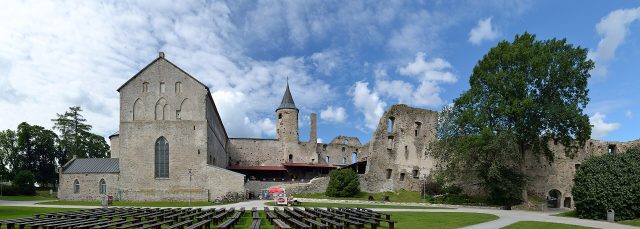
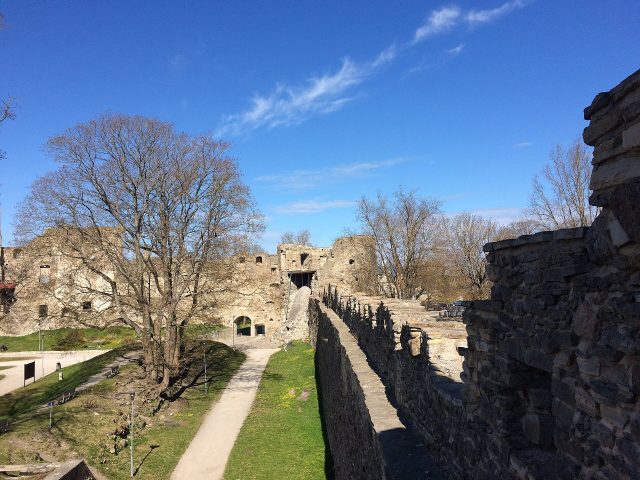
Haapsalu’s Lode Castle is one of those rare places where history isn’t just preserved in stone—it lingers, almost imperceptibly, in the very air between the ruins. Built in the 13th century as the seat of the Saare-Lääne bishopric, it was more than a fortress; it was a statement of power, a center of governance where land disputes were settled, justice was administered, and envoys from distant courts were received. The bishops who ruled here shaped the region’s fate, and though their world has long faded, the castle’s remains still carry the weight of those decisions. Time has worn it down, but even in its current state, the site feels alive in a way few ruins do—less like a relic and more like a quiet witness to centuries of human ambition and conflict.
The architecture of Lode Castle reflects the practical yet imposing style of medieval Baltic strongholds, with its own subtle local adaptations. Thick limestone walls, sturdy buttresses, and narrow arrow slits speak to its defensive purpose, while the inner courtyard once housed living quarters, chapels, and storerooms. The keep, or donjon, stood as the last line of defense during sieges, its height offering both protection and a vantage point over the surrounding lands. Over the centuries, the castle evolved with the times: in the 14th century, round towers were added to strengthen its defenses, and by the 16th century, the walls were thickened to withstand cannon fire. These layers of history are still visible in the masonry—if you look closely, you can trace the hands of different eras in the way the stones were laid.
The castle’s fate was as turbulent as the region’s history. It weathered multiple sieges during the Middle Ages, only to find itself at the heart of the Livonian War in the 16th century. When the bishopric was dissolved in 1559, the castle lost its political significance and began a slow decline. By the 18th century, it had been reduced to ruins, its stones repurposed by locals for building materials. For generations, it was forgotten, a crumbling afterthought in the landscape. It wasn’t until the 19th century, when interest in medieval architecture revived, that people began to see the ruins as something worth preserving. Today, the remains have been stabilized, but the restoration work is deliberately restrained—enough to prevent further decay, but not so much that it erases the marks of time.
Lode Castle is inseparable from the town of Haapsalu, which grew up in its shadow. Founded in the same century as the castle, Haapsalu was for centuries little more than a settlement clustered around the bishop’s residence. The fortress didn’t just protect the town; it shaped its layout. The narrow, winding streets of the old quarter, which survive to this day, were designed with the castle’s walls in mind. Even now, with only fragments of the structure remaining, its presence is still felt. The ruins loom over the town, a reminder of the time when the castle dominated the skyline, its silhouette unchallenged by the low wooden houses that once surrounded it.
What makes Lode Castle special is its atmosphere. Unlike Tallinn’s crowded Old Town or Tartu’s lively university district, Haapsalu’s ruins are rarely overrun with visitors. This quiet allows you to experience the place at your own pace, without the distraction of crowds. The castle is set within a park, a green expanse where locals and travelers alike come to sit on the grass, read, or simply gaze at the weathered stones. In autumn, the leaves turn gold and amber, framing the ruins in warm hues, while winter lends the site an eerie beauty, snow settling into the crevices of the walls. Spring is perhaps the best time to visit—the air is filled with the scent of blossoms, and birds nest in the nooks of the ancient masonry.
For those with an interest in history, Lode Castle is a treasure trove. It offers a tangible record of how fortification techniques evolved over the centuries, from the high walls of the medieval period to the adaptations made for gunpowder warfare. The nearby Haapsalu Museum houses artifacts unearthed during excavations: coins, weapons, and everyday objects that paint a vivid picture of life in the bishopric. These fragments—some mundane, others extraordinary—help bridge the gap between the past and present, offering a glimpse into the lives of the people who built, defended, and eventually abandoned the castle.
There’s something deeply human about Lode Castle. It doesn’t try to impress with grandeur or spectacle; instead, it invites contemplation. The stones here have absorbed centuries of stories—of power struggles, of faith, of the slow passage of time. Touching the rough surface of a wall, you can almost feel the weight of those who walked these grounds before you. It’s why the site attracts not just history enthusiasts, but anyone seeking a moment of stillness. In a world that moves too quickly, places like this serve as a reminder that some things endure.
What makes Lode Castle unique is its unassuming nature. There are no flashy reconstructions, no interactive exhibits, no attempts to dress up the past for modern consumption. It is what it is: a ruin, a fragment of history left largely untouched. And that’s its strength. The castle doesn’t need embellishment; its power lies in its authenticity. It stands as a silent testament to the people who built it, the wars it survived, and the centuries that have since passed. Some of its stories have been uncovered, but many remain untold—waiting, perhaps, for the next visitor to listen.