Haapsalu Castle is one of those rare places where history isn’t just preserved in stone—it lingers in the air, in quiet corners, and in stories that refuse to fade. It stands in the heart of the coastal town of Haapsalu, surrounded by narrow streets, weathered wooden houses, and the scent of the sea. The castle is unassuming, yet its walls hold centuries of shifting power, faith, and everyday life. It doesn’t demand attention but quietly insists on being remembered.
The castle’s origins trace back to the 13th century, when these lands were under the rule of the Livonian Order. The first written records mention it in 1279, though some form of fortification likely existed earlier. Built as the residence of the Bishop of Ösel-Wiek, it served as both a spiritual and administrative center. In the Middle Ages, Haapsalu drew pilgrims to the relics of Saint Nicholas, housed in the town’s cathedral. The castle witnessed grand ceremonies, sieges, and the devastation of the plague.
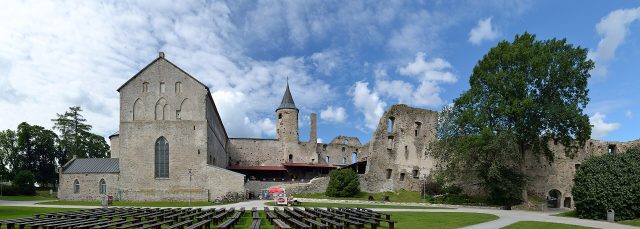
What makes the castle’s architecture compelling is how it layers history. The earliest structure was likely wooden, but by the 14th century, it had been rebuilt in stone. The main building is a sturdy rectangular block with thick walls, originally surrounded by a moat and earthen ramparts. Inside, vaulted ceilings, narrow arrow slits, and fragments of medieval frescoes hint at its past as an episcopal chapel.
The Maiden’s Tower is one of its most intriguing features. A small circular structure, it’s said to have been a prison for women. Historians debate whether it was truly used for confinement or simply part of the defenses, but the mystery adds to its allure.
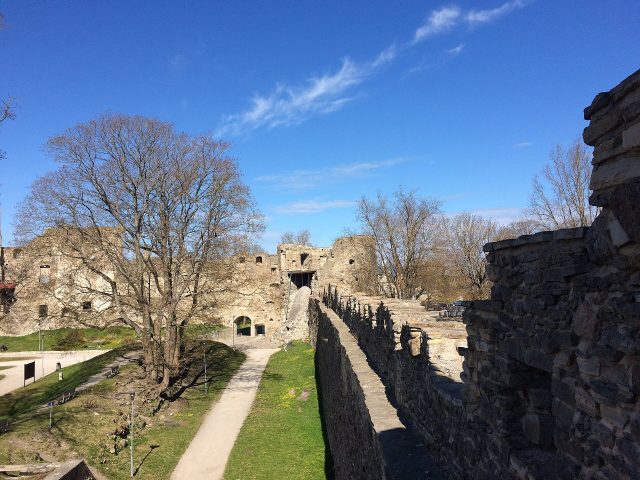
The castle’s low outer wall, stretching along the bay, tells its own story. Unlike imposing ramparts, this one feels intimate, built more for contemplation than defense. By the 17th century, when Estonia came under Swedish rule, the castle had lost its military significance. Its stones were repurposed for local construction, and parts of it were used as storage or housing. Restoration efforts began in the 19th century, giving the castle a slightly romanticized appearance while preserving what remained.
Today, Haapsalu Castle is a museum. There are no glass cases—just raw history you can touch. The worn stone steps, heavy wooden doors, and remnants of the medieval drainage system speak to the practical ingenuity of the past. Exhibits explore the lives of the bishops who once ruled here, the daily routines of townspeople, and how Haapsalu evolved over the centuries.
The castle is also steeped in legend. The most famous is that of the White Lady. According to local folklore, the ghost of a bride who died on her wedding day appears in the castle windows on certain nights. The story is so deeply embedded in the town’s identity that every August, Haapsalu hosts a festival in her honor.
Surrounding the castle is a quiet park, once part of the bishop’s estate. Now, it’s a place to wander among old trees, sit on a bench, and imagine the landscape centuries ago. From here, you can see the bay, once a vital trade route. In the Middle Ages, Haapsalu’s harbors were active, and the castle served as both a lookout and a symbol of authority. Today, the water still laps against the castle walls, a reminder of time’s slow passage.
The castle is the soul of Haapsalu. The town itself has narrow streets, pastel-colored wooden houses, and an unhurried rhythm. In summer, it hosts festivals, concerts, and markets. Winter brings a hush, broken only by the crunch of snow underfoot. The castle remains at the center of it all, a place people return to again and again.
Visiting Haapsalu Castle isn’t like ticking off a tourist attraction. There are no crowds here, no rushed selfies. You can wander the halls, trace your fingers along the ancient stones, and listen to the wind whistling through the arrow slits. Then, stepping onto the wall, you can look out over the bay and understand why visitors often return. It’s a place to linger, to let the weight of history settle around you, and to feel, just for a moment, like you’ve stepped into another time.