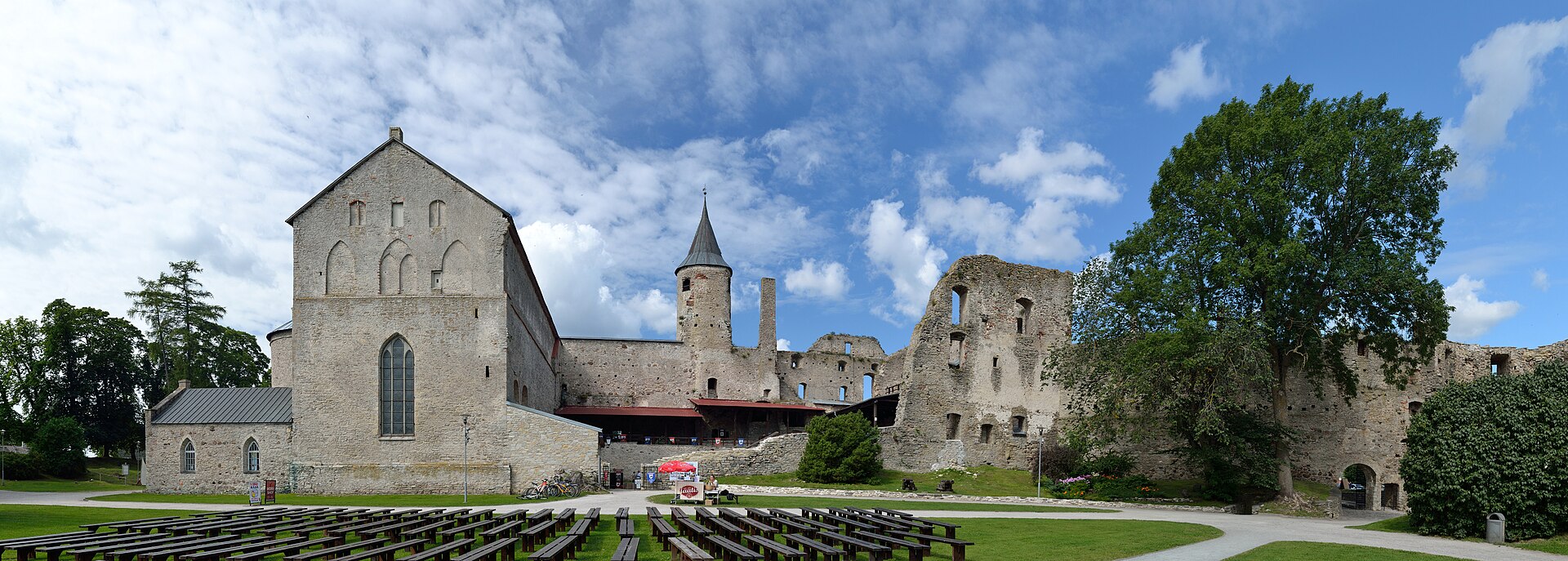
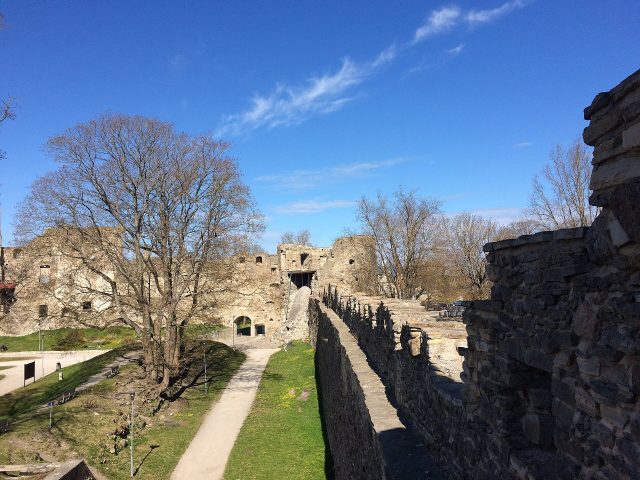
Haapsalu Bishop’s Castle stands on the quiet edge of Estonia’s western coast, where the Baltic wind carries the scent of salt and pine through the old stone walls. Built in the 13th century, it was the center of the Bishopric of Ösel-Wiek, shaping the region’s religious and political life. The castle’s origins lie in the era when German crusaders and bishops sought to consolidate influence over the local population, merging military and ecclesiastical authority. Its ruins—crumbling towers and arched gateways—still bear the weight of history.
The central fortress, with thick limestone walls and defensive towers, was built to resist attacks. The adjacent cathedral and bishop’s palace served as symbols of spiritual and administrative control. The cathedral, one of Estonia’s oldest, features a simple Gothic design. Inside, vaulted ceilings and narrow windows create a sense of reverence, though much of the interior has faded with time. The layout—inner courtyard, defensive moat, and outer walls—reveals medieval military engineering.
One legend clings to the castle: the White Lady. She is said to appear in the cathedral’s window during the August full moon. Local lore claims she was a maiden who loved a canon, a romance that ended tragically. The story lingers, especially on summer nights when cicadas hum and waves lap in the distance. Visitors come hoping to see her—or simply to feel the eerie beauty of the ruins.
The castle was a strategic stronghold during the Livonian War in the 16th century. Russian forces eventually breached its defenses. Later, under Swedish and Russian rule, it lost its military role and fell into disrepair. By the 19th century, its stones were repurposed for local buildings. Preservation efforts began in the 20th century, turning the site into a place where history could be studied rather than forgotten.
Today, the castle is a quiet monument. The inner courtyard, once busy, now lies still, its grass dotted with wildflowers in summer. The roofless cathedral commands attention, its stones silent witnesses to centuries of change. From the towers, the view stretches over Haapsalu’s red-tiled roofs and the calm bay.
The castle’s decay is part of its story. Unlike some European ruins, it hasn’t been meticulously restored. Walls are stabilized, foundations protected, but no grand reconstructions exist. This approach leaves the site raw, as if it still holds the stories of those who lived and died within its walls.
What does it feel like to stand here? The wind howls through empty windows, stones bear the marks of time, and seabirds break the silence. In summer, open-air concerts and medieval festivals bring the past to life. In winter, snow softens the ruins’ outlines.
Haapsalu moves at its own pace. The castle is one part of its story, but it lingers in the mind. Whether you come for history, legends, or quiet beauty, the place offers something deeper—a sense of time, endurance, and the power of stone and story. It doesn’t demand attention. It rewards those who listen.