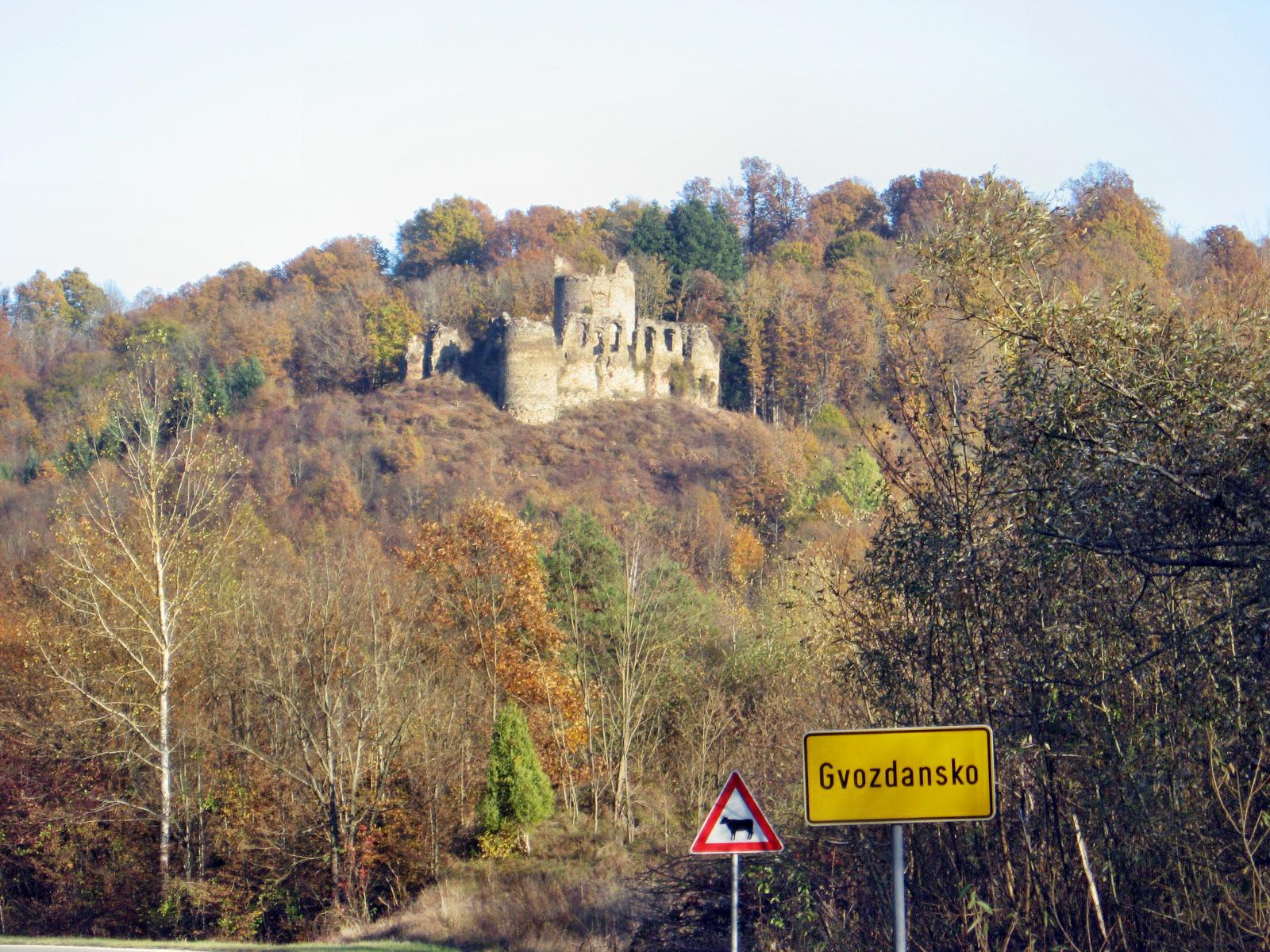
Perched on a gentle hill above the quiet village that shares its name, Gvozdansko Castle stands as a silent witness to centuries of history in this corner of Croatia. Its weathered stone walls, once a formidable barrier between worlds, now bear the marks of time, softened by nature and neglect. There are no crowds here, no souvenir stalls or glossy signs—just the wind whispering through empty halls and the sweeping view of rolling green hills stretching toward the horizon. The castle feels less like a tourist attraction and more like a forgotten relic, its crumbling grandeur holding a quiet dignity that draws those who seek something beyond the usual travel experiences.
The story of Gvozdansko is woven into the turbulent history of the Balkans, a region where empires clashed and borders shifted like sand. In the 16th century, as the Ottoman Empire expanded into Europe, this castle became a critical stronghold on the frontier. Its strategic position allowed it to control the roads leading deeper into Croatia, while its thick walls and sturdy towers made it a formidable obstacle for invading forces. The most famous chapter in its history came in 1577, when the castle withstood a prolonged Ottoman siege before finally falling. After the Turks were driven out in the 17th century, Gvozdansko lost its military importance, and over time, its walls began to crumble as people moved away, leaving it to the mercy of the elements.
The architecture of the castle reflects its original purpose as a fortress. The main structure is a solid rectangle of thick stone, its narrow slit windows once used by defenders to fire upon attackers. Inside, the remains of living quarters, barracks, and storage rooms hint at the daily life that once filled these spaces, though little of the original furnishings or decorations survive. The most striking feature is the central tower, still standing tall above the surrounding landscape. Climbing to its top offers a sweeping panorama of the countryside—endless fields, patches of forest, and distant mountains that now seem peaceful but were once the backdrop for fierce battles.
Today, Gvozdansko Castle is a place for those who want to step away from the noise of modern tourism and connect with history on a deeper level. There are no guided tours reciting rehearsed facts, no informational plaques detailing every stone—just the raw, unfiltered presence of the past. Occasionally, the castle serves as a venue for small cultural events, like concerts or historical reenactments, but on most days, it belongs to the few who wander here, whether by chance or by choice. The silence is broken only by the wind and the occasional rustle of grass growing between the stones, a reminder of the countless lives that once passed through these walls.
The village below the castle is as quiet and unassuming as the fortress itself. Life here moves at a slower pace, much as it has for generations. Narrow streets wind between houses with terracotta roofs, and old churches stand as quiet sentinels of the past. If you’re lucky, a local might share a story or two about the castle, tales passed down through the years that blur the line between history and legend. The surrounding countryside remains largely untouched, with forests and fields offering a glimpse of nature as it once was. Deer roam the woods, rare wildflowers bloom in the meadows, and the only sounds are the songs of birds and the whisper of the wind.
Visiting Gvozdansko is less about ticking off a sightseeing checklist and more about immersing yourself in a different time. There’s no set path to follow, no schedule to keep—just the freedom to explore at your own pace. You might spend hours wandering the ruins, imagining the clatter of armor and the shouts of soldiers, or simply sit on a crumbling wall, watching the sunset paint the hills in gold. This is a place for those who value authenticity over convenience, where the past isn’t polished for tourists but left in its raw, imperfect state. In an age where many historic sites feel more like theme parks, Gvozdansko offers something rare: a chance to experience history as it truly was, unfiltered and unscripted.
If you find yourself in this part of Croatia, take the time to seek out the castle. It doesn’t announce itself with flashy signs or grand entrances, and that’s part of its charm. The path leading up to it is unassuming, winding through the village before climbing the hill to the gates. As you step inside, the cool stone beneath your fingers seems to hum with stories of the past. There’s a sense of solitude here, a quiet that feels almost sacred. It’s the kind of place where you might just find what you didn’t know you were looking for—a moment of stillness, a connection to something greater than yourself, a reminder that history isn’t just something we read about, but something we can touch.