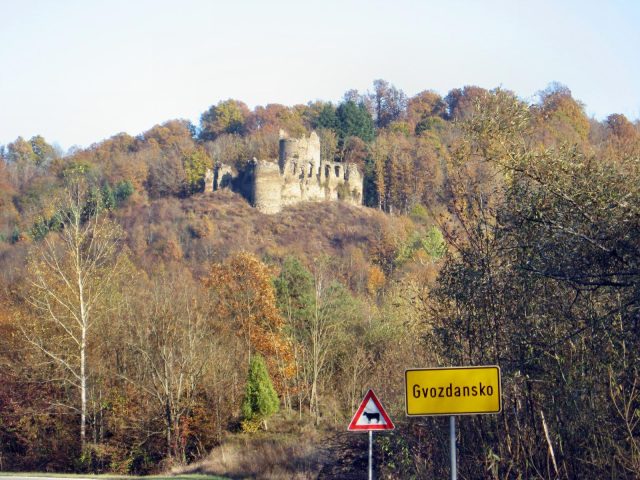
Gvozdansko is one of those rare places that feels untouched by time, a quiet village tucked away in the rolling hills of inland Croatia. Far from the well-trodden paths of the Adriatic coast or the bustling cities, it exists in a world of its own—where the landscape looks more like an old etching than a modern postcard. There are no crowds here, no souvenir shops or noisy cafés, just the rustle of leaves and the occasional murmur of locals going about their day. It’s the kind of place that doesn’t try to impress; it simply is, offering a sense of stillness and a connection to history that lingers in the air like the scent of damp earth after rain.
At the heart of Gvozdansko’s story is its fortress, a once-mighty stronghold that stood on the fault line between two worlds. Built in the 16th century, when the Ottoman Empire pushed westward and the Habsburgs scrambled to hold the line, the fortress was more than just stone and mortar—it was a symbol of defiance. These lands were a battleground, and Gvozdansko found itself on the front lines, its walls bearing witness to the clashes that shaped the region. Today, only ruins remain, but their sheer scale and ruggedness still command attention. The fortress doesn’t need grand restorations to tell its story; the weathered stones speak for themselves.
The most enduring tale tied to Gvozdansko is that of its final stand. In 1578, Ottoman forces laid siege to the fortress, and for weeks, a small garrison of locals and mercenaries held out against overwhelming odds. When hope of reinforcements faded, the defenders chose to ignite the gunpowder stores rather than surrender. The explosion marked the end of the fortress’s military role, but the story lived on, passed down through generations. It’s a tale of stubborn resistance, one that still resonates in the quiet of the ruins. Whether every detail is historically precise or not, the legend has become part of the place, as much a part of its identity as the stones themselves.
The architecture of the fortress is unmistakably functional, designed for survival rather than comfort. Thick walls, narrow arrow slits, and the skeletal remains of towers all hint at the harsh realities of life on the frontier. Inside, you can still make out the outlines of barracks and storerooms, where soldiers once slept and stockpiled supplies. Now, the courtyards are overgrown with grass, and the only sounds are the wind and the distant call of birds. Walking through the ruins, it’s easy to imagine the fortress as it once was—a place of constant vigilance, where every shadow could mean danger. The surrounding landscape has changed little over the centuries, with fields and forests stretching out in all directions, as if waiting for history to pick up where it left off.
Beyond the fortress, the countryside around Gvozdansko is a patchwork of vineyards, woodlands, and gentle hills. The land here is still worked much as it has been for generations, with locals tending to crops and vines in the same way their ancestors did. The villages nearby are clusters of old stone houses with terracotta roofs, their simple lines blending seamlessly into the landscape. There are no modern intrusions, no sprawling resorts or neon signs—just the quiet rhythm of rural life. It’s a place where time moves differently, where the hours are marked by the sun’s arc rather than the ticking of a clock.
Gvozdansko isn’t the kind of destination that draws crowds. It doesn’t have luxury hotels or Michelin-starred restaurants, and that’s precisely what makes it special. Those who do make the journey here come for something intangible—a sense of authenticity, a break from the noise of the modern world. You won’t find guided tours or neatly labeled exhibits; the fortress doesn’t offer explanations or grand narratives. Instead, it invites you to wander, to sit on a crumbling wall and listen to the wind, to let your imagination fill in the gaps. The ruins aren’t polished or sanitized for tourists; they’re raw and real, shaped by centuries of neglect and weather, and all the more compelling for it.
This isn’t a place for those seeking Instagram-worthy moments or the latest travel trends. Gvozdansko doesn’t try to entertain or dazzle; it simply exists, a quiet witness to the past. There’s no artificial atmosphere here, no curated experience—just the land, the ruins, and the stories they hold. It’s a place for reflection, for those who want to step outside of time, if only for a little while. The scars of history are visible in every cracked stone, a reminder of the lives that were lived and lost here. And perhaps that’s why it lingers in the memory long after you’ve left—the sense that you’ve touched something real, something that hasn’t been diluted by the passage of years.
If you’re the kind of traveler who seeks out places that feel undiscovered, Gvozdansko will reward your curiosity. It’s not on the way to anywhere, and that’s part of its charm. The journey here is as much a part of the experience as the destination itself, winding through backroads where the only signs of life are the occasional farmhouse or a herd of sheep grazing by the roadside. When you finally arrive, there’s no fanfare, no grand entrance—just the quiet hum of the countryside and the fortress standing sentinel over the hills. It’s the kind of place that stays with you, not because it’s grand or glamorous, but because it feels honest. In a world that often moves too fast, Gvozdansko offers a rare chance to slow down, to listen, and to remember.