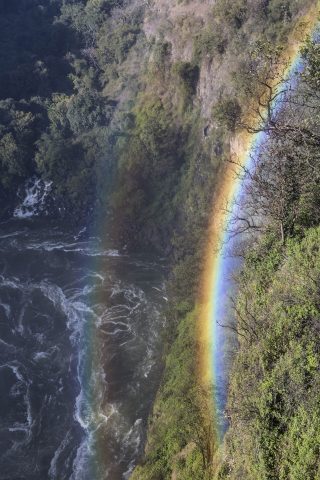
Zambezi National Park follows the river that gives it its name. The water here flows wide and slow before crashing into Victoria Falls. The savanna meets the river in a quiet rhythm, where wildlife ignores the lines humans draw on maps. Unlike nearby reserves, this park hasn’t been shaped for tourists. No crowds, no staged safaris—just the raw pulse of the African bush.
The Zambezi River shapes everything. During the rainy season, it floods the lowlands, turning savanna into a maze of waterways. When the dry season comes, the river shrinks, leaving sandbanks where hippos rest and crocodiles warm themselves. The water dictates life—drawing animals, sheltering birds, feeding the dense greenery along its edges. It isn’t just part of the park; it is the park.
The land changes quickly. To the north, miombo woodlands stretch out, their tall trees sheltering antelope and rare birds. To the south, grassy plains appear, dotted with granite rocks and acacia thickets. Near the river, the vegetation grows thick—wild figs, ebony trees, vines twisting around ancient trunks. The place feels untouched, though people have passed through for generations.
The Zambezi’s history is tied to the river. For centuries, it was a trade route for local communities and later for European explorers. In the 19th century, David Livingstone traveled these waters, drawn by the unknown. He would later become the first European to see Victoria Falls, but his journey was part of a larger story—one of curiosity and ambition. Back then, no one thought of conservation; the river was a highway, the land a resource. The park was created later to protect what remained.
Today, Zambezi National Park offers something rare: Africa without the tourist show. No open-top safari vehicles, no guarantees of spotting the Big Five. Instead, you can walk trails, paddle a canoe, or sit on the bank and watch elephants drink. The wildlife moves freely—elephants, buffalo, giraffes, zebras. Encounters feel unplanned. You might see impala darting through grass or a leopard resting under a baobab. There’s no schedule, no promise. That’s the point.
Birds are one of the park’s quiet wonders. Over four hundred species live here—marabou storks, sunbirds flashing like jewels. During migration, the skies fill with herons, ibises, and storks. The riverbanks echo with kingfishers and hornbills. Even if you don’t care about birds, the life around the water is mesmerizing. It shows how much thrives where humans don’t take over.
The river is also a place for adventure. In calm stretches, you can paddle past hippos, their bodies rising and sinking. Crocodiles sun themselves on the banks or slip into the water. The Zambezi isn’t tame. Locals know this, treating it with caution. For visitors, that respect makes the experience deeper—you’re not just watching nature, you’re stepping into it.
In the dry season, the river reveals secrets. Sandbanks appear, letting you walk barefoot, listening to rushing water and bird calls. At sunset, the river turns gold and crimson. The light shifts on the water. It’s easy to see why these lands were once sacred. There’s a stillness here that stays with you.
Zambezi National Park isn’t for those who want luxury. No high-end lodges, no gourmet meals, no air-conditioned tours. What it offers is freedom—to wander, to listen, to be present. It’s Africa without the artifice. That’s why people come—not for promises, but for what it shows them.