The Victoria Falls Bridge is one of those rare structures that feels like it was always meant to be here, as if the landscape itself demanded it. Stretching across the Second Gorge of the Zambezi River, just downstream from the thunderous Victoria Falls, the bridge connects Zimbabwe and Zambia with an almost effortless grace. It was completed in 1905, a time when engineering feats were as much about ambition as they were about necessity. The British colonial administration wanted a direct rail link between Cape Town and Cairo, and this bridge was a critical piece of that grand, if ultimately unfinished, vision. Designed by George Andrew Hobson and built by the Cleveland Bridge & Engineering Company, it was assembled in England, shipped in pieces to southern Africa, and then painstakingly reassembled on-site. The result is a steel arch bridge that not only serves its practical purpose but also complements the dramatic scenery around it.
Standing on the bridge today, it’s hard not to feel the weight of history. The Zambezi roars below, its waters churning before they plunge into the gorge, and the spray from the falls often drifts upward, leaving a fine mist on the bridge’s railing. The structure itself is a study in early 20th-century engineering—riveted steel girders, a single arch spanning 156 meters, and a deck that carries both rail and road traffic. For decades, it was the only crossing point between Zimbabwe and Zambia, making it a vital artery for trade, travel, and even diplomacy. The bridge has witnessed colonial rule, independence movements, and the ebb and flow of regional politics, all while remaining a constant presence in the lives of those who live and work along the Zambezi.
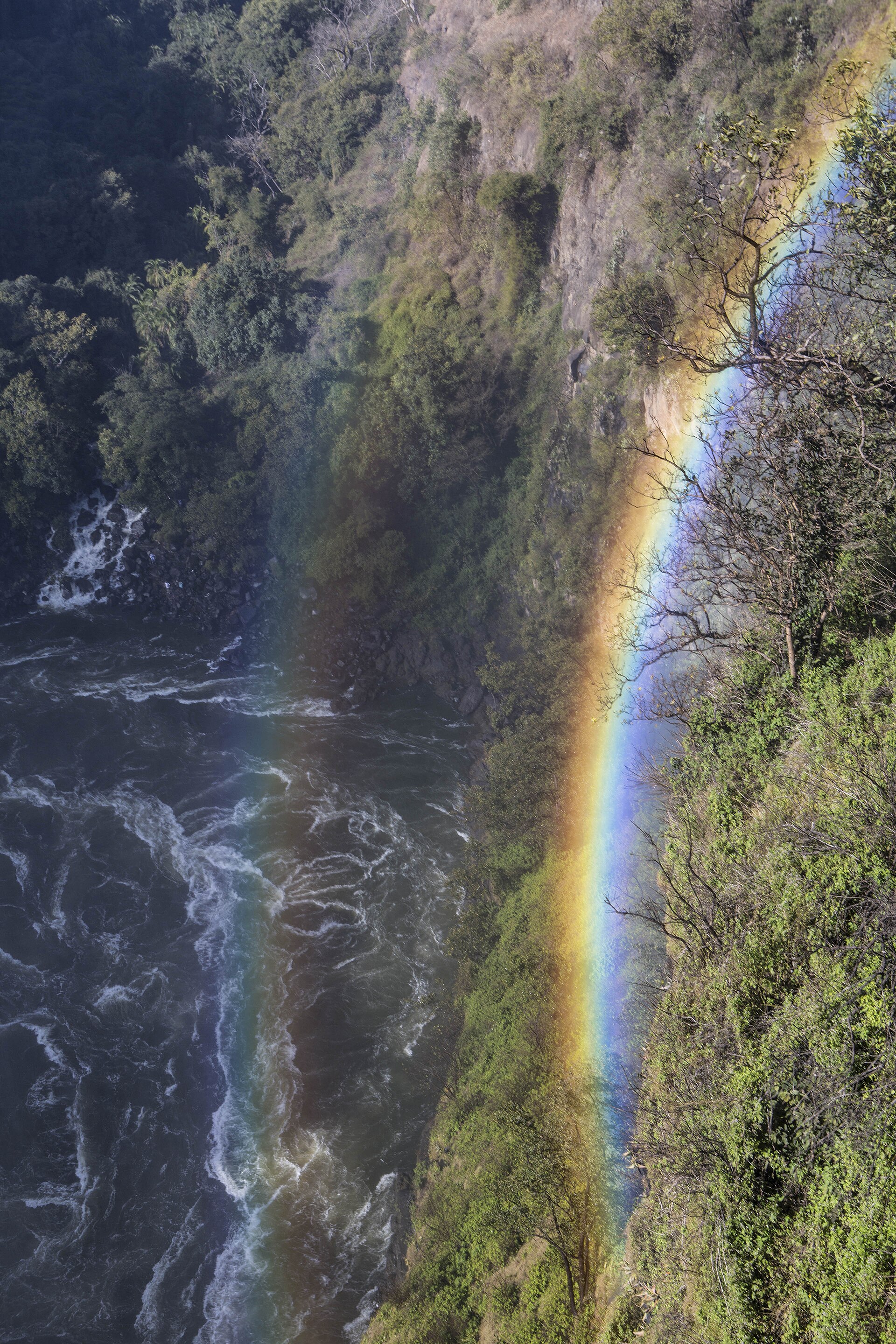
The bridge’s location is no accident. It was deliberately placed just below the falls, where the Zambezi narrows into a deep, sheer-sided gorge. This not only provided a natural foundation for the structure but also ensured that the bridge would become part of the spectacle. Visitors who walk or drive across it are treated to one of the most dramatic views in Africa—the falls to the left, the gorge stretching away to the right, and the river below, its surface broken by jagged rocks and swirling currents. On the Zimbabwean side, the bridge leads directly into Victoria Falls town, a place that has grown up around the tourism industry but still retains a certain frontier charm. On the Zambian side, the road winds through the bush toward Livingstone, a quieter, more laid-back counterpart to its Zimbabwean neighbor.
For many travelers, the bridge is more than just a way to cross the river. It’s a place to pause and take in the scale of the landscape. The best time to visit is early morning or late afternoon, when the light softens the harsh edges of the gorge and the spray from the falls catches the sun, creating rainbows that arc over the water. The bridge is also a popular spot for adrenaline seekers. Bungee jumping from its deck has become something of a rite of passage for those visiting the falls, with the 111-meter drop offering a few seconds of freefall before the elastic cord snaps taut. For those who prefer to keep their feet closer to the ground, there are also guided tours that take visitors beneath the bridge, where the engineering details and the sheer size of the structure become even more impressive.
The bridge has its quieter moments too. Locals cross it daily, some on foot, others on bicycles or in cars, going about their routines with little fanfare. Fishermen sometimes cast their lines from the banks below, and in the dry season, when the water levels drop, the exposed rocks reveal the river’s hidden contours. The bridge is also a gathering place for those who work in the tourism industry—guides, vendors, and drivers who rely on the steady stream of visitors to make a living. In the evenings, when the day-trippers have left, the bridge takes on a different character. The lights along its length flicker to life, and the sound of the falls becomes a distant rumble, a reminder of the raw power that lies just beyond the edge of town.
There’s a certain irony in the fact that a bridge built during the colonial era has become such a symbol of connection. It was originally conceived as a tool of empire, a way to bind together distant territories under British rule. Yet today, it serves as a link between two independent nations, a reminder that infrastructure often outlasts the intentions of those who create it. The border post on the Zambian side is a busy place, with trucks lined up for inspection and travelers stopping to have their passports stamped. The Zimbabwean side, by contrast, feels more relaxed, with a small market where vendors sell crafts and curios to those passing through. The bridge itself is neutral ground, a place where the politics of the region fade into the background, at least for a moment.
The Victoria Falls Bridge is also a testament to the enduring appeal of the falls themselves. Victoria Falls is one of the natural wonders of the world, a place where the Zambezi suddenly drops 108 meters into a narrow gorge, creating a curtain of water that can be seen and heard from miles away. The bridge offers one of the best vantage points to appreciate the scale of the falls, especially during the wet season, when the spray rises hundreds of meters into the air. The sound of the water crashing into the gorge is deafening, a constant roar that drowns out everything else. It’s a humbling experience, a reminder of how small humans are in the face of nature’s power.
Yet for all its grandeur, the bridge is also a very human place. It’s where travelers meet, where stories are exchanged, and where the line between adventure and everyday life blurs. Whether you’re crossing it for the first time or the hundredth, there’s always something new to notice—the way the light hits the steel at different times of day, the patterns of the water below, or the faces of the people who pass by. It’s a place that invites you to slow down, even if just for a moment, and appreciate the journey as much as the destination. In a region that’s often defined by its extremes—of landscape, of history, of experience—the Victoria Falls Bridge offers a rare sense of balance. It’s a structure that has stood the test of time, not just as a feat of engineering, but as a part of the living, breathing story of the Zambezi.