The Yaa Asantewaa Museum in Kumasi is where the story of the Ashanti people isn’t just preserved—it’s brought to life through the voices of those who shaped it. This isn’t a place of dusty relics or impersonal exhibits; every object here, from faded photographs to handwritten letters, ties back to a single figure whose name became synonymous with defiance and dignity. Yaa Asantewaa was the queen mother of Ejisu, one of the states within the Ashanti Confederacy, and in the early 20th century, she led a rebellion against British colonial rule. Her refusal to surrender the Golden Stool—the sacred symbol of Ashanti sovereignty—turned her into a legend, and this museum is where that legend takes on weight and meaning.
The building itself is part of the story. It stands within the grounds of Kumasi Fort, constructed by the British in the late 19th century as a military stronghold. After capturing the city, the colonizers repurposed the fort as a prison and administrative hub, later using it to store archives and war trophies. When the decision was made to transform it into a museum in the 1990s, the structure retained much of its original austerity: thick red-brick walls, narrow windows, heavy doors. But now, those same walls speak of something different—not the might of empire, but the struggle for freedom.
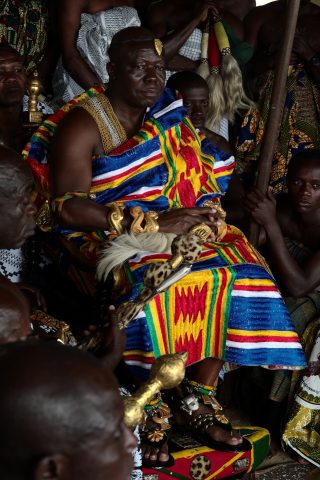
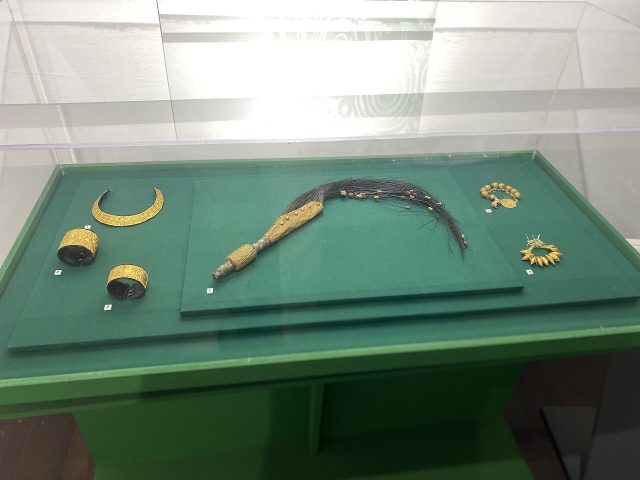
The exhibition begins in a hall dedicated to Ashanti culture before European contact. Here, you’ll find kente cloth, its intricate patterns woven by hand to convey entire messages, alongside ritual gold ornaments, weapons, and everyday objects. A replica of the Golden Stool takes center stage, not just as a symbol of power but as the embodiment of the Ashanti spirit. The British repeatedly tried to seize it, believing its capture would break resistance, but the Ashanti hid it time and again. In 1900, Yaa Asantewaa rallied her people with a simple, unshakable demand: the stool would never be surrendered. The uprising she led became the last major war for Ashanti independence.
The next section shifts to the colonial era, where photographs and documents depict British officers, local rulers, and scenes of daily life under imperial rule. Letters and decrees from the time are on display, including those detailing Yaa Asantewaa’s arrest and exile. After the rebellion was crushed, she and other leaders were sent to the Seychelles, where she spent the rest of her life. The museum doesn’t glorify these events, nor does it reduce them to a dry recitation of facts. Instead, it shows how ordinary people—farmers, artisans, women—became part of something much larger than themselves.
A separate section explores Yaa Asantewaa’s legacy. After Ghana gained independence in 1957, her story became a symbol of resistance not just for the Ashanti but for the entire nation. The museum features contemporary art inspired by her, from paintings and sculptures to textiles that blend her image with traditional Ashanti motifs. There are also modern books and articles about her, proof that her story continues to resonate. One standout piece is a series of tapestries where her likeness is woven into patterns that echo the very kente cloth she might have worn.
Though small, the museum holds outsized significance in Kumasi. It’s a hub for lectures, workshops, and festivals centered on Ashanti history and culture. Occasionally, visitors can participate in kente-weaving demonstrations or jewelry-making sessions, filling the space with the clatter of looms and the scent of natural dyes. For locals, it’s more than a tourist attraction—it’s a place that reinforces identity. For outsiders, it offers a chance to see Ghana’s history not through the lens of colonialism, but through the lens of resilience and tradition.
A visit here leaves an odd impression: the past feels vivid, yet it’s clear this history isn’t confined to the past. Schoolchildren on field trips, students taking notes, and elderly residents stopping by to revisit familiar exhibits all move through the halls. Sometimes, tours are given in Twi, and the stories of Yaa Asantewaa are told as they have been for over a century—passed down orally, from one generation to the next. The museum doesn’t try to cover everything; it focuses on one story, and that focus is what makes it powerful.
Kumasi itself is a city steeped in history, and the Yaa Asantewaa Museum is just one facet of it. But here, you can sense the pulse of the Ashanti past, understand why the Golden Stool matters so deeply, and see why a woman who led a rebellion over a century ago still evokes pride. This isn’t a museum that aims to impress with scale or sheer volume of artifacts. It’s a place where history is told with care, where the people who lived it are given the respect they deserve. And perhaps that’s why it lingers in the memory long after you’ve left.