Manhyia Palace stands at the heart of Kumasi, a city that has long been the cultural and historical nucleus of the Ashanti people. This isn’t just a building—it’s a living institution, where the past and present of one of Ghana’s most influential ethnic groups continue to intersect. The palace serves as the official residence of the Asantehene, the traditional ruler of the Ashanti, a role that remains deeply embedded in the region’s social and political fabric. Even today, decisions about community matters, cultural preservation, and local governance are made within these walls, reflecting the enduring significance of traditional leadership in modern Ghana.
The palace was constructed in the early 20th century, a time when British colonial authorities sought to reshape Ashanti authority by relocating the capital from the ruins of old Kumasi. Yet Manhyia was never meant to be a mere administrative center. Instead, it became a symbol of resilience, blending European colonial architecture with Ashanti design elements—a physical manifestation of a culture that adapted without surrendering its identity. The building’s structure tells a story of negotiation, where foreign influences met local traditions, resulting in something uniquely Ashanti.
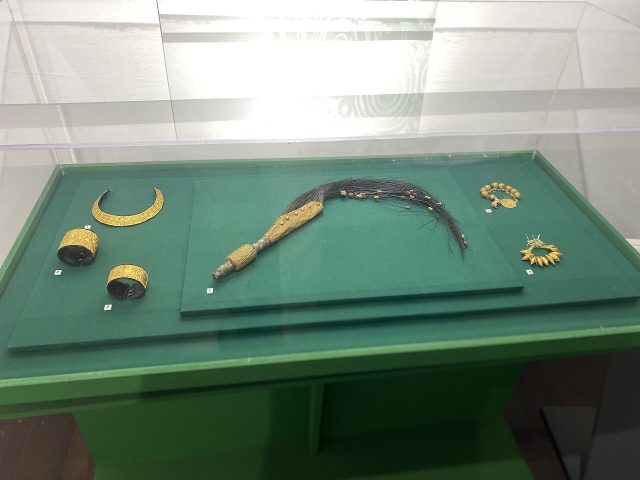
Inside, the palace houses a collection of artifacts that offer a glimpse into the kingdom’s rich history. Gold ornaments, ceremonial swords, and intricately carved stools line the rooms, each item tied to rituals and pivotal moments in Ashanti history. Among the most revered is the Golden Stool, or *Sika Dwa Kofi*, believed to embody the soul of the Ashanti people. According to legend, it descended from the heavens, and its spiritual significance is so profound that the original is rarely displayed. Still, replicas and other sacred objects provide a tangible connection to the past, allowing visitors to sense the weight of tradition that permeates the space.
Manhyia is far from a static museum. It remains an active center of Ashanti life, where ceremonies, festivals, and gatherings of elders unfold as they have for generations. One of the most important events is the *Adae* festival, a time when drummers fill the air with rhythmic beats, and offerings are made to honor ancestors. The atmosphere is one of reverence, where even a casual visitor can feel the depth of respect that surrounds the palace. On certain days, the courtyard comes alive with people dressed in vibrant *kente* cloth, arriving to pay homage to their rulers and uphold age-old customs.
The area around the palace is just as vibrant. Kumasi is famous for its markets, and the nearby Kejetia Market is one of the largest in West Africa, a labyrinth of stalls selling everything from handwoven textiles to spices and traditional medicines. Nearby, the National Cultural Centre showcases Ashanti craftsmanship, from brass casting to woodcarving. Yet it’s Manhyia that anchors the city’s historical identity, a place where the past isn’t just remembered—it’s lived.
A visit to Manhyia offers more than a tour of a historic site; it’s an opportunity to witness how tradition and modernity coexist. There are no rigid museum rules here, just an unspoken understanding of the palace’s significance. A guide or a local resident might share stories of coronations, explain the symbolism behind certain artifacts, or recount the legends that have shaped Ashanti history. These narratives bring the space to life, making it clear that Manhyia isn’t just a relic—it’s a place where history is still being written.
What makes Kumasi and Manhyia particularly compelling is their role in illustrating how traditional authority functions in contemporary Africa. There’s no ostentatious display of wealth, but rather a quiet dignity in the way rituals are observed, how people interact with their ruler, and how customs are preserved. For many Ashanti, the palace isn’t just a building—it’s the heartbeat of their culture, a place where the past informs the future. It’s a reminder that some institutions endure not by resisting change, but by adapting while staying true to their essence.