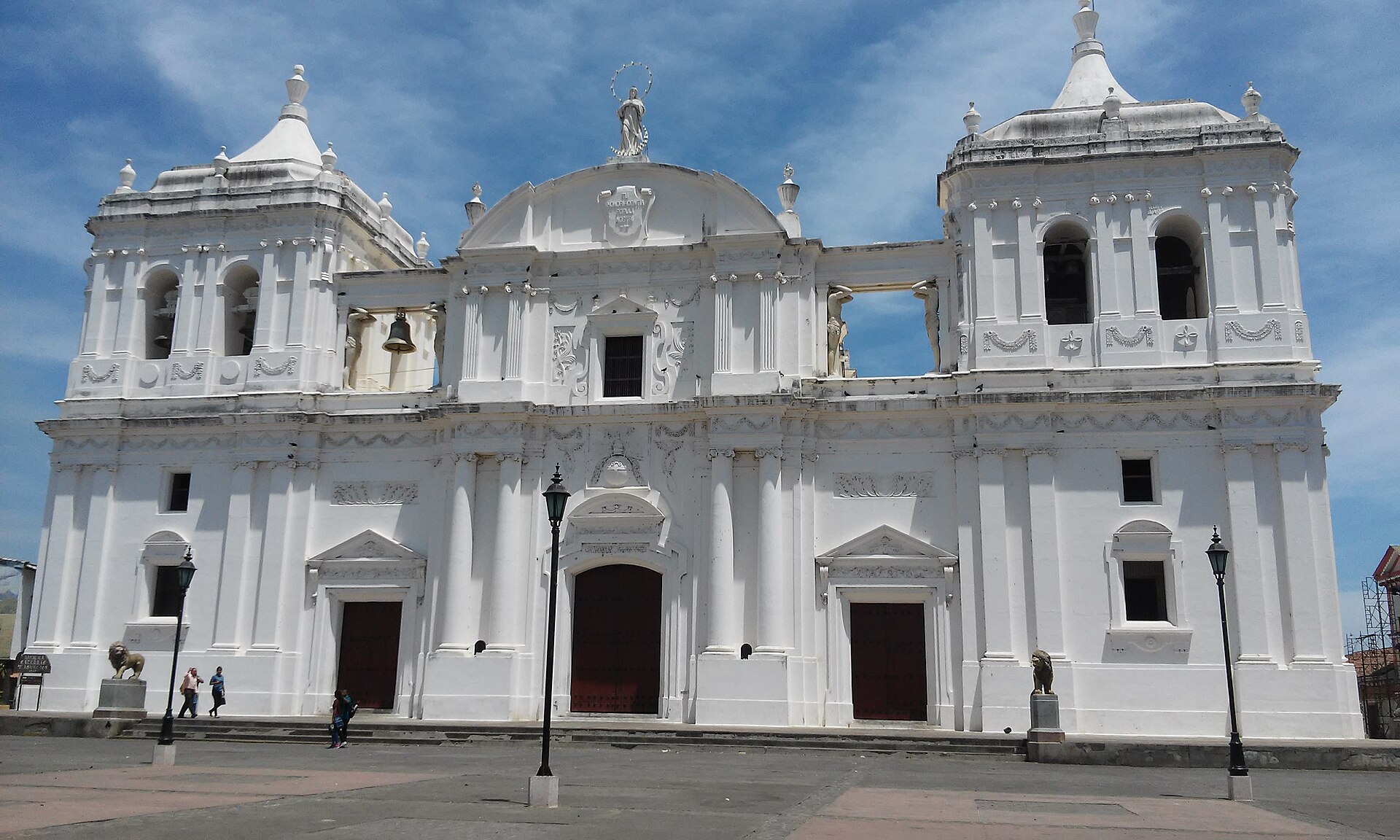
León is a city where history and art breathe together, woven into the fabric of its streets. Among the narrow lanes lined with brightly painted facades and the lively plazas where life unfolds in its own unhurried rhythm, the León Art Museum stands as one of Nicaragua’s most meaningful cultural spaces. It isn’t just a place that preserves art—it’s a storyteller, one that connects the past to the present in the way only a place with a true soul can.
The museum occupies a colonial-era mansion, its architecture a quiet testament to the city’s layered history. Built in the late 18th century, the building retains the hallmarks of its time: thick wooden beams, inner courtyards where fountains once murmured, high ceilings that seem to hold the weight of centuries, and intricately carved doors. It doesn’t feel like a museum piece, though. Instead, it feels lived-in, a space where art and everyday existence blend seamlessly, as if the walls themselves have absorbed the creativity that has passed through them over the years.
Inside, the collection spans several centuries of Nicaraguan art, beginning with colonial-era religious paintings. These works, often depicting saints and biblical scenes, carry the naive sincerity of the period, their simplicity revealing more about the faith and culture of the time than any grand statement could. The 19th century brought a shift, as Nicaragua moved toward independence and art became a way to define national identity. The paintings from this era are filled with patriotic themes, yet they’re also deeply personal—volcanoes, lakes, and tropical forests rendered with such affection that they feel like love letters to the land itself.
But the museum’s true highlight is its collection of modern Nicaraguan art, particularly the works of Armando Morales. Born in León, Morales became one of the country’s most celebrated artists, his paintings layered with symbolism and raw emotion. His themes—memory, loss, rebirth—resonate deeply in a nation that has endured revolution, war, and natural disasters. His art doesn’t spell out history; it evokes it, leaving room for the viewer to feel the weight of the past without being told what to think. Standing before one of his canvases, it’s easy to sense the quiet tension between hope and sorrow, a tension that has shaped Nicaragua in ways both visible and unseen.
Beyond its permanent collection, the museum keeps its doors open to the present through temporary exhibitions, showcasing both local and international artists. This makes it more than a repository of the past—it’s a living space, one that evolves with the cultural currents of the country. Workshops, lectures, and artist talks are common here, turning the museum into a gathering place for creators and those who simply want to engage with art. There’s no rush, no pressure to move on from a piece that catches your eye. Visitors are free to linger, to let the art sink in at its own pace.
León has long been a city of artists, and the museum is a natural extension of that spirit. The streets are dotted with studios where painters and craftspeople still work, and murals blend seamlessly with the colonial architecture, as if the city itself is a canvas. The museum acts as a bridge between tradition and modernity, showing how one flows into the other. There’s no rigid separation here—even the oldest works feel relevant, part of an ongoing conversation about what it means to be Nicaraguan.
A visit to the museum is less about ticking off exhibits and more about stepping into a larger story. As you move through the galleries, the art begins to reveal the contours of Nicaragua’s history: the struggles for independence, the dreams and disappointments, the moments of triumph and tragedy. It’s not presented as a dry timeline but as something felt—through color, form, and emotion. One painting might hint at the shadows of civil war, another at the longing for peace, while a third captures the quiet beauty of a sunlit courtyard, where clay pots and flowering trees tell their own small stories.
The museum sits at the heart of León, making it an easy stop on any exploration of the city. Afterward, you might wander into a nearby café where artists gather to talk over coffee, or browse the local market, where handmade crafts offer another glimpse into Nicaragua’s creative spirit. León is a place where art isn’t confined to museums—it spills into the streets, into the way people live and interact. The León Art Museum isn’t an exception to this; it’s a reflection of it. It doesn’t try to impress with grandeur or spectacle. Instead, its strength lies in its authenticity, in the way it quietly invites you to see Nicaragua not just as a place on a map, but as a living, breathing story told through art.