The Temple of Hatshepsut clings to the cliffs of Deir el-Bahri, a stark and elegant structure carved into the rock as if nature itself had shaped it. Built in the 15th century BCE, it was designed by the architect Senenmut, who created a series of terraces rising in perfect symmetry from the desert floor. The temple was meant to honor the pharaoh Hatshepsut, one of the few women to rule Egypt as a king rather than a queen. Her reign was a time of prosperity, and the temple reflects that—its reliefs depict her in the traditional regalia of a male ruler, complete with a false beard, a symbol of divine authority.
The walls of the temple tell stories of her achievements, including the famous expedition to the land of Punt, a distant and mysterious region believed to be somewhere along the Red Sea or the Horn of Africa. The carvings show ships laden with exotic goods—gold, ebony, incense trees—brought back to Egypt. Some of these trees were even planted near the temple, though none survive today. The reliefs are remarkably detailed, offering a glimpse into the trade and diplomacy of the time.
Hatshepsut’s legacy was nearly erased after her death. Her successor, Thutmose III, ordered her name and image removed from monuments across Egypt, a deliberate attempt to rewrite history. Here, the damage is still visible—chiseled-out cartouches and defaced figures stand as silent witnesses to the political struggles of the era. The temple was later restored by Polish archaeologists, who spent decades piecing together its fragmented past.
The site has a weight to it, not just from its ancient history but from more recent events. In 1997, a violent attack on tourists left dozens dead, casting a shadow over the temple for years. Security is now tight, with armed guards and checkpoints along the road leading to the site. The memory of that day lingers, though the temple itself remains a place of quiet grandeur.
Visiting in the early morning is the best way to experience it. The sun rises over the cliffs, casting long shadows across the terraces, and the heat is still bearable. By midday, the stone radiates warmth, and the glare can be overwhelming, even in winter. Many visitors arrive at dawn, often combining the trip with a hot-air balloon ride over the Valley of the Kings. The balloons drift silently above the temples and tombs, offering a different perspective on the landscape.
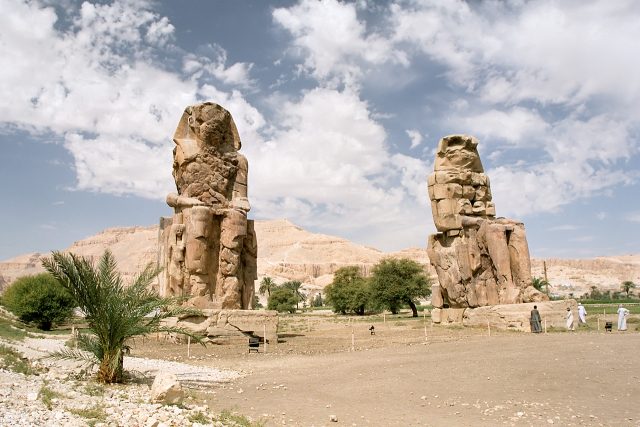
The walk from the parking lot to the temple is about half a mile, a straight path through the desert. A small electric train runs the route for those who prefer not to walk, though the ride is brief. Nearby, the Colossi of Memnon stand guard over the ruins of Amenhotep III’s mortuary temple, their massive stone forms a reminder of the scale of ancient Egyptian ambition. The Valley of the Kings is just a short drive away, where the tombs of pharaohs lie hidden beneath the hills.
Tickets for the temple are sold separately from those for the Valley of the Kings, with booths set up near the main parking area. The balloon flights, which depend on weather conditions, often take off before sunrise. Delays and cancellations are common, but refunds are usually offered if the flight doesn’t go ahead. The experience is worth the uncertainty—the view of the temple from above, bathed in the first light of day, is unforgettable.
There’s something about the Temple of Hatshepsut that feels timeless. It’s not just the age of the stone or the stories carved into its walls, but the way it sits in the landscape, as if it has always been there. The cliffs behind it rise sharply, framing the temple like a natural monument. Even with the crowds that gather each morning, there are moments when the place feels almost empty, as if the past is still holding its breath.