Luxor Temple stands on the east bank of the Nile, where the modern city wraps around its walls. Pharaohs Amenhotep III and Ramses II built it over centuries, dedicating it to Amun, Mut, and Khonsu—gods who ruled Thebes when it was Egypt’s capital. The stones still hold the weight of rituals performed here under the desert sun.
Avenue of sphinxes once linked this temple to Karnak. Buried for centuries, it was uncovered in recent excavations. Now you can walk the same path priests and pharaohs took. At the entrance, one obelisk remains; its twin stands in Paris’s Place de la Concorde. France received it in the 19th century, leaving this one behind.
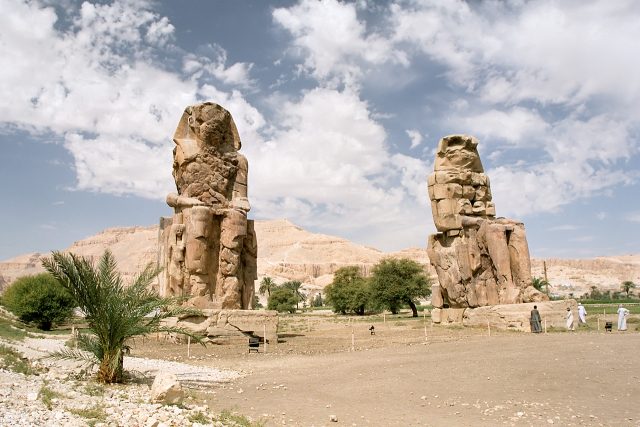
Colossal statues of Ramses II guard the entrance. Their faces are worn, but their presence is undeniable. The temple unfolds in layers—each revealing a different era. Amenhotep III’s courtyard leads to the hypostyle hall, where columns rise like petrified papyrus. Their capitals bear lotus and palm carvings. Reliefs on the walls show pharaohs offering gifts to the gods, scenes once lit by torchlight.
The temple absorbed new beliefs over time. Romans turned part of it into a church, adding frescoes that still peek through older carvings. Later, a mosque was built atop its ruins. When archaeologists uncovered the site, they found the mosque suspended above ancient columns. Instead of removing it, they left it—a bridge between past and present.
The temple is small enough to explore in an hour.
Visit in the evening. The heat fades, and golden light bathes the stones. Shadows deepen the reliefs, making the columns seem to shift. The city hums nearby, but the temple stays quiet. From here, the Nile is a short walk away. Feluccas drift past, and ferries cross to the west bank, toward the Valley of the Kings.
Luxor Temple stays open after dark. Lights switch on at dusk, softening the stone. From November to March, evenings are cool—bring a jacket. Tickets are sold until closing, and lines are shorter than during the day.
The stones have seen empires rise and fall. They’ve watched religions come and go. Yet they remain. The past isn’t just remembered here—it lingers in the light on the carvings, in the echo of footsteps, in the mosque above the columns. You come for the history, but you stay for the way time feels different here.