The Confucius Temple in Taichung is one of those rare places where time seems to slow down, as if the world beyond its walls moves at a different pace. Tucked away from the city’s bustling streets, it sits within a quiet park, its presence commanding a sense of calm that feels almost timeless. Unlike the vibrant, ornate Buddhist temples that dot Taiwan’s landscape, this temple carries a different kind of weight—one of restraint, balance, and quiet reverence. There are no dazzling colors or elaborate carvings here, just clean lines, thoughtful proportions, and an atmosphere that speaks to the enduring influence of Confucian thought.
Built in 1976, the temple was conceived as a tribute to a philosophy that shaped not only China’s spiritual life but also its education, ethics, and governance for centuries. Taiwan, which has preserved many traditions from the mainland, holds such places in particular regard. The Taichung temple isn’t a replica of ancient Confucian sanctuaries but rather a modern interpretation, blending classical architectural principles with local sensibilities. It stands as a bridge between past and present, a physical reminder of how deeply Confucianism has rooted itself in the island’s cultural identity.
The main hall embodies this fusion of tradition and adaptation. Its sweeping roof, with upturned eaves characteristic of Chinese architecture, is covered in green tiles that catch the sunlight in soft, shifting hues. The supporting columns are adorned with subtle carvings, but the design avoids excess, favoring simplicity over spectacle. At the heart of the complex lies the altar, where a tablet honors Confucius, surrounded by courtyards and pavilions that once hosted ceremonies and rituals. The layout follows ancient conventions, yet there’s a sense of openness, as if inviting visitors to step into a living tradition rather than a relic of the past.
This isn’t a temple in the conventional sense—there are no incense offerings to deities, no prayers for fortune or favor. Instead, it serves as a cultural and educational space, where the teachings of Confucius are celebrated through ceremony and reflection. On significant dates, such as the philosopher’s birthday, the temple comes alive with rituals that feel more like a homage to history than a religious observance. Participants dressed in traditional robes recite classical texts, accompanied by ancient music, while the scent of flowers and candles lingers in the air. These events are less about worship and more about preserving a connection to the past, ensuring that the values Confucius espoused remain relevant.
One of the most striking features of the temple is the pavilion dedicated to scholars. Here, tablets bear the names of those who advanced Confucian thought, whether through philosophy, education, or governance. It’s a quiet acknowledgment of how Confucianism wasn’t just a moral code but a framework for intellectual and societal progress. In Taiwan, where education has long been held in high esteem, such spaces resonate deeply. The pavilion serves as a reminder that knowledge and virtue were once inseparable, and that the pursuit of wisdom was a lifelong endeavor.
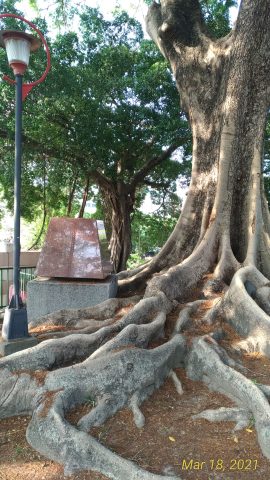
Surrounding the temple is a park that feels like an extension of its tranquil spirit. Ponds reflect the sky, arched bridges invite leisurely strolls, and ancient trees provide shade in the summer and golden foliage in the fall. The park is a favorite spot for locals, who come not just to visit the temple but to escape the city’s pace—whether to read under a tree, enjoy a picnic, or simply sit in silence. There’s no rush here, no agenda beyond the simple pleasure of being present in a place where nature and history coexist.
The Confucius Temple in Taichung isn’t a museum, nor is it a typical tourist attraction. It exists in its own rhythm, unhurried and unpretentious. You might spend an hour wandering its courtyards or an entire afternoon lost in thought on a park bench, watching shadows stretch across the walls or listening to the rustle of leaves. It’s a place for those who seek more than just a photo opportunity—those who want to understand how traditions endure, even in a rapidly changing world. The temple doesn’t demand attention; it earns it through its quiet dignity.
In recent years, the temple has found new life among younger generations, particularly students. For them, it’s not just a historical site but a tangible link to the cultural foundations of their society. Lectures, workshops, and even traditional wedding ceremonies are held here, proving that Confucianism isn’t a relic but a living philosophy. The temple adapts, finding ways to remain relevant without losing its essence. It’s a testament to how deeply these ideas are woven into Taiwan’s identity, even as the world around it evolves.
Visiting the temple requires no special preparation. There are no strict rules, just an unspoken respect for the space and its history. You can remove your shoes before entering the main hall, sit on the steps gazing at the altar, or wander the park’s paths, pondering how ideas born over two millennia ago still shape lives today. That, perhaps, is the temple’s greatest gift—it doesn’t just preserve the past but invites reflection on the present. In a world that often feels fragmented, it offers a moment of stillness, a chance to consider what endures.