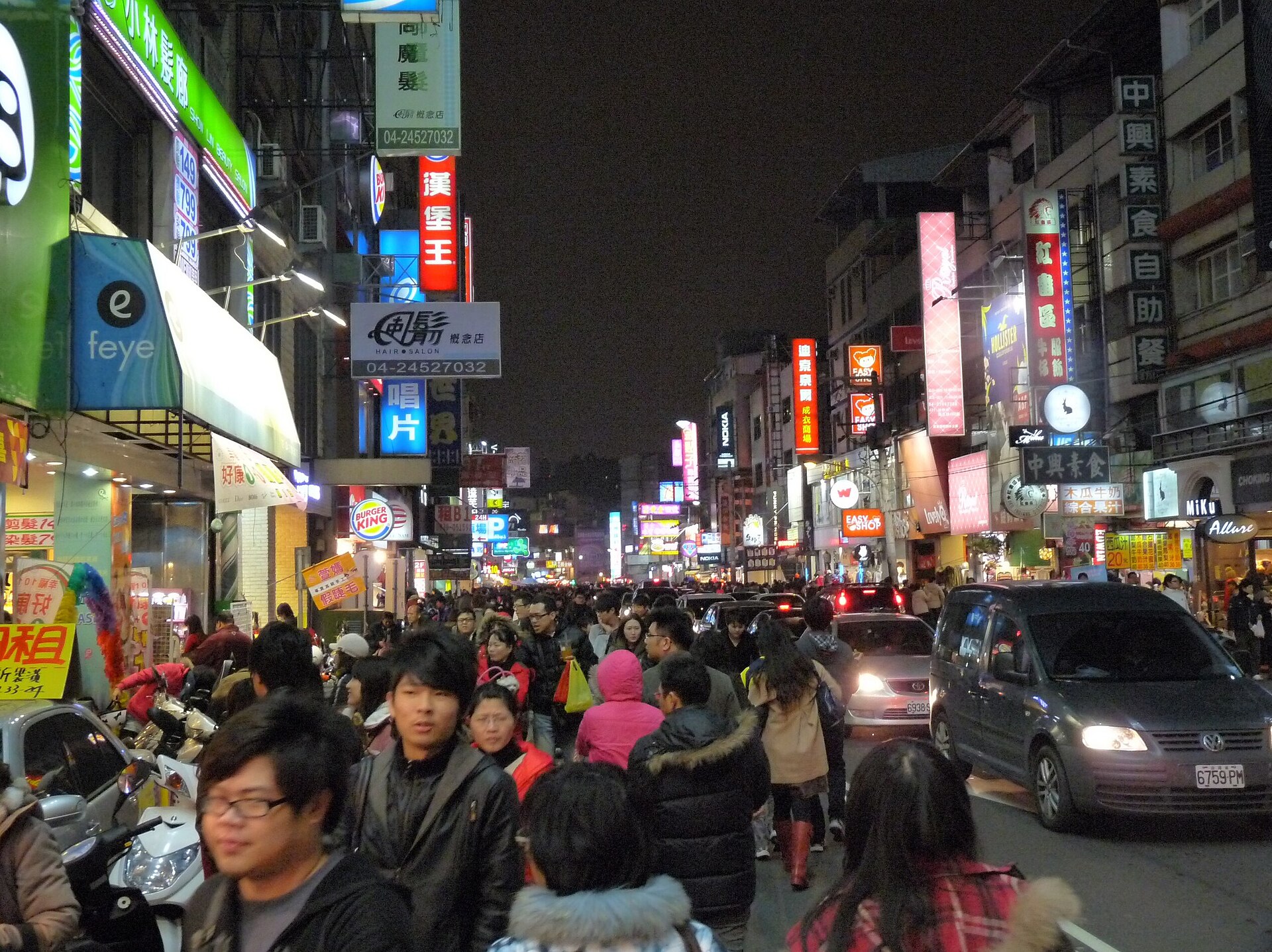
Fengjia Night Market in Taichung isn’t just a place to eat or shop—it’s where the city’s pulse feels strongest. Unlike polished tourist spots, it thrives on its own rhythm, a maze of narrow alleys humming with voices, sizzling woks, and the scent of spices that lingers in the air long after you leave. Here, the crowd isn’t just visitors; it’s students, families, and locals who’ve made this market part of their daily lives for generations.
The market took shape in the 1960s, growing organically around Feng Chia University. What began as a few stalls catering to students and professors soon spilled into the surrounding streets, expanding into the sprawling labyrinth it is today. There’s no grand plan to its layout—just a tangle of lanes that twist and turn, widening into small plazas before narrowing again into tight corridors lined with vendors. The buildings themselves tell a story: weathered facades stand beside newer storefronts, their mismatched styles a quiet record of the city’s evolution.
Food is the heart of Fengjia, and the choices can feel overwhelming. The market is famous for its fried chicken cutlets, marinated in a blend of spices before being battered and deep-fried to a crisp golden brown. The first bite delivers a satisfying crunch, followed by juicy, tender meat inside. Then there are the *baozi*—steamed buns stuffed with pork, mushrooms, or vegetables—soft and pillowy, best eaten while still warm. Vendors also serve up classics like oyster omelets, stinky tofu (for the adventurous), and bubble tea, which originated in Taiwan and remains a staple here. The drinks come in endless variations: cold milk teas with chewy tapioca pearls, fruity infusions, or herbal blends spiked with ginger or cinnamon, depending on the season.
Beyond food, the market is a microcosm of everyday life. One aisle might be packed with clothing stalls selling everything from trendy streetwear to practical basics, while another is devoted to electronics, kitchen gadgets, or household goods. The atmosphere shifts as the evening wears on—early visitors might be students grabbing a quick bite between classes, while later crowds include families lingering over dinner or groups of friends sharing plates at tiny plastic tables. The energy is infectious, a mix of urgency and leisure, as people weave through the crowds or pause to chat with vendors they’ve known for years.
What makes Fengjia special is its authenticity. There’s no attempt to sanitize or stage the experience; it’s messy, loud, and unapologetically real. The market has adapted over the decades—city officials have widened walkways, improved lighting, and added waste bins—but the soul of the place remains unchanged. Vendors remember their regulars, calling out greetings or recommending dishes based on what’s fresh that day. For students, it’s a second home, a place to unwind after exams or meet up with friends. For locals, it’s where they’ve celebrated birthdays, introduced their kids to their favorite snacks, or simply passed an evening with no agenda other than to soak in the atmosphere.
The market doesn’t open until late afternoon and stays lively well past midnight, with the busiest nights falling on weekends. By then, the air is thick with the smell of grilled skewers, the clatter of woks, and the occasional burst of laughter from a group sharing a meal. It’s easy to lose track of time here, wandering from one stall to the next, sampling bites of this or that, or settling in at a corner table to watch the crowd go by. The lighting is warm but uneven, casting long shadows that add to the market’s intimate, almost theatrical feel.
Fengjia is more than just a destination; it’s a living piece of Taichung’s identity. It reflects the city’s history—how it grew from a quiet university district into a bustling urban hub—and its present, where tradition and modernity coexist without fuss. The market doesn’t need to be flashy or perfect; it just needs to be itself. And in that way, it offers something rare: a glimpse into the everyday rhythms of life in Taiwan, where food, community, and culture blend seamlessly into the fabric of the city.