Taichung’s Museum of Fine Arts is one of those rare places where art doesn’t just hang on walls or sit behind glass—it becomes part of the city’s rhythm. Unlike traditional museums with their hushed halls and dim lighting, this one feels open and alive. High ceilings, natural light streaming through large windows, and an architecture that flows rather than imposes create the sense that the art doesn’t end at the building’s edges. It spills outward, inviting visitors not just to observe but to linger, to let the space and the works within it become part of their own experience, even if only for an afternoon.
The museum’s story began in the late 1980s, a time when Taichung was carving out its identity as a cultural hub on the island. The city wasn’t content to be just another industrial or business center; it wanted art to feel accessible, something woven into everyday life. When the museum opened in 1988, it wasn’t just a repository for paintings and sculptures—it was a place for conversation, a bridge between artists and the people who lived around it. Over the years, its collection grew organically, gathering works by Taiwanese artists across generations while also bringing in international perspectives that helped locals see art in a broader context.
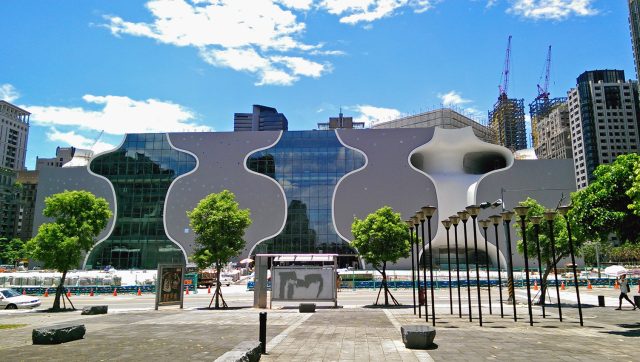
The building itself is worth paying attention to. Designed to blend into the city rather than dominate it, the museum’s glass and concrete facades give it a modern yet unassuming presence. Inside, the layout follows a principle of openness: galleries flow into one another without rigid boundaries, and large windows frame views of the surrounding park, dissolving the line between interior and exterior. This isn’t a place where you have to tiptoe around or worry about breaking some unspoken rule. You can wander at your own pace, pause where you like, or even sit on one of the benches to take in the details without feeling rushed.
The museum’s collection focuses primarily on Taiwanese art from the 20th and 21st centuries, showcasing both established names and emerging voices shaping the island’s contemporary culture. Some works reflect local traditions and history—landscapes capturing Taiwan’s natural beauty, portraits of its people, abstract pieces that hint at deeper cultural motifs. Temporary exhibitions often tackle timely themes, from environmental issues to social change, ensuring the museum remains a living space rather than a static archive. It’s not just about preserving the past; it’s about engaging with the present and imagining what comes next.
Beyond the permanent displays, the museum regularly hosts workshops, talks, and artist meetups that feel more like invitations than formal events. These gatherings offer a chance to dive into the creative process, whether through hands-on activities, interactive installations, or performances where the audience isn’t just passive observers. For children, there are programs designed to make art feel approachable, even playful—something that belongs to them, not just to adults or experts. On days like these, the museum transforms into a kind of laboratory, a place where ideas are tested, shared, and sometimes even challenged.
The area around the museum is worth exploring, too. A nearby park provides a quiet spot to reflect after a visit, while the surrounding streets are dotted with small cafes and shops selling local crafts. Taichung itself moves at a different pace than Taipei—less hurried, more deliberate—and the museum embodies that rhythm. There’s no pressure to rush, no sense that you’re missing out if you linger too long in one gallery. You can spend an hour or an afternoon, then step outside to find the city going about its day, but perhaps seeing it a little differently now.
What makes this museum special isn’t its size or fame. It doesn’t try to impress with grand gestures or blockbuster exhibitions. Instead, it offers something quieter: a space for art to exist without pretense, for visitors to engage with it on their own terms. There are no rigid interpretations here, no right or wrong way to experience a piece. That openness is why the museum feels so at home in Taichung—it doesn’t dictate, it invites. It doesn’t demand attention, it earns it. And in doing so, it becomes more than just a place to see art. It becomes a place to think, to feel, and maybe even to see the world a little differently.