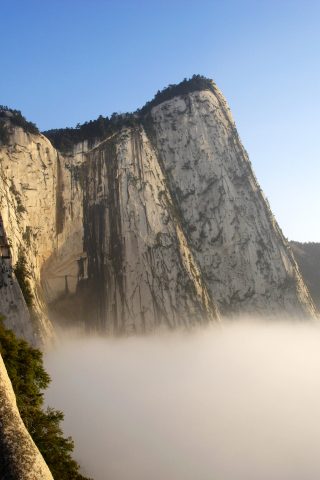
Perched on the slopes of Mount Huashan, one of Daoism’s five sacred peaks in China, Yuquan Temple is more than just a historical site—it’s a place where time seems to soften, where the past lingers in the quiet rustle of leaves and the murmur of a mountain spring. Huashan itself is famous for its sheer cliffs and dizzying trails, a landscape that tests the body and stirs the soul. But Yuquan offers something different: a pause, a moment to breathe amid the grandeur, where the weight of centuries feels almost tangible.
The temple dates back to the Tang Dynasty, a time when Daoism flourished and Huashan became a magnet for pilgrims. Legends say that Chen Tuan, the Daoist sage credited with developing qigong, once meditated here. Whether or not the stories are true, the air around Yuquan still carries a sense of contemplation, a quiet invitation to step away from the noise of the world. Today, the temple draws both monks and travelers, though not in the same way. For some, it’s a spiritual stop; for others, simply a place to sit and listen to the wind.
The architecture of Yuquan follows the familiar rhythms of Daoist temples—wooden pavilions with upturned eaves, their roofs adorned with dragons and clouds, stone steps winding up the slope, and courtyards that offer shelter from the sun or rain. The main hall honors the mountain’s deity, while smaller chambers house altars to Daoist immortals. The buildings don’t fight the landscape; they settle into it, as if they’ve always been part of the mountain’s slow, patient growth.
At the heart of the temple is the spring that gives it its name. The water in Yuquan’s pool is startlingly clear, and locals have long believed it holds healing properties. Pilgrims once carried it with them on their journeys; now, most people come just to watch the way the light plays on the surface or to cross the small stone bridges that arch over the stream. On hot days, the shade of the old trees and the sound of running water make it easy to linger.
Yuquan isn’t as grand as some of Huashan’s other temples, and that’s part of its charm. There are no crowds here, no rush to reach the summit. Instead, there’s silence, broken only by birdsong or the occasional murmur of monks. Time moves differently in this corner of the mountain. A short visit can feel like a step back in time, especially in the early morning, when the first light spills over the ridges, or at dusk, when the shadows stretch long and the air cools.
For many, Yuquan is the first stop on the climb up Huashan. The trail to the peak begins nearby, and the temple seems to offer a quiet blessing to those setting out on the journey. But even if you’re not planning to go further, it’s worth staying awhile. The temple grounds are dotted with ancient pines and bamboo groves, perfect for slow, unhurried walks or just sitting on a bench, watching the mountains.
Though Yuquan is tied to Daoism, its appeal isn’t limited to the devout. There are no rigid rules here, no prescribed rituals. Some come seeking inspiration, others for peace, and some simply to enjoy the beauty of the place. There’s nothing staged or performative about it—just the quiet harmony of nature and human hands.
The temple remains active, with monks still conducting services. On certain days, the sound of a gong or the scent of incense drifting through the air might catch your attention. But even on quiet days, when no one else is around, Yuquan doesn’t feel abandoned. It has its own rhythm, steady and unhurried, like the mountain itself.
Visiting Yuquan isn’t just about seeing an old temple. It’s a chance to step out of the rush of modern life, if only for a little while. There’s no need to prove anything here, no reason to hurry. Just the mountains, the temple, and the quiet, reminding you that some things endure.